







The Engine of Change
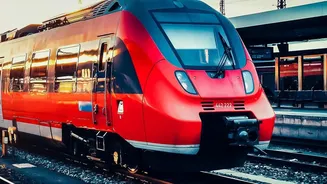
At its heart, a hydrogen-powered train is an electric train that carries its own power source. Instead of drawing electricity from overhead wires, it uses a fuel cell. Inside the fuel cell, hydrogen stored in tanks on the train combines with oxygen from the air.
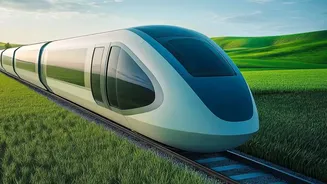
This electrochemical reaction generates electricity to power the motors, with the only emission being pure water vapour. This process makes them a zero-emission alternative to the diesel locomotives that still run on many routes across India, significantly reducing air and noise pollution. It's a clean, quiet, and efficient way to move people and goods, marking a significant leap from traditional engines.
A Push for a Greener Railway
The shift towards hydrogen is a crucial part of Indian Railways' ambitious goal to become a net-zero carbon emitter by 2030. While the network has achieved nearly 100% electrification on its broad-gauge lines, many heritage, hilly, and remote routes are difficult or financially unviable to electrify. Hydrogen trains offer a perfect solution for these lines, allowing for decarbonization without the need for costly infrastructure. Furthermore, this move aligns with India's broader national goals. By producing green hydrogen domestically using renewable energy, India can reduce its heavy dependence on imported diesel, saving valuable foreign exchange and boosting energy security. This transition is a key pillar of the National Green Hydrogen Mission and the 'Atmanirbhar Bharat' vision.
India's Hydrogen Train Takes to the Tracks
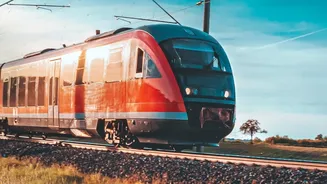
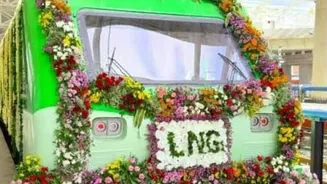
This is no longer a distant dream. On July 17, 2026, India launched its first domestically designed and built hydrogen train. The 10-coach train, inaugurated on the Jind-Sonipat section of the Northern Railway, is a pilot project to demonstrate the technology's feasibility in Indian conditions. Developed entirely in India, this train can carry approximately 2,600 passengers at speeds of up to 75 km/h. To support this, the country's largest railway hydrogen storage and refuelling facility has been set up in Jind, Haryana. While initial passenger numbers have been low, prompting plans to extend the route to Delhi, the project has successfully proven the technology's operational capability.
Challenges on the Road Ahead
Despite the successful launch, the journey to widespread adoption has several challenges. The biggest hurdle is the high cost of green hydrogen. Currently, producing it is more expensive than using diesel or electricity. Another major challenge is the lack of infrastructure. India needs to build a comprehensive ecosystem for hydrogen production, transportation, and storage, which requires massive investment and coordinated planning. Safety protocols for handling flammable hydrogen gas also need to be robustly established. These are significant obstacles, but the government is addressing them through the National Green Hydrogen Mission, which aims to scale up production and bring down costs over the next decade.
The Future of Rail Travel
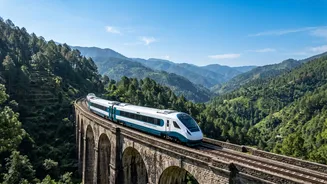
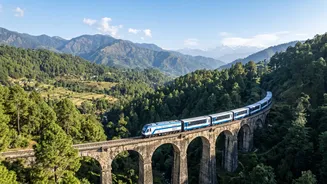
The hydrogen train running in Haryana is just the beginning. Indian Railways plans to use the insights from this pilot to deploy more hydrogen trains, particularly on its iconic heritage routes under the 'Hydrogen for Heritage' initiative. This not only helps preserve the fragile ecosystems of these beautiful locations but also offers a unique, clean, and quiet tourist experience. As technology matures and costs decrease, hydrogen-powered locomotives will play an increasingly vital role alongside electrification in making the Indian Railways network one of the greenest in the world. It signals a future where one of the world's largest railway networks runs on clean energy, benefiting both the environment and the economy.