







What Exactly Is the PJ.2.1 Variant?
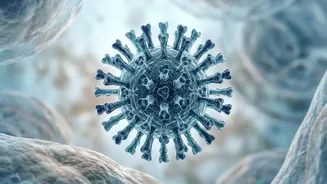
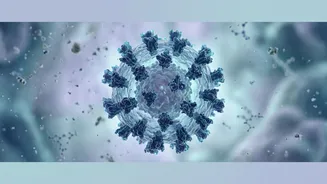
PJ.2.1 is a new lineage of the SARS-CoV-2 virus, which causes COVID-19. First identified in Ontario, Canada, in May 2026, it is a descendant of the JN.1 lineage, which was part of the Omicron family. Scientists refer to it as a 'saltation variant', meaning
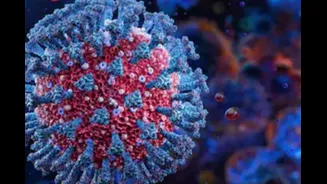
it appeared with a large number of genetic changes at once, rather than evolving slowly over time. These mutations are primarily in the spike protein, the part of the virus that latches onto human cells. Laboratory studies suggest these changes might allow the virus to bind more effectively to our cells, potentially giving it a growth advantage. However, this doesn't automatically mean it's more dangerous.
Where Has It Been Detected Globally?
Since its initial detection in Canada, PJ.2.1 has been identified in numerous other countries. Cases have been confirmed across the United States, starting in New York City in June 2026 and spreading to several other states. The variant has also been found in multiple European nations, including France and Spain, where local transmission has been noted. Further afield, PJ.2.1 has been reported in parts of Asia, including Singapore and Israel, as well as in Australia and New Zealand. This geographical spread indicates the variant is capable of international transmission, leading the World Health Organization (WHO) to monitor it closely.
Is It a Cause for Concern in India?
As of mid-November 2026, there is no official confirmation of widespread PJ.2.1 transmission in India. The Indian SARS-CoV-2 Genomics Consortium (INSACOG), the body responsible for tracking variants in the country, has not publicly reported its detection. However, experts note that given India's extensive international travel connections, it is plausible that the variant could arrive undetected. Health officials are advising against panic, emphasizing that the emergence of a new variant does not immediately warrant new restrictions. Instead, the focus remains on robust genomic surveillance to quickly identify PJ.2.1 if and when it appears in the population.
Does It Cause More Severe Illness?
Currently, there is no clinical evidence to suggest that PJ.2.1 causes more severe disease, hospitalisations, or deaths than previous variants. While lab studies point to potentially more efficient cell entry, this doesn't necessarily translate to worse outcomes in people. Experts are careful to distinguish between a variant that spreads easily and one that causes more serious illness. Symptoms associated with PJ.2.1 are reported to be similar to other COVID-19 strains and respiratory illnesses like the flu and common cold, including fever, cough, sore throat, and fatigue. There are no unique symptoms that can distinguish it without a diagnostic test.
Do Existing Vaccines Offer Protection?
Early findings are cautiously optimistic. Laboratory research from October 2026 indicated that antibodies from updated vaccines are still capable of neutralising the PJ.2.1 variant. One study found that its ability to evade these antibodies was relatively limited compared to some other circulating variants. For instance, antibodies from an LP.8.1-adapted vaccine were found to be effective against PJ.2.1, with only a small (1.8 times) reduction in neutralisation sensitivity. While these lab results are encouraging, more real-world data is needed to confirm vaccine effectiveness against infection. Health experts advise those in high-risk groups to consult their doctors about staying up-to-date with recommended vaccinations.