







Why the New Moon Is Your Best Friend
The single most important factor for a successful stargazing session is darkness. The biggest obstacle to that darkness, aside from city lights, is the Moon. Its reflected sunlight can brighten the night sky significantly, washing out all but the brightest
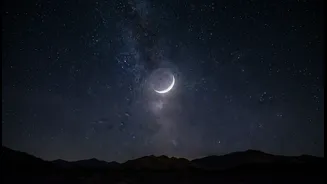
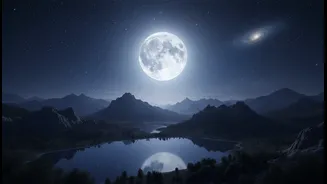
stars and planets. This is why experienced stargazers plan their outings around the new moon, when the Moon is not visible in the sky. For July 2026, the new moon falls on Tuesday, July 14. The days surrounding this date will offer the darkest skies of the month, making it the ideal window for spotting fainter objects like the Milky Way, distant nebulae, and meteor showers. The period from the last quarter moon on July 7 until a few days after the new moon is your prime time. After that, the waxing moon will gradually reintroduce more light into the night sky, culminating in a bright full moon on July 29.
Navigating the Monsoon Challenge
In India, July is synonymous with the monsoon. While the rain brings life and cools the air, the associated cloud cover is the bane of astronomers. However, all is not lost. Stargazing during the monsoon requires patience and strategic planning. The key is to monitor local weather forecasts with an almost obsessive focus. Look for short-term predictions that show a break in the clouds. Often, the sky clears up for a few hours just after a spell of rain, offering surprisingly crisp and clean viewing conditions. Some regions are also more favourable than others. High-altitude, rain-shadow areas like Spiti Valley in Himachal Pradesh remain largely dry and offer some of the clearest skies in the country, even in July. For those elsewhere, places like Malshej Ghat in Maharashtra or parts of Coorg in Karnataka can offer good viewing windows between showers. The trick is to be ready to go at a moment's notice when a clear patch of sky presents itself.
What to See This July
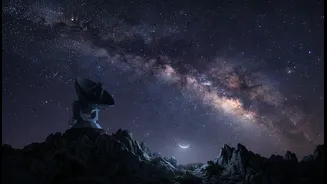
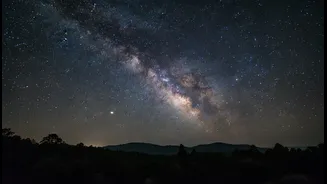
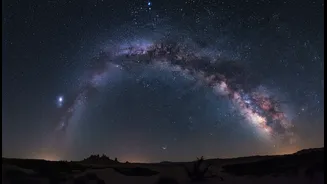
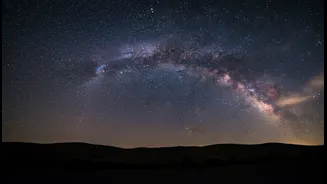
Despite the challenges, July 2026 is packed with celestial events. Early in the month, on the mornings of July 7 and 8, you can spot a beautiful alignment of the Moon and Saturn in the pre-dawn sky. On July 11, a slim crescent moon will form a picturesque triangle with the reddish planet Mars and the famous Pleiades star cluster. The main event for many will be the Milky Way galaxy, which is best viewed during the dark nights around the new moon on July 14. Look towards the southern sky for the constellations Scorpius and Sagittarius; the brightest part of the Milky Way lies between them. The end of the month brings a double meteor shower. The Southern Delta Aquariids and the Alpha Capricornids both peak around July 30-31. Unfortunately, the nearly full moon on July 29 will wash out many of the fainter meteors. However, the Alpha Capricornids are known for producing exceptionally bright fireballs, which might still be visible despite the lunar glare.
Finding a Dark Sky Spot
Light pollution from cities is a major hurdle for stargazers. To truly appreciate the night sky, you need to get as far away from urban centres as possible. For those in big cities like Mumbai or Delhi, this might mean a weekend trip to a more rural location. Places like Jawhar in Maharashtra offer a quick escape from Mumbai's lights. Wildlife sanctuaries, national parks, and high-altitude hill stations are often excellent choices. Binsar in Uttarakhand and the vast salt desert of the Rann of Kutch are other noted dark-sky locations. Even if you can't travel far, you can still improve your view. Find a local park, a large field, or even a rooftop that is shielded from the direct glare of streetlights. The key is to find a spot with a wide, unobstructed view of the sky, particularly towards the south to see the core of the Milky Way.
Your Essential Stargazing Toolkit
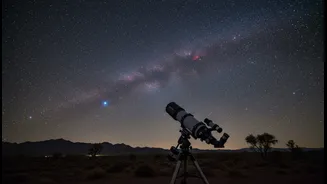
You don't need expensive equipment to get started. Your most important tool is your eyes, but you must allow them 20-30 minutes to fully adapt to the dark. Avoid looking at your bright phone screen, which will ruin your night vision. Instead, use a stargazing app like Sky Map or Stellarium in night mode, which uses a red filter. A simple pair of binoculars can dramatically enhance your view, revealing craters on the Moon, the moons of Jupiter, and many more stars within the Milky Way. A red-light torch is also a great accessory, as it illuminates your surroundings without compromising your night vision. Finally, since stargazing involves a lot of waiting and looking up, bring a comfortable reclining chair or a blanket to lie on. Comfort is key to a patient and rewarding night under the stars.