



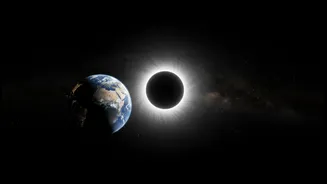


A Shadow Over Europe, Not India
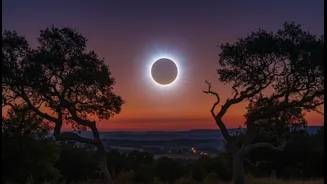
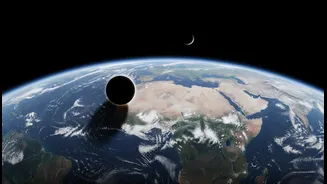
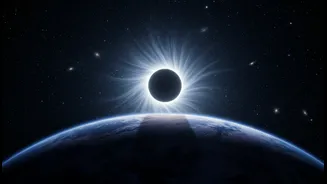
First, the essential information for sky-gazers in India: this eclipse will not be visible from the subcontinent. The path of totality, where the Moon completely blocks the Sun, begins over the Arctic and Greenland, before moving across Iceland and concluding
over northern Spain and Portugal. While cities like Valencia and Bilbao will be plunged into midday darkness for a few precious minutes, people across most of Europe and parts of North Africa will see a partial eclipse. For us in India, it will be a normal day. But the story of the eclipse is far more than just its path; it’s a story about how we turned a symbol of terror into a tool of profound discovery and economic opportunity.
A History of Fear and Superstition
For much of human history, a solar eclipse, or Suryagrahan, was the ultimate bad omen. Without the science to explain the sudden disappearance of the Sun, cultures worldwide developed myths to make sense of the terrifying darkness. In ancient Hindu mythology, the demon Rahu is said to swallow the Sun, leading to an eclipse. This event was considered deeply inauspicious, a time when harmful forces were at play. Pregnant women were often advised to stay indoors to protect their unborn children, and many would fast, believing food prepared during an eclipse was impure. This fear was not unique to India; the ancient Greeks believed an eclipse signified angry gods, a prelude to disaster and destruction.
The Eclipse as a Scientific Laboratory
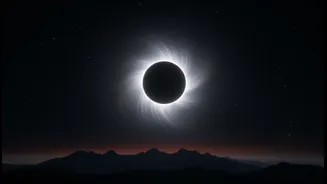
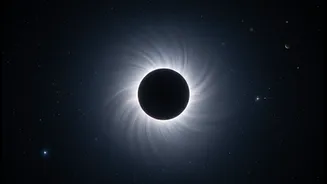
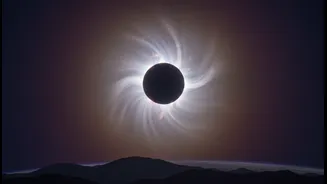
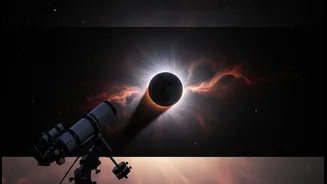
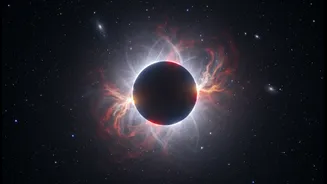
The transition from risk to utility began when science offered a new perspective. An eclipse became a natural experiment, a rare chance to study our star in ways impossible at any other time. During totality, the Sun's brilliant face is blocked, revealing its ethereal outer atmosphere, the corona. This ghostly halo of superheated plasma is usually invisible, lost in the Sun's own glare. Scientists flock to eclipse paths to study the corona, helping them understand solar winds and the powerful magnetic forces that can impact our technology on Earth. It was during an eclipse in 1919 that astronomers famously gathered evidence supporting Einstein's theory of general relativity, forever changing our understanding of gravity and the universe.
The Modern 'Eclipse Economy'
Today, the utility of a solar eclipse extends far beyond the scientific community. It has created a booming global industry: eclipse tourism. The 2024 total eclipse in North America was estimated to have generated a multi-billion dollar economic impact, with small towns and large cities along the path of totality reaping immense benefits. Hotels and rentals are booked out years in advance, often at hugely inflated prices. Restaurants, souvenir shops, and local businesses see a massive influx of cash. For the August 2026 event, Spain is poised to be a major hub for eclipse chasers, thanks to its favourable weather prospects. What was once a cause for shuttering windows and staying home has become a reason to travel the world and spend.
A Shared Moment of Wonder
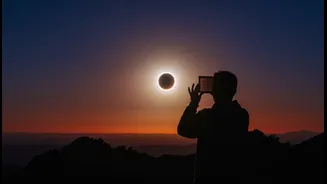
Beyond the science and the money, the modern eclipse offers one final form of utility: a shared moment of collective awe. In a divided world, a total solar eclipse is a unifying event. People of all backgrounds gather together, look up at the sky, and experience a profound sense of wonder. It’s a powerful, humbling reminder of our small place in a vast cosmos. For a few brief minutes, the machinery of daily life pauses, replaced by a visceral connection to the natural world. This ability to inspire, to unite, and to offer a moment of pure, unadulterated awe may be the eclipse's greatest utility of all.