



A Quantum Leap in Ambition
Chandrayaan-4 represents a monumental step up from its predecessor. While Chandrayaan-3 was a one-way trip to land and explore, this new mission is a round trip. The primary objective is to land on the Moon, collect up to three kilograms of soil and rock,
and then launch off the lunar surface to bring the precious cargo safely back to Earth. If successful, India would become only the fourth nation in history—after the United States, the former Soviet Union, and China—to accomplish this incredibly complex feat. Approved by the Union Cabinet, the mission underscores a new era of confidence in India's space exploration capabilities, moving from demonstrating presence to performing advanced, multi-stage operations.
The Five-Module, Two-Rocket Plan
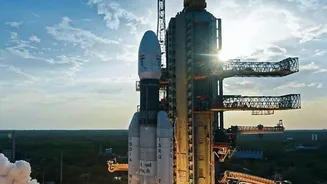
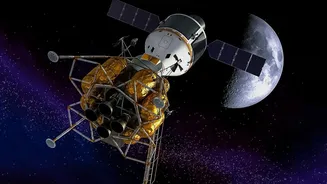
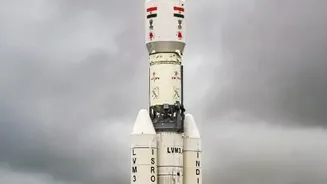
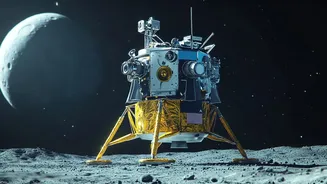
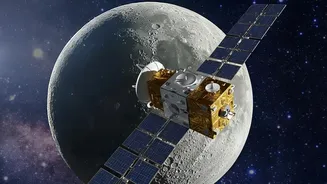
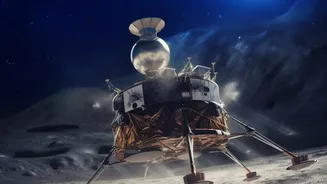
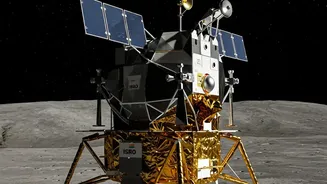
The sheer complexity of a sample-return mission means it's too heavy for a single rocket. ISRO's innovative solution involves five separate modules launched by two of its powerful LVM3 rockets. The first launch will carry the Descender Module (the lander) and the Ascender Module (the small rocket that will launch off the Moon). The second rocket will carry the Propulsion Module, a Transfer Module, and the critical Re-entry Module. These two separate stacks will perform a delicate dance in Earth's orbit, docking together to form one integrated spacecraft before heading to the Moon. This orbital rendezvous and docking is a crucial technology that ISRO has been preparing for, and its success is fundamental to the entire mission.
An Intricate Lunar Ballet
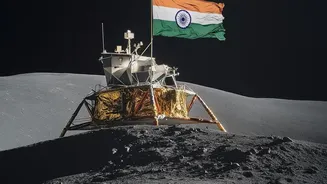
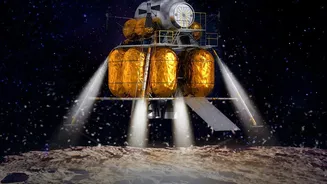
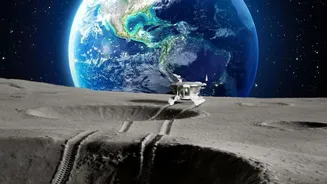
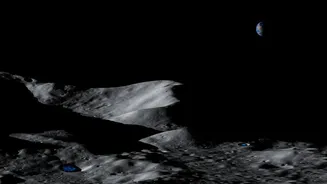
Once the integrated craft reaches lunar orbit, the mission unfolds in a series of high-stakes maneuvers. The lander, carrying the ascender, will detach and perform a soft landing near the Moon's south pole, a region believed to be rich in water ice. A robotic arm will then collect surface samples, while a drill will gather subsurface material. These samples will be sealed in a container aboard the Ascender Module. At the right moment, the Ascender will launch from the Moon—using the lander as a launchpad—and rendezvous with the Transfer Module waiting in lunar orbit. The sample container will be transferred, and the Re-entry Module will then begin its long journey home, designed to survive a fiery plunge through Earth’s atmosphere.
Why Bring Moon Rocks to Earth?
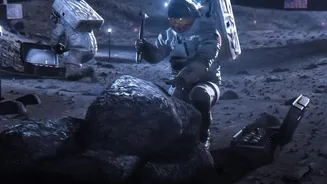
While rovers can perform on-site analysis, there is no substitute for studying pristine lunar samples in sophisticated laboratories on Earth. Scientists can use equipment far too large or delicate to send to space, allowing for a much deeper understanding of the Moon’s geology, mineralogy, and evolution. The samples from the south pole are particularly valuable as they could contain water ice and other volatiles, resources that could be vital for future long-term lunar habitats and even as a source for rocket fuel. These samples will not just answer questions about the Moon's past but also pave the way for humanity's future in space.
The Path to Gaganyaan and Beyond
Chandrayaan-4, with a launch targeted for around 2028, is more than a scientific mission; it is a critical stepping stone for India's human spaceflight ambitions. Key technologies being demonstrated—such as automated rendezvous and docking, launching from another celestial body, and high-speed atmospheric re-entry—are all essential for one day sending Indian astronauts to the Moon and bringing them back safely, a goal set for 2040. Each successful phase of Chandrayaan-4 will validate the systems and strategies needed for the Gaganyaan program and future interplanetary missions, solidifying India's position as a major global space power.