








The Festival's Green Roots
Harela, literally meaning “Day of Green,” is a folk festival of the Kumaon region that celebrates the onset of the monsoon and the start of the sowing season. Traditionally, families sow seven or more types of grains in a basket ten days before the festival.
On Harela day, which falls on July 16, these vibrant green shoots are harvested and placed on the heads of family members as a blessing for prosperity and a good harvest. The festival is also deeply connected with the worship of Lord Shiva and Goddess Parvati, whose union symbolises fertility and the renewal of life that the rains bring. This intimate connection to nature and agriculture has made Harela the perfect cultural anchor for a modern environmental movement.
The Facts: An Ambitious Greening Mission
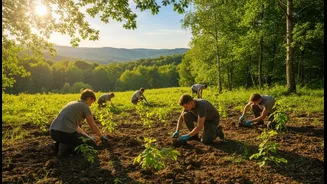
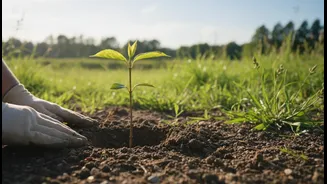
Capitalising on the festival's spirit, the Uttarakhand state government has been organizing large-scale plantation drives since 2015. These annual events have grown in scale, involving the forest department, various other government bodies, schools, NGOs, and local communities. For 2026, the forest department has announced a plan to plant 59 lakh saplings across the state on Harela day alone. Of these, 38 lakh are planned for the Kumaon region and 21 lakh for Garhwal, covering thousands of hectares. In Dehradun district, the target for the month-long festival is over 15.5 lakh saplings, with an emphasis on creating thematic green zones to boost eco-tourism. Officials have stressed the importance of planting native, fruit-bearing, and fodder species to suit local conditions and benefit communities. To improve transparency, details of plantation sites are often uploaded to mobile apps for real-time monitoring.
Practical Impact: Beyond the Numbers
The most visible impact of the Harela drive is the surge in public engagement with environmental issues. The campaign transforms tree planting from a niche activity into a mass movement, fostering a sense of collective responsibility. It serves as a powerful awareness tool, particularly for younger generations in schools and colleges who are actively involved. By framing conservation within a cherished cultural tradition, the initiative encourages a deeper, more personal connection to the environment. Furthermore, the focus on planting fodder and fruit trees has a direct economic and social benefit for rural communities, providing resources and strengthening the bond between people and the forests they depend on. State officials have also pointed to successes in broader conservation efforts, such as the conservation of water sources through the Spring and River Rejuvenation Authority (SARRA), which they link to the same environmental ethos promoted by Harela.
Remaining Questions: Survival and Sustainability
Despite the impressive plantation figures, critical questions remain about the long-term success of the drive. The primary challenge for any mass plantation is the survival rate of the saplings. Experts point out that without systematic post-planting care, many saplings do not survive their initial years due to drought, grazing, or neglect. While officials in the past have claimed survival rates of nearly 80%, these figures can be difficult to independently verify and vary widely. Critics argue that many plantation drives become one-day photo opportunities, lacking the sustained follow-up required for genuine afforestation. There is also the risk of promoting monocultures or planting species not suited to the local ecology, which can be less beneficial for biodiversity than natural forests. The irony of felling thousands of mature trees for development projects during the same Harela month when saplings are being planted is also not lost on environmental activists.
The Future of a Green Tradition
For Harela's sapling drive to translate into lasting ecological benefit, the focus must shift from the number of saplings planted to the number of trees that survive and thrive. This requires a more scientific approach, including careful species selection, proper site preparation, and, most importantly, a robust, long-term monitoring and maintenance plan. Ensuring community ownership, where local people are incentivised and empowered to protect the new plantations, is crucial for their long-term health. Some government plans have begun to reflect this, with proposals for five-year maintenance responsibilities and financial incentives for citizens who care for trees. Ultimately, the Harela drive holds immense potential. By wedding a deeply felt cultural tradition with a pressing environmental need, it can do more than just put saplings in the ground; it can cultivate a generation of citizens dedicated to restoring Uttarakhand’s green heritage. But to do so, the effort must extend well beyond the single day of the festival.