





India’s new Vande Bharat sleeper trains are generating excitement for their promise of world-class travel. One specific feature—the fully sealed gangway—is drawing direct comparisons to the iconic Rajdhani, sparking a debate about comfort.
A New Era for Overnight Travel
The Vande Bharat
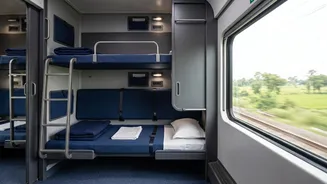
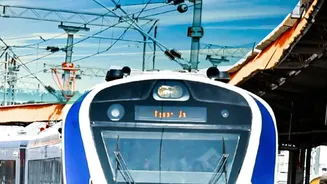
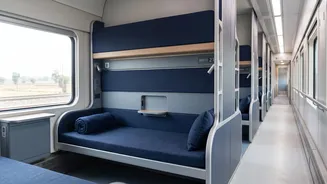
Express has already changed daytime train travel in India, and now its sleeper variant is set to redefine overnight journeys. The first prototype, rolled out from BEML's facility in Bengaluru, promises a blend of speed, efficiency, and enhanced passenger comfort. Designed for long-distance routes of 800-1200 km, these self-propelled trainsets can achieve operational speeds of 160 km/h, aiming to cut down travel time significantly. With modern interiors, improved berths, and advanced safety features, the Vande Bharat sleeper is positioned as a direct successor to the long-reigning premium standard set by the Rajdhani Express.
The Detail Sparking Discussion: Sealed Gangways
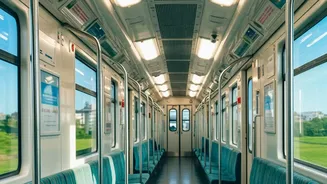
Among the many upgrades, one design detail has caught the public's eye: the fully sealed gangways between coaches. In traditional trains like the Rajdhani, which use LHB (Linke Hofmann Busch) coaches, the vestibules connecting compartments are covered by a flexible, bellow-like structure. While functional, these gangways are not airtight, often letting in outside noise, dust, and temperature fluctuations. The Vande Bharat sleeper, in contrast, features a completely sealed and enclosed corridor. This design, common in modern European trains, creates a seamless interior, allowing passengers to walk between coaches as if in one continuous carriage.
The Rajdhani Benchmark for Comfort
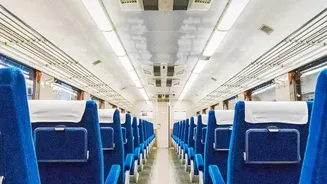
For decades, the Rajdhani Express has been the gold standard for premium long-distance train travel in India. Its air-conditioned coaches and onboard catering set it apart. However, the experience isn't without its minor discomforts. The noise from the tracks and the characteristic sounds of the train moving are most audible near the vestibules. The movement of the unsealed gangways creates metallic sounds and allows track noise to filter into the coach, which can be a disturbance, especially for those in berths near the coach ends. This has long been an accepted part of the Indian train journey experience.
The Unproven Promise of a Quieter Ride
Logically, a sealed gangway should lead to a quieter cabin. By creating an airtight barrier, it should significantly reduce the external noise from the wheels on the track and the surrounding environment. While BEML and Indian Railways have highlighted 'noise insulation and mitigation measures' as key features, they have not made a specific, quantified claim about decibel reduction from the gangways alone. The comparison to the Rajdhani's noisier vestibules is therefore based on design principles and passenger expectation rather than official performance data. Sources mention that the train uses improved suspension and other design elements to deliver a higher riding index and a smoother, jerk-free journey, all of which contribute to a quieter experience overall.
More Than Just Noise Reduction
The benefits of a sealed gangway extend beyond just acoustics. It creates a more stable and secure passage between coaches, improves the efficiency of the air conditioning, and prevents dust from entering, leading to a cleaner internal environment. This feature is part of a larger suite of upgrades that set the Vande Bharat sleeper apart. These include ergonomically designed berths with better cushioning, improved ladders for upper berths, automatic plug doors, sensor-based inter-coach doors, and modern bio-vacuum toilets. Furthermore, the train is equipped with advanced safety features like the indigenous KAVACH system, CCTV cameras, and enhanced fire safety standards.