




Location, Location, Location: Where Your Fridge Lives Matters
A refrigerator's job is to move heat from the inside to the outside, keeping your food cool. But if the appliance is in a warm spot, it has to work much harder to do its job. External heat sources force the compressor to run longer and more frequently,
which can lead to less consistent internal temperatures and higher energy bills. For this reason, you should avoid placing your refrigerator next to heat-producing appliances like an oven, dishwasher, or stove. Likewise, a spot that gets direct sunlight for several hours a day will also make your fridge work overtime. The ideal ambient temperature for most refrigerators is between 60°F and 85°F. For every degree of increase in the surrounding temperature, a fridge's energy consumption can rise significantly.
Give It Room to Breathe
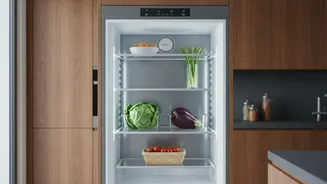
Even in a cool spot, a refrigerator needs proper ventilation to dissipate the heat it removes from its interior. This happens via condenser coils, which are typically located on the back or bottom of the unit. If the fridge is pushed flush against a wall or crowded by cabinets, air can't circulate freely around these coils. This trapped heat forces the compressor to work harder, reducing efficiency and potentially shortening the appliance's lifespan. Most manufacturers recommend leaving at least a couple of inches of clearance around the sides and back, and on top of the unit, to ensure proper airflow. Following these guidelines helps the appliance run optimally, keeping your food consistently cool.
Inside Job: Understanding Your Fridge's Temperature Zones
Just as the location in your kitchen matters, so does the location of food inside your fridge. Not all areas of a refrigerator maintain the same temperature. Cold air is denser than warm air, so it naturally sinks. This creates distinct temperature zones, and knowing how to use them is key to prolonging the life of your groceries. Keeping your fridge at or below 40°F (4°C) is crucial for slowing the growth of most bacteria. However, the temperature will fluctuate slightly from shelf to shelf.
The Door: The Warmest Spot
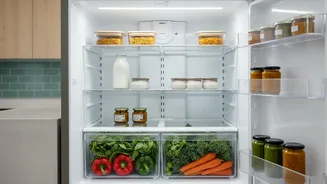
The refrigerator door is the warmest part of the unit because it's most exposed to the warm air of your kitchen every time you open it. For this reason, you should only store items that are most resistant to spoilage here. Condiments, sauces, and bottled drinks are perfect for the door. You should avoid storing highly perishable items like milk and eggs in the door, even if it has a designated compartment for them. These items are better off on a colder, more stable shelf inside the main compartment.
Upper Shelves: For Ready-to-Eat Foods
The upper shelves of a refrigerator typically have the most consistent, albeit slightly warmer, temperatures compared to the bottom. This area is ideal for foods that don't require intense cold, such as leftovers, yogurts, cheeses, and other ready-to-eat items. Storing cooked foods on shelves above raw items is also a critical food safety practice, as it prevents any potential drips from raw meat from contaminating them.
Lower Shelves: The Coldest Zone
The bottom shelf is generally the coldest part of the refrigerator, making it the best place for your most perishable items. This is where you should store raw meat, poultry, and fish. To prevent cross-contamination, always keep these items in sealed containers or on a plate to catch any potential leaks. Milk and eggs should also be stored on a lower shelf, preferably toward the back, where the temperature is coldest and most stable.
Crisper Drawers: A Humidity Haven
The crisper drawers are designed to maintain a different level of humidity than the rest of the fridge. Many have adjustable sliders to control airflow. A high-humidity setting (less air flow) is best for produce that tends to wilt, such as leafy greens, broccoli, and fresh herbs. A low-humidity setting (more air flow) is suited for fruits and vegetables that release ethylene gas as they ripen, like apples, pears, and avocados. Separating these items prevents the ethylene from causing other produce to spoil prematurely.