



A New Signature in the Cosmos
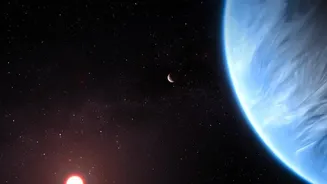
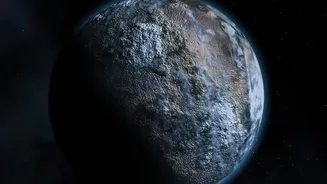
Astronomers are celebrating the detection of water vapour on a rocky exoplanet larger than our own. While the specific planet in this latest discovery is still being detailed in forthcoming papers, the finding builds on Webb's growing legacy of atmospheric
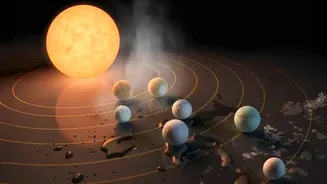
analysis. Such discoveries are monumental, not because they confirm life, but because they prove our technological capacity to find the ingredients for it across the galaxy. Previous detections by both the Hubble and Webb telescopes have hinted at water on various exoplanets, from gas giants to smaller rocky worlds, but each new confirmation sharpens our understanding. This particular detection on a super-Earth—a class of planet with no direct counterpart in our own solar system—adds another fascinating piece to the puzzle of planetary diversity.
What Exactly Is a Super-Earth?
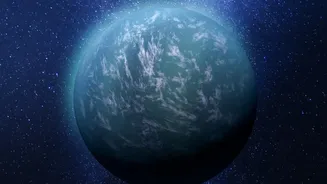
The term 'super-Earth' might conjure images of a bigger, better version of our own world, but in astronomy, it's a simple classification based on size and mass. These are planets more massive than Earth but lighter than ice giants like Neptune. They can be made of rock, gas, or a combination, and they are surprisingly common throughout the Milky Way. Our solar system is unusual for not having one. Scientists are keenly interested in them because their size range could allow for a wide variety of environments, from 'water worlds' with deep oceans to dense, gassy planets known as 'mini-Neptunes'. Studying their atmospheres is a crucial step in figuring out which category a specific super-Earth falls into.
Decoding Light from Light-Years Away
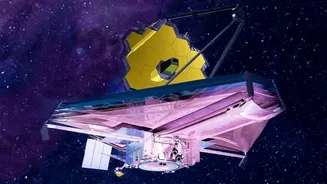
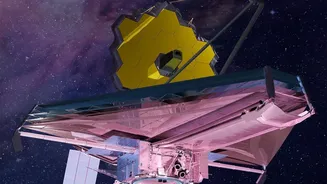
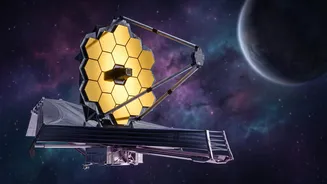
Detecting anything in the atmosphere of a planet hundreds of light-years away sounds like science fiction, but the method, called transit spectroscopy, is elegantly simple in concept. When an exoplanet passes in front of its host star from our point of view, a tiny fraction of the starlight filters through the planet's atmosphere. The James Webb Space Telescope's powerful instruments can capture this light and spread it into a spectrum, like a rainbow. Different molecules in the atmosphere absorb specific colours, or wavelengths, of light, leaving behind a unique chemical 'fingerprint'. In this case, the spectrum revealed the tell-tale signature of water (H2O), a testament to Webb's incredible sensitivity.
A Steamy Atmosphere, Not an Ocean World (Yet)
It is crucial to put this discovery in context: finding water vapour does not automatically mean the planet has liquid oceans or is habitable. Many super-Earths orbit very close to their stars, resulting in surface temperatures hot enough to melt lead. On such a world, any water would exist as a scorching steam or vapour in the atmosphere, potentially replenished by volcanic activity. Furthermore, scientists must be cautious and rule out other possibilities. In some cases, the water signature might originate from the planet's cool host star itself, rather than from a planetary atmosphere. Further observations are often needed to confirm that the water is truly associated with the planet.
The Next Frontier for Webb
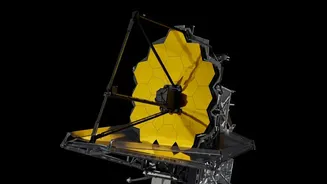
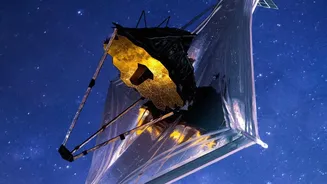
This discovery is not an end-point but a spectacular demonstration of what is now possible. The James Webb Space Telescope was designed precisely for these kinds of measurements, pushing the boundaries of what we can learn about worlds beyond our own. Each atmospheric detection provides crucial data for astronomers building a census of planetary climates and compositions across the galaxy. By studying a wide range of planets—hot, cold, rocky, and gassy—scientists can refine their models of how planets form and evolve. This knowledge helps them narrow down the search for planets that might have the right conditions for life as we know it, turning a galaxy of possibilities into a focused hunt for other pale blue dots.