







What Is the Public-Private Model?
At its core, the public-private partnership model involves NASA setting the scientific goals and often providing the key instruments, while commercial companies provide the transportation and operational services. Think of it less like NASA hailing a taxi
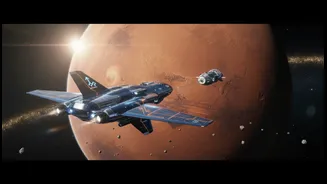
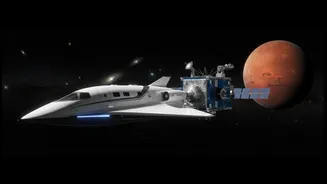
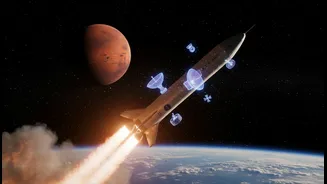
and more like it co-signing a lease on a vehicle it helped design. A prime example is the recently announced Aeolus mission, scheduled for 2028. NASA is developing the sophisticated atmospheric-science instrument suite, but Relativity Space is responsible for the rocket, the spacecraft, and the flight to Mars. This approach allows NASA to focus its budget on pioneering science and reduces the massive overhead of developing entire missions from scratch. In return, companies like Relativity gain invaluable experience on high-profile interplanetary missions, proving their capabilities for future contracts.
Learning from the Moon: The Artemis Precedent
This Mars strategy isn't emerging from a vacuum. It's a direct evolution of the model NASA is using for its Artemis program to return to the Moon. Through initiatives like the Commercial Lunar Payload Services (CLPS), NASA has awarded contracts to multiple companies to deliver scientific and technological payloads to the lunar surface. These missions serve as a crucial proving ground for the systems, technologies, and partnership frameworks that will eventually be needed for the much more complex challenge of reaching Mars. By testing these capabilities closer to home, NASA can gather critical data, refine operational strategies, and foster a competitive commercial market before committing to the years-long journey to the Red Planet.
The Force Multiplier: Benefits and Opportunities
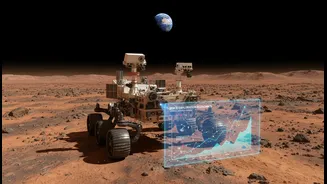
NASA Administrator Jared Isaacman has called these partnerships a "force multiplier for science." The primary benefit is the ability to conduct more science, more frequently. By offloading launch and operations to the private sector, NASA can stretch its budget further and accelerate the pace of discovery. For startups and the wider aerospace industry, this model opens up new avenues for participation. Beyond the headline-grabbing launch contracts, NASA is actively seeking industry proposals for everything from robotic mobility systems to deep space communications. This creates a tiered ecosystem where companies of various sizes can contribute, fostering innovation and competition that drives down costs for the American taxpayer.
Navigating the Risks and Policy Debates
Despite the successes of commercial programs for Earth orbit, extending this model to deep space comes with inherent risks. One key area of concern for policy watchers is mission assurance. When a private company is responsible for a multi-million-dollar NASA instrument, questions of liability and oversight become more complex. The model relies on a delicate balance, with NASA shifting some risk to its commercial partners. Success depends on the maturity and reliability of these private systems, which are still being proven in the harsh environment of interplanetary space. Furthermore, there is an ongoing debate about funding levels. For a true commercial market to thrive, consistent and adequate government investment is crucial, especially when NASA is the primary customer for these ambitious services.
What to Watch Before Drawing Conclusions
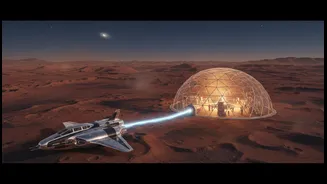
Before declaring the model a complete success or failure, several key developments are worth watching. The performance of commercial lunar landers under the CLPS initiative will be a major indicator of industry's readiness for more complex tasks. The progress of missions like Aeolus, from development through its 2028 launch, will be a direct test of this partnership model for a Mars-bound mission. Policy watchers should also monitor NASA's future solicitations for Mars-related services, as these will reveal how the agency plans to build out the commercial ecosystem for communications, payload delivery, and eventually, human landing systems. The evolution of these partnerships, rather than a single mission outcome, will truly define the future of Martian exploration.