






The Science of Porosity
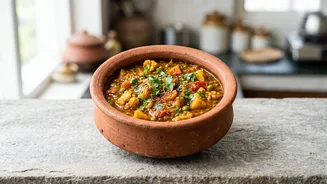
The magic of a clay pot, or 'handi', lies in its porous nature. Unlike metal or glass, unglazed clay has microscopic pores that allow both heat and moisture to circulate throughout the pot during cooking. As food heats up, it releases steam. The clay walls
absorb this steam and then slowly release it back into the dish. This creates a self-basting effect, keeping gravies and meats incredibly moist and tender without becoming watery or drying out. This constant circulation of moisture means you often need less oil and water, letting the ingredients' natural juices shine.
Gentle, Even Heat for Deeper Flavours
Metal pans heat up quickly and can create hot spots, risking scorched spices or unevenly cooked food. Clay, however, is a poor conductor of heat, which in this case is a significant advantage. It heats up slowly and distributes that heat evenly across its entire surface. This gentle, consistent warmth is perfect for slow-cooking the complex masalas found in Indian gravies. Flavours have time to meld and deepen without the harsh heat that can destroy delicate aromatic compounds. Once hot, the clay retains heat exceptionally well, meaning your food continues to cook gently even after being taken off the stove and stays warm for longer.
Locking in Nutrients
The slow and gentle cooking process does more than just enhance flavour; it helps preserve the nutritional value of your food. High heat can destroy sensitive vitamins and minerals. The lower, more even temperature inside a clay pot is less destructive to these essential nutrients. Because the steam and moisture are continuously circulated rather than escaping, water-soluble vitamins are retained within the dish instead of being lost to evaporation. The result is a gravy that is not only delicious but also more nutritionally dense compared to food cooked in other types of cookware.
A Natural Way to Balance Flavour
Clay is naturally alkaline. This property has a subtle but important effect on the food cooked within it. When you cook acidic ingredients like tomatoes, tamarind, or yoghurt—all staples of Indian gravies—the alkaline surface of the pot helps to neutralize some of that acidity. This can lend a hint of natural sweetness to the dish, reducing the need to add sugar or other balancing agents. Many people find that food cooked in clay is also easier to digest, possibly due to this pH-balancing effect.
Getting Started with Clay Cookware
To get the most out of a clay pot, it's important to prepare it correctly. Before its first use, an unglazed clay pot needs to be seasoned. This typically involves soaking it in water for several hours, which strengthens the clay and prevents cracking. Never expose a clay pot to sudden temperature changes, such as placing a cold pot on a hot stove; always start on low heat and gradually increase it. For cleaning, avoid harsh soaps which can be absorbed into the porous clay. Instead, use hot water and a stiff brush. With proper care, a clay pot can become a cherished tool in your kitchen, connecting you to a healthier and more flavourful way of cooking.