


Beyond the Touchdown
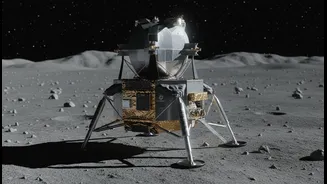
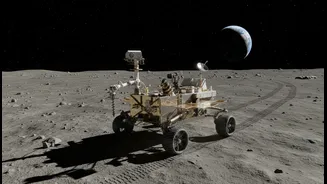
The successful soft landing of the Vikram lander near the Moon’s south pole in August 2023 was a moment of immense national pride for India and a landmark achievement in space exploration. For one lunar day, equivalent to about 14 Earth days, the Pragyan
rover traversed the surface, while the lander’s instruments performed the first-ever in-situ measurements of this unexplored region. While the operational phase on the lunar surface was brief, the mission's scientific life is proving to be long and incredibly fruitful. ISRO has made the mission's data accessible to researchers worldwide, ensuring that the legacy of Chandrayaan-3 extends far beyond the landing itself. This ongoing analysis is now yielding a deeper, more nuanced understanding of our celestial neighbour.
A Surprising Lunar Temperature Profile
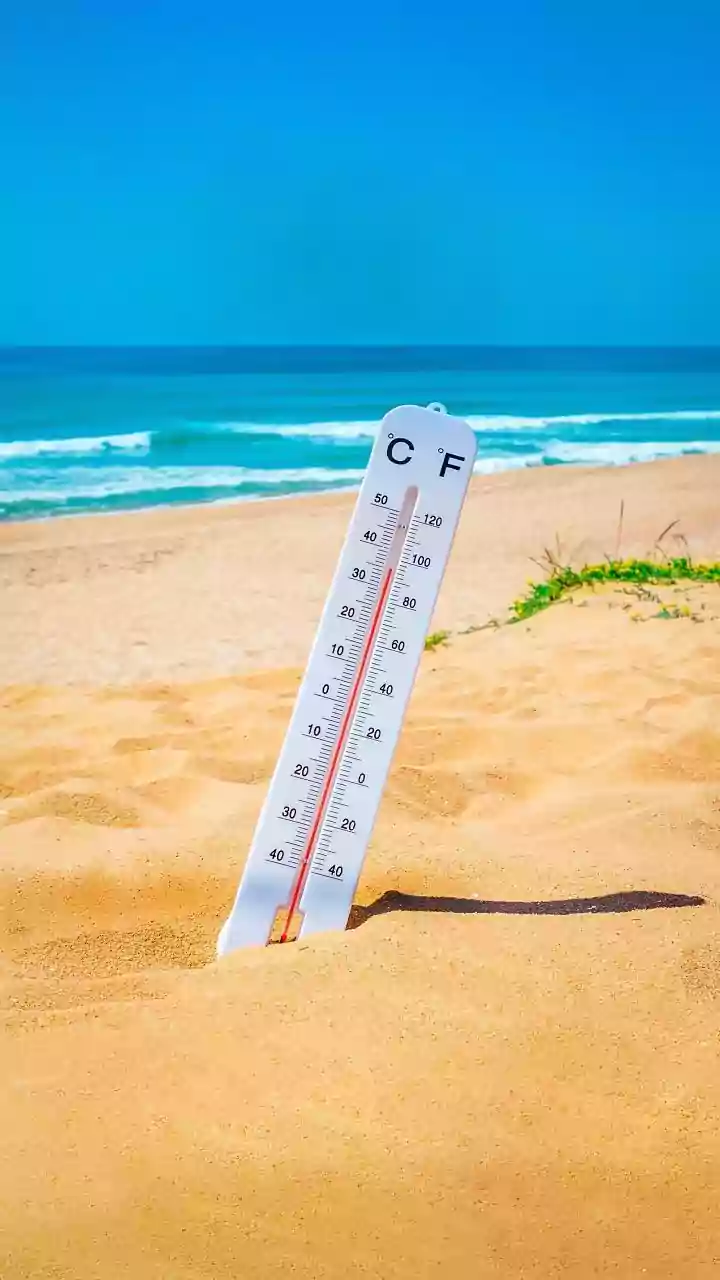
One of the most immediate and surprising findings came from the Chandra’s Surface Thermophysical Experiment (ChaSTE). By probing the top 10 centimetres of the lunar soil, or regolith, ChaSTE delivered the first-ever temperature profile of the south polar region. It recorded a dramatic temperature drop from around 60 degrees Celsius on the surface to a frigid minus 10 degrees Celsius just a few centimetres below. This steep gradient was far greater than scientists had anticipated and suggests that the topsoil of the Moon is a powerful thermal insulator. This finding has significant implications for future lunar missions, especially for understanding how to build habitats or extract resources like water ice, which may be preserved just beneath the unexpectedly insulating surface layer.
Connecting Moon Rocks on Earth and the Moon
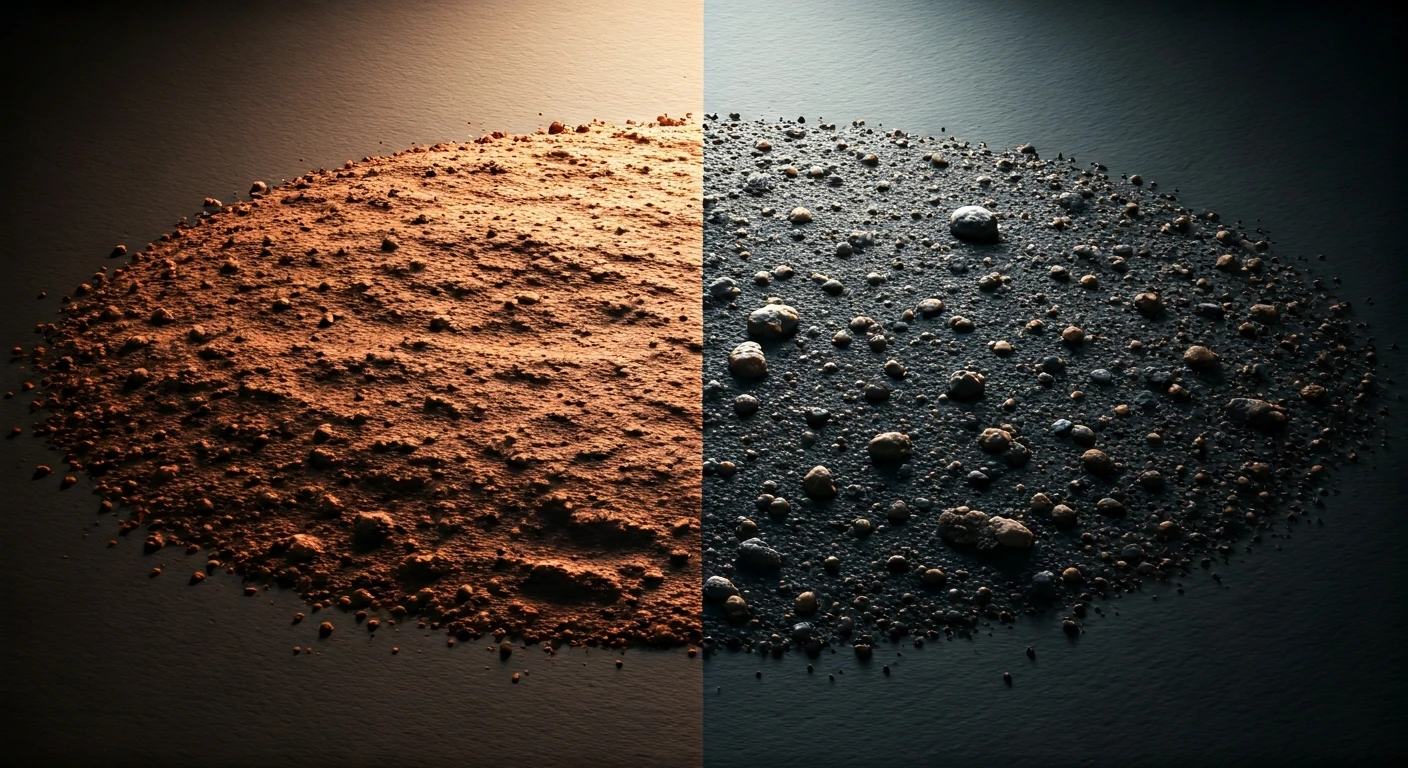
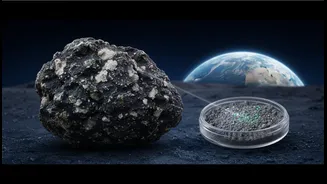
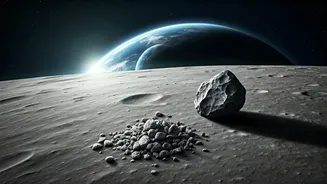
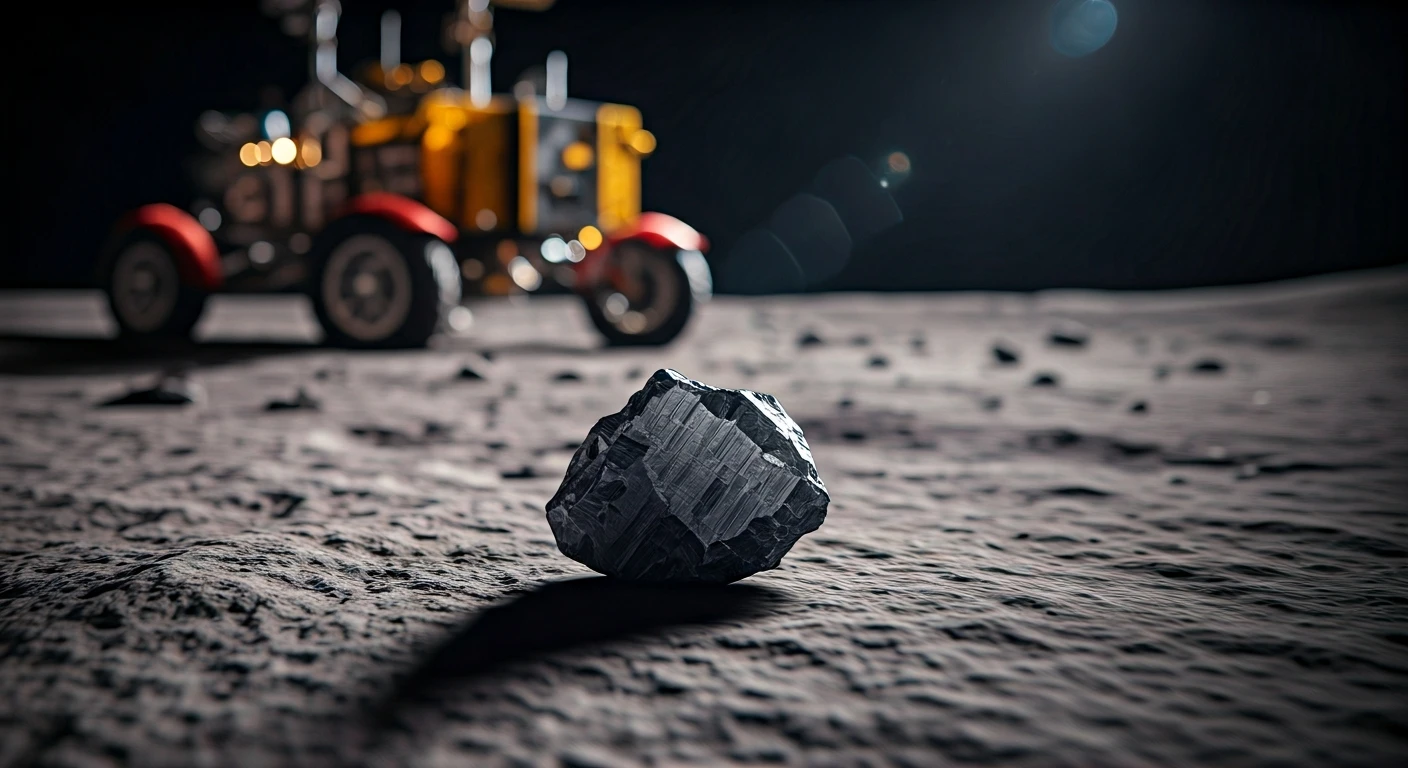
The Pragyan rover’s Alpha Particle X-ray Spectrometer (APXS) has been instrumental in analyzing the chemical makeup of the lunar surface. A recent groundbreaking study from July 2026 revealed a striking geochemical match between the soil at the 'Shiv Shakti' landing site and a specific lunar meteorite found on Earth. The meteorite, ALHA 81005, was the very first rock from Earth confirmed to have a lunar origin. This connection is vital; it allows scientists to cross-reference the rover's in-situ data with physical samples already in laboratories. The analysis showed the landing site soil is rich in magnesium and iron, but lower in aluminum, consistent with material from the Moon's deeper crust or upper mantle. This supports the theory that a colossal, ancient impact that formed the South Pole-Aitken basin may have dredged up and scattered this primitive material across the region.
A Land Buried by Time
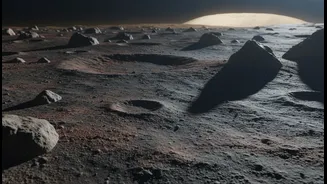
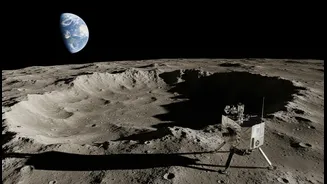
Combining images from the Pragyan rover's navigation camera with high-resolution data from the Chandrayaan-2 orbiter, scientists made another fascinating discovery: the Vikram lander touched down inside a massive, ancient, and buried impact crater. This hidden feature is estimated to be about 160 kilometres in diameter and may even be older than the giant South Pole-Aitken basin. Over billions of years, this crater was filled in and covered by debris, or ejecta, from countless subsequent impacts. Understanding this complex layering of materials helps geologists piece together the violent history of the lunar surface and provides context for the elemental composition being measured by the rover. The landing site itself is a complex tapestry woven from the remnants of multiple ancient cosmic collisions.
Listening to the Lunar Environment
Beyond geology, Chandrayaan-3 provided new insights into the Moon's tenuous environment. The Instrument for Lunar Seismic Activity (ILSA) payload on the lander detected vibrations from the rover's movements and other natural events, becoming the first seismometer to listen to the Moon since the Apollo era. Meanwhile, another instrument measured the near-surface plasma environment, finding the density of charged particles to be sparser than some models predicted. This data is crucial for understanding how the solar wind interacts with the lunar surface and for designing radiation shielding for future robotic and human missions. Each dataset, whether from listening to moonquakes or analyzing the thin lunar 'air', adds a vital piece to the puzzle.