


Why Your Choice of Oil Matters
Every cooking oil has a unique profile of flavour, nutritional benefits, and a specific 'smoke point'—the temperature at which it begins to break down and smoke. Using an oil beyond its smoke point not only creates a bitter taste but can also release
harmful compounds and destroy beneficial nutrients. Indian cooking involves a wide range of techniques, from high-heat deep-frying and tempering (tadka) to gentle sautéing. Understanding which oil to use for which method is key to creating delicious and healthy meals.
The Mediterranean Superstar: Olive Oil
Olive oil, especially extra virgin, is celebrated for its heart-healthy monounsaturated fats and antioxidants. Its fruity, sometimes peppery, flavour is perfect for salad dressings, dips, and finishing dishes where it can be used raw. However, its role in high-heat Indian cooking is more nuanced. Extra virgin olive oil has a relatively low smoke point (around 160°C to 190°C), making it unsuitable for deep-frying samosas or preparing a sizzling tadka. Refined or 'light' olive oil has a higher smoke point (up to 240°C) and a more neutral flavour, making it a more versatile, though more expensive, option for sautéing.
The Versatile Staple: Groundnut Oil
Groundnut oil, or peanut oil, is a long-standing favourite in many Indian households, especially for frying. Refined groundnut oil boasts a high smoke point of around 232°C (450°F), making it an excellent and stable choice for deep-frying everything from pakoras to puris. It is rich in monounsaturated fats, which help in lowering bad cholesterol (LDL), and is a good source of Vitamin E, an antioxidant. Its mild, nutty flavour doesn't overpower the spices in a dish, allowing the core flavours of the food to shine through.
The Flavour Enhancer: Sesame Oil
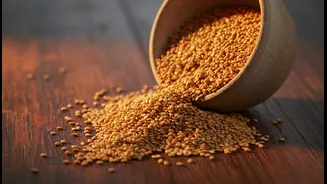
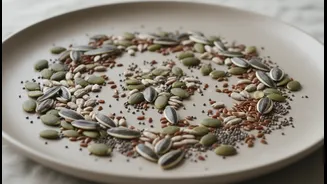
Known as 'til ka tel', sesame oil is cherished for its distinct, nutty aroma and is a cornerstone in many South Indian and Asian cuisines. It comes in two main forms: light (unrefined) and toasted (dark). Toasted sesame oil has a lower smoke point (around 177°C) and is best used as a finishing oil to add flavour to noodles or salads. Refined sesame oil has a higher smoke point of about 232°C, making it suitable for sautéing. Rich in antioxidants like sesamol and sesamin, sesame oil has anti-inflammatory properties and is good for heart health.
The Pungent Powerhouse: Mustard Oil
No discussion of Indian oils is complete without 'sarson ka tel'. A staple in North and East India, mustard oil is known for its sharp, pungent flavour and a very high smoke point of approximately 250°C (482°F). This makes it ideal for traditional high-heat cooking and pickling, where its natural antibacterial properties are a bonus. Mustard oil has a beneficial fatty acid profile, with a good balance of omega-3 and omega-6 fatty acids. Its high concentration of monounsaturated fats makes it a heart-healthy choice, associated with a reduced risk of cardiovascular issues.
Making the Right Choice for Your Dish
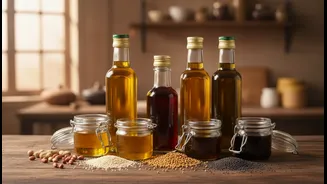
There is no single 'best' oil; the ideal choice depends on the dish. For high-heat frying, turn to the stability of groundnut or mustard oil. For sautéing and general cooking, refined olive oil, sesame oil, or groundnut oil work well. For flavourful dressings and drizzling over finished dishes, extra virgin olive oil and toasted sesame oil are your best friends. The most traditional and perhaps wisest approach is to have a variety of oils in your kitchen. Rotating your oils not only makes your food tastier but also provides a wider range of beneficial fats and nutrients.