





A Sky-High Ambition
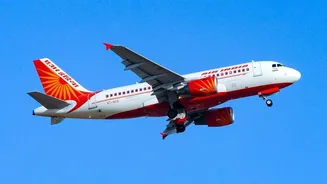
During a visit to Egypt, Union Minister Piyush Goyal stated that India’s total requirement for aircraft exceeds 2,000 planes. He highlighted that while Indian carriers like IndiGo, Air India, and Akasa Air have already placed landmark orders for over
1,200 jets, the country is preparing for another wave of 1,000 orders to meet surging passenger demand. Goyal also noted that the government is pushing global manufacturers like Boeing and Airbus to accelerate their delivery timelines, pointing to a growing gap between demand for air travel and the current availability of aircraft.
The Engine of Unprecedented Growth
India's aviation market is in the midst of a historic boom, making it one of the fastest-growing in the world. Projections from consultancy Oliver Wyman forecast that India's commercial aircraft fleet will grow at an annual rate of 7.1% between 2026 and 2036. This expansion is fueled by a burgeoning middle class with greater disposable income, a renewed focus on tourism, and government policies aimed at enhancing regional connectivity. The UDAN (Ude Desh ka Aam Nagrik) scheme, for instance, has been instrumental in making air travel accessible in Tier-2 and Tier-3 cities by operationalizing hundreds of new routes and connecting dozens of previously underserved airports.
Airlines on a Buying Spree
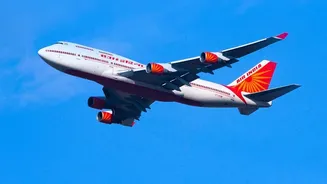
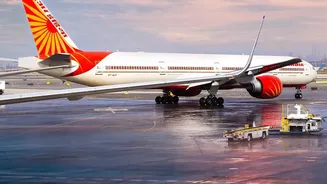
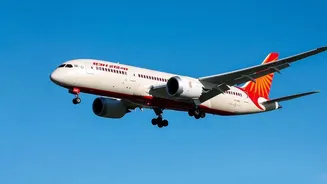
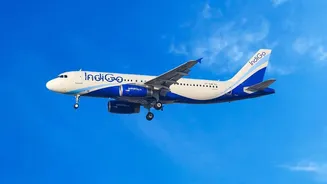
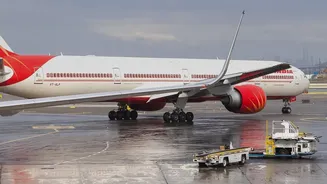
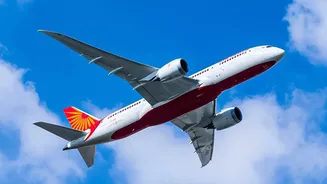
Even before this latest announcement, Indian airlines had already made global headlines with record-breaking purchases. The Air India group has a confirmed order for 600 aircraft from both Airbus and Boeing. Budget carrier IndiGo has a delivery pipeline of over 900 Airbus jets, while newcomer Akasa Air has ordered 226 Boeing 737 MAX planes. These massive backlogs mean that Indian carriers are set to receive, on average, at least one new aircraft every week for the foreseeable future. Goyal's statement suggests this pace is not only set to continue but could even accelerate, cementing India's position as a critical market for the world's top aircraft manufacturers.
Can Infrastructure Keep Pace?
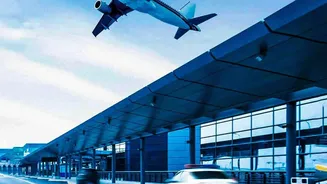
The ambition to more than double the country's fleet raises a critical question: can India’s ground infrastructure handle this influx? Adding over 2,000 new aircraft requires a parallel expansion in airport capacity, maintenance facilities, and skilled personnel. Several major airports are already operating near or above capacity. While the government has ambitious plans, including developing 100 new airports over the next decade under a modified UDAN scheme and investing heavily in expanding existing hubs, the challenge is immense. Furthermore, the industry faces a potential shortage of pilots, especially commanders, and a need for more Maintenance, Repair, and Overhaul (MRO) facilities to service the growing fleet.
The Global Supply Chain Challenge
A significant hurdle for India’s aviation growth is the stressed global supply chain. Aircraft manufacturers are dealing with huge order backlogs from airlines across the world. Shortages of key components and engines have slowed down production and delayed delivery schedules. According to Ministry of Civil Aviation figures, some aircraft ordered by Indian carriers are not scheduled for delivery until as late as 2034. This means that even as India signals its readiness to place more orders, the actual arrival of these planes will be a long-term process, dependent on the manufacturing capacity of a strained global industry.