


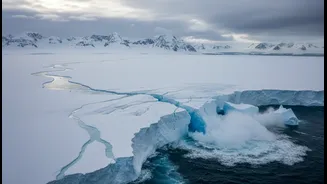


The Great Unravelling
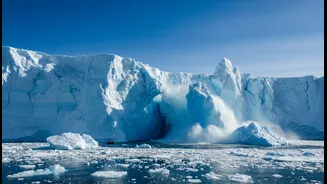
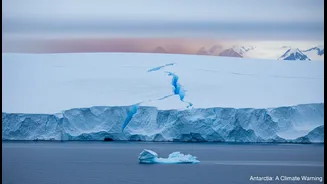
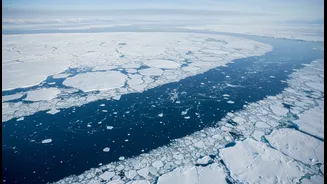
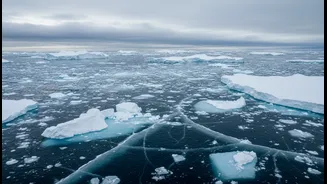
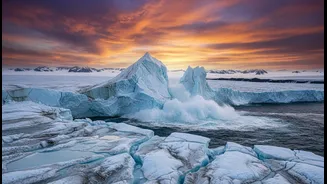
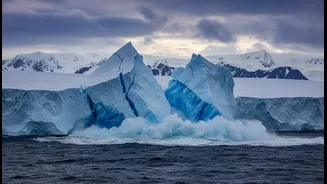
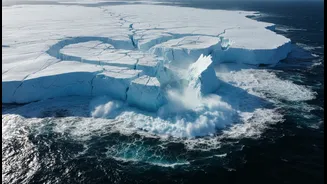
For most of us, Antarctic ice melt brings to mind one thing: rising sea levels. And the threat is very real. The continent is losing ice at an accelerating rate. Recent data shows that the West Antarctic Ice Sheet, in particular, is shedding billions
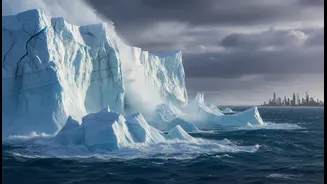
of tonnes of ice annually. Glaciers like the massive Thwaites, ominously nicknamed the 'Doomsday Glacier', are losing their footing as warmer ocean water melts them from below. The complete collapse of Thwaites alone could raise global sea levels by over half a metre, and it acts as a cork holding back even more ice that, if released, could raise sea levels by a catastrophic three metres. For a country like India, with its long, densely populated coastline and major cities like Mumbai and Kolkata, this direct threat of inundation is a sobering reality.
A Planet's Circulation System Under Threat
The consequences, however, extend far beyond the coastlines. The influx of colossal amounts of cold, fresh meltwater into the salty Southern Ocean is disrupting something fundamental: the planet's circulatory system. Think of it as a global ocean conveyor belt, formally known as the Thermohaline Circulation. This system transports heat, carbon, oxygen, and nutrients around the world. Dense, cold, salty water sinks near the poles, driving deep ocean currents. But as Antarctic meltwater dilutes the seawater, it becomes less dense and loses its ability to sink. This is causing a dangerous slowdown in the 'engine' of this global circulation. Scientists now predict that this Antarctic overturning circulation could slow by as much as 40% by the middle of this century.
The Global Weather Whiplash
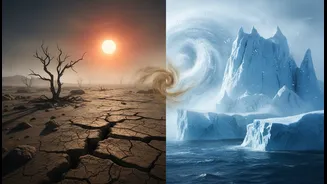
Slowing down this planetary-scale system will inevitably have profound impacts on weather patterns across the globe. The ocean and atmosphere are intimately linked, and the circulation system plays a critical role in distributing heat from the tropics towards the poles. Stalling this process could lead to more extreme and unpredictable weather. While the most dramatic projections include a significant cooling of Europe, the knock-on effects could be felt everywhere. Changes in the Southern Ocean can influence weather patterns as far away as the Pacific, affecting phenomena like El Niño and La Niña, which have a direct and powerful influence on the Indian monsoon. A disruption in these cycles could lead to more erratic rainfall, impacting agriculture and water security for millions.
A Cascade of Consequences
The chain reaction doesn't stop with the weather. A slowdown in ocean overturning would also trap nutrients in the deep ocean, preventing them from reaching the surface where they support marine life. This could devastate marine ecosystems and the fisheries that depend on them. Furthermore, the ocean is one of our planet's most important carbon sinks. The global conveyor belt helps pull carbon dioxide from the atmosphere into the deep ocean. A weaker circulation means the ocean will absorb less CO2, leaving more in the atmosphere to accelerate global warming—creating a dangerous feedback loop. This means the melting in Antarctica not only responds to climate change but also actively amplifies it.