




Decoding the Wrist Roller
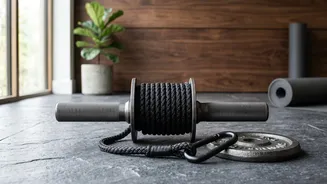
The exercise, sometimes colloquially known as 'African Wrist Rolling', is most commonly referred to as the wrist roller. It's a simple yet brutally effective movement for targeting the muscles in your lower arms. The equipment itself is straightforward:
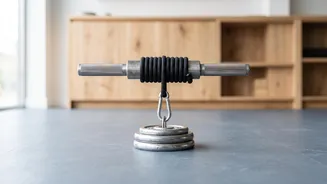
a handle or bar with a rope attached to the middle, and a weight at the end of the rope. By rotating your wrists, you wind the rope around the bar, lifting the weight. The primary muscles worked are the wrist flexors (on the palm side of your forearm) and the wrist extensors (on the top side). This exercise is renowned for creating constant tension, leading to significant muscle growth and endurance. Strong forearms are not just for aesthetics; they are crucial for improving grip strength in other major lifts like deadlifts and pull-ups, and for preventing injuries in sports and daily tasks.
Mastering the Proper Technique
Proper form is non-negotiable to prevent injury and get the most out of the exercise. Start with a very light weight to master the movement before trying to progress. 1. Stance and Grip: Stand with your feet shoulder-width apart. Hold the wrist roller with both hands using an overhand (pronated) grip, with your palms facing down. 2. Arm Position: Extend your arms straight out in front of you, parallel to the floor. Keep a slight bend in your elbows to avoid locking the joint. Your body should remain stationary. 3. The Upward Roll: Slowly begin to rotate your wrists one at a time, winding the rope up. Focus on using only your wrists and forearms; avoid using your shoulders or momentum to help lift the weight. One wrist should flex to pull the rope up, while the other extends to prepare for the next rotation. 4. The Controlled Descent: Once the weight reaches the bar, the repetition is only half done. Slowly and deliberately reverse the motion, unwinding the rope with the same controlled wrist-by-wrist rotation. Do not let the weight just drop; the negative portion of the exercise is just as important for building strength.
Why Pain Happens and How to Fix It
Wrist pain during this exercise is a common complaint, and it's almost always a sign of a technical flaw or overuse. The most frequent culprit is tendinitis, an irritation of the tendons that cross the wrist, often caused by repetitive strain. Common mistakes that lead to pain include: Using Too Much Weight: This is the number one error. Ego lifting forces your wrists into compromised positions and puts excessive strain on tendons and ligaments. Start light and focus on control. Poor Wrist Alignment: Your wrist should stay in a relatively neutral, straight line with your forearm. Excessive bending or arching under load is a recipe for pain. Jerky, Fast Movements: The wrist roller is an exercise of control and time under tension, not speed. Rapid, uncontrolled rolling uses momentum and increases the risk of sprains. Insufficient Warm-Up: Like any other joint, your wrists need to be prepared for exercise. Gentle wrist circles and stretches can increase blood flow and flexibility before you start.
Respecting Your Practical Limits
Understanding the practical limits of range of motion (ROM) and progression is vital for long term joint health. The wrist joint is complex and not designed for extreme movement under heavy load. The goal is to work the muscles through a controlled, pain free range, not to push the joint to its absolute end range. Normal wrist extension (bending backward) is around 70–80 degrees, and flexion (bending forward) is about 80–90 degrees. You do not need to hit these maximums during the exercise. Listen to your body. If you feel a sharp, pinching pain, you are going too far or using too much weight. Reduce the load or the range of motion. Progression should be gradual. Only increase the weight when you can complete all of your sets with perfect, pain free form at a slow, controlled tempo. For frequency, training forearms with this intensity twice a week is typically sufficient for most people. Overtraining these smaller muscles and joints can easily lead to overuse injuries like tendinitis.