







Inception: The Architecture of Reality
Christopher Nolan's heist thriller isn't just about stealing secrets; it's about navigating the treacherous landscapes of the human subconscious. The film presents a world where technology allows 'extractors' to enter and share dreams, creating a multi-layered
reality where the laws of physics are merely suggestions. What makes "Inception" a masterpiece is how it uses this high-concept premise to explore profound questions about memory, guilt, and the nature of reality itself. The idea of planting an idea so deep it becomes indistinguishable from a person's own thought is a terrifying and fascinating concept. The film never gives easy answers, and its famously ambiguous ending isn't a trick; it's the entire point. By leaving the final totem spinning, Nolan forces the audience to confront the central question: if you are happy in your reality, does its authenticity even matter?
Arrival: The Language of Time
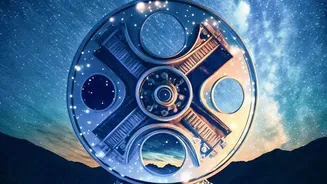
When twelve mysterious alien pods appear across the globe, the world prepares for invasion. But "Arrival" subverts every trope of the genre. Instead of a war, it gives us a conversation. The film centers on linguist Dr. Louise Banks, who is tasked with deciphering the aliens' complex language. What she discovers is a concept at the heart of linguistic theory: the Sapir-Whorf hypothesis, which suggests that the language you speak shapes how you perceive the world. For the aliens, whose language is written in circular symbols with no beginning or end, time is not a linear progression. By learning their language, Louise's perception of time begins to change, allowing her to experience the past, present, and future simultaneously. It's a poignant and deeply emotional journey that uses its sci-fi premise to tell a story about communication, grief, and the choices we make, even when we know the outcome.
Blade Runner 2049: The Soul of a Copy
Denis Villeneuve’s stunning sequel to the 1982 classic expands on its predecessor’s core question: what does it mean to be human? In a bleak future, bioengineered humans known as 'replicants' are part of society, but they are still seen as less than human. The film follows K, a replicant 'blade runner' whose job is to hunt down his own kind. When he uncovers a secret that could shatter the fragile social order, he is forced to confront his own identity and the nature of his existence. The film is a masterful meditation on memory, authenticity, and love. Are our memories what make us who we are, even if they're implanted? Can a soul be born from an artificial beginning? With breathtaking visuals and a story that is both epic and deeply personal, "Blade Runner 2049" is a melancholic poem about finding humanity in a world that has lost its own.
Interstellar: Love as a Physical Force
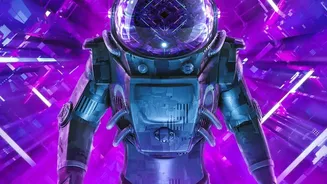
On its surface, "Interstellar" is a grand space epic about a team of astronauts traveling through a wormhole to find a new home for humanity. But at its heart, it's an intimate story about the bond between a father and his daughter. Christopher Nolan grounds the film's fantastical journey in real theoretical physics, from Einstein's theory of relativity to the mind-bending realities of time dilation near a black hole. Yet, the film proposes that the most powerful force in the universe is not gravity, but love. A character in the film, Dr. Brand, speculates that love is the one thing humans can perceive that transcends dimensions of time and space. It's a bold, sentimental idea in a hard sci-fi wrapper, and it’s what gives the film its enduring emotional power. It suggests that the connections we forge are not just feelings, but tangible forces that can echo across the cosmos.