






Beyond Hornbill and Bihu
Ask someone to name a festival from Northeast India, and they might mention Nagaland's Hornbill Festival or Assam's Bihu. These are magnificent, vital celebrations that have, to their credit, gained a degree of national recognition. The Hornbill Festival,
launched in 2000, is a major draw, uniting Nagaland's tribes and attracting tourists from across the globe. Similarly, Bihu is the cultural heartbeat of Assam, celebrated with immense joy. But to let our knowledge stop here is to read only the first page of an epic. These events are the exception, not the rule. The region, home to over 200 distinct communities, hosts a staggering variety of festivals that remain largely unknown to the rest of the country. This lack of visibility isn't just a missed opportunity for tourism; it's a gap in our collective cultural understanding.
A Tapestry of Unseen Colours
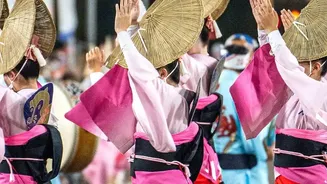
Imagine the scene at the Mopin festival in Arunachal Pradesh, where the Galo tribe celebrates the harvest, their faces daubed with rice flour as a symbol of prosperity. Or the Chapchar Kut in Mizoram, a joyous spring festival filled with bamboo dances (Cheraw) after the arduous task of clearing forests for cultivation is complete. Consider the Torgya monastery festival in Tawang, where monks in elaborate masks perform sacred dances to ward off evil spirits and usher in prosperity. There's also Meghalaya's Nongkrem Dance Festival, a five-day thanksgiving celebration of the Khasi tribe, and the Wangala, the harvest festival of the Garo people. These are not just events; they are living traditions, rich with unique rituals, music, and social significance that tell the story of the people and their relationship with the land. Their exclusion from the mainstream festival narrative impoverishes us all.
The Barriers to the National Stage
So why does this cultural treasure trove remain largely untapped? The challenges are multifaceted. For decades, poor infrastructure, geographical isolation, and security concerns made the region difficult to access. While connectivity has improved dramatically, perception lags reality. Mainstream media coverage is often limited, focusing on a few select events or perpetuating outdated stereotypes. Furthermore, a lack of concerted, nationwide marketing campaigns means these festivals struggle for the same mindshare as their counterparts elsewhere. The region accounts for a tiny fraction of India's total tourist arrivals, a clear sign of its untapped potential. Administrative hurdles like the Inner Line Permit (ILP) system in some states can also act as a deterrent for spontaneous travel planning.
Why Integration Is a National Imperative
Bringing more Northeast energy to India's festival map is about more than just adding new travel destinations. It is an act of national integration. Promoting these festivals creates economic opportunities, supporting local artisans, fostering community-based tourism, and providing sustainable livelihoods. The success of the Hornbill Festival, which generated significant revenue and jobs, is a powerful case study. More importantly, it fosters cultural diplomacy and strengthens our national fabric. When we celebrate the Dree festival of the Apatanis or the Lui-Ngai-Ni of the Naga tribes with the same national enthusiasm as other major festivals, we move beyond token representation. We acknowledge that the cultures of the Northeast are not peripheral but are a core part of India's identity. This active celebration helps break down stereotypes, builds mutual respect, and truly embodies the spirit of 'unity in diversity' that the nation prides itself on.