

The Simple Science of Green
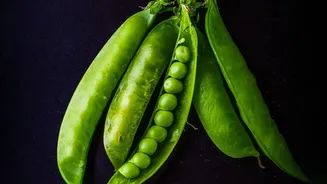
The brilliant colour of green vegetables comes from a pigment called chlorophyll. Unfortunately, chlorophyll is sensitive and begins to break down when exposed to heat and acids, which are naturally present in vegetables themselves. When you cook peas,
their cell walls soften, releasing these acids. The longer they cook, the more the magnesium at the core of the chlorophyll molecule gets replaced by hydrogen, changing the colour from bright green to a dull, greyish-green. The secret to keeping peas vibrant is to minimise cooking time and control this reaction.
Master the Blanch and Shock
The single most effective technique for locking in colour is called blanching and shocking. This two-step process is a restaurant kitchen staple for a reason. First, you plunge the peas into a large pot of rapidly boiling, salted water for a very short time—just 90 seconds to 2 minutes is usually enough. This brief cooking deactivates enzymes that cause discolouration and flavour loss. The 'shock' is the crucial next step: immediately transfer the peas from the boiling water into a bowl of ice water. This halts the cooking process instantly, setting the cell walls while they are firm and locking in that perfect, bright green colour.
Tips for Maximum Vibrancy
Beyond blanching, a few other habits can help. First, don't cover your pot when boiling green vegetables. Covering traps steam, which concentrates the vegetables' natural acids and accelerates colour loss. Also, adding acidic ingredients like lemon juice or vinegar should always be done at the very end of cooking, or just before serving. While some suggest adding a pinch of baking soda to make the water more alkaline and preserve the green, this can negatively affect the texture, making the peas undesirably soft. The most reliable method remains a short cooking time in plenty of boiling water.
Recipe: Luminous Green Pea and Mint Soup
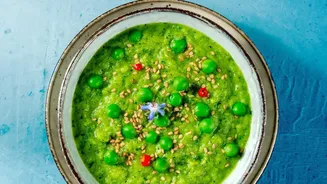
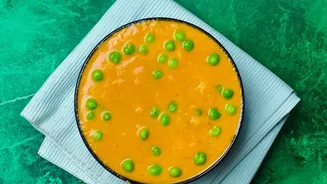
This soup is a perfect way to showcase your new technique. Start by gently sweating a chopped onion in a little oil or butter until soft. Add vegetable stock and bring it to a simmer. Add a generous amount of frozen peas and cook for just 3-5 minutes, until they are tender but still intensely green. Remove the pot from the heat and stir in a handful of fresh mint leaves. Use an immersion blender or carefully transfer to a regular blender and purée until silky smooth. For an extra-vibrant colour, you can add a few fresh spinach leaves during blending. Season with salt, pepper, and a final squeeze of lemon juice just before serving.
Recipe: Bright Green Pea Purée
A vibrant green purée is a versatile side for fish, chicken, or roasted meats. For the best result, start by blanching and shocking your peas as described above. Gently soften some chopped shallots in butter without letting them brown. Add the blanched peas to the pan just to warm them through. Transfer the peas and shallots to a blender. Add a knob of butter, a splash of cream or vegetable stock, and blend until completely smooth. Add the liquid sparingly, just enough to get the blender moving, to maintain a thick consistency. Season well with salt and pepper. For a truly professional, silky-smooth finish, you can press the purée through a fine-mesh sieve.