


In cricket, a captain's decision can be the thin line between eternal glory and lasting infamy. While great calls are celebrated, some blunders are so monumental that fans carry the sting for decades, replaying them in their minds forever.
Mike Gatting's Moment of Madness
The stage was
the 1987 World Cup final at a packed Eden Gardens. England, led by Mike Gatting, was in a commanding position chasing Australia’s total of 253. At 135 for 2, with Gatting himself batting beautifully on 41, victory seemed well within grasp. Australian captain Allan Border, in a move of desperation, brought himself on to bowl his part-time spin. What happened next is etched in cricketing folklore as a 'brain-fade' of epic proportions. To Border's very first delivery, Gatting attempted a reverse sweep—a shot that was highly unorthodox and risky at the time. He failed to connect properly, the ball deflecting off his bat and shoulder before lobbing up for an easy catch behind the stumps. The dismissal triggered a collapse, and England fell short by just seven runs. For a captain in control to play such an unnecessary, high-risk shot in a World Cup final remains one of the game's most unforgivable moments of judgement.
Misbah's Ill-Fated Scoop
The inaugural 2007 T20 World Cup final delivered a classic India-Pakistan thriller. Chasing 158, Pakistan needed just 13 runs from the final over with one wicket left. The man on strike was their captain, Misbah-ul-Haq, who had single-handedly dragged his team to the brink of victory. After a wide and a towering six, the equation came down to six runs needed from four balls. MS Dhoni surprisingly handed the ball to the inexperienced Joginder Sharma. Facing a slower ball, Misbah attempted a scoop shot over fine leg, a stroke he had used successfully throughout the tournament. But this time, he mistimed it. The ball went straight up and landed safely in the hands of S Sreesanth at short fine-leg, handing India the World Cup. Misbah himself later admitted he 'got overconfident'. For Pakistani fans, it was a heartbreaking end, a trophy lost by a shot that was both audacious and, ultimately, disastrous.
The Chappell Blunder Backed by Ganguly
Sometimes a captain's biggest mistake isn't on the field, but off it. In 2005, Indian captain Sourav Ganguly was instrumental in appointing Greg Chappell as the team's head coach. Ganguly had been impressed with Chappell's inputs on his batting during a tour of Australia. However, the decision backfired spectacularly. The Ganguly-Chappell partnership, which was meant to take Indian cricket forward, devolved into one of the most toxic periods in its history. Chappell's methods created divisions within the team, and his relationship with the captain soured completely. It culminated in Ganguly being unceremoniously dropped from the team and losing his captaincy. Ganguly has since publicly called the decision to recommend Chappell the 'biggest mistake' of his career. For fans who watched their beloved captain and team get torn apart by internal politics, it was a self-inflicted wound that took years to heal.
The Forfeit That Wasn't Sporting
In January 2000, a Test match between South Africa and England at Centurion was ruined by rain, with a draw being the only likely outcome. On the final day, South African captain Hansie Cronje made what appeared to be a bold and sporting declaration, forfeiting an innings to set up a chase for England. England accepted and went on to win a thrilling match. Cronje was praised for his creative captaincy that saved a dead Test. The truth, however, was far darker. A few months later, the cricketing world was rocked by the match-fixing scandal. It was revealed that Cronje had accepted money and a gift from a bookmaker to ensure there was a result in the match, not a draw. The 'inventive' captaincy was, in fact, an act of corruption. This revelation destroyed Cronje's reputation and exposed a deep-rooted problem in the sport, leading to his lifetime ban. Fans felt utterly betrayed; a moment celebrated for its sportsmanship was actually a calculated fix.
Dhoni's Inaction in a T20 Final
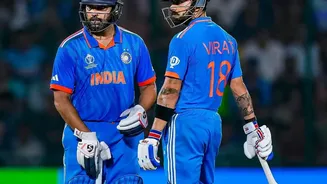
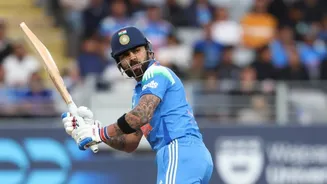
In the 2014 T20 World Cup final, India was up against Sri Lanka. Virat Kohli was in supreme form, hitting 77 off 58 balls and setting India up for a strong finish. But at the other end, Yuvraj Singh struggled immensely, scoring a painful 11 runs off 21 balls, killing the innings' momentum. As Yuvraj failed to rotate the strike or find the boundary, the well-set Kohli was left stranded at the nonstrikers end. Fans were screaming for captain MS Dhoni to intervene, either by retiring Yuvraj out or promoting himself up the order. Dhoni, renowned as one of the game's greatest finishers, stayed in the dugout. When he finally came to the crease, he faced only seven balls. India limped to a total of 130 than Sri Lanka chased down comfortably. While Yuvraj faced most of any blame many fans couldn t forgive Dhoni s passive captaincy in a crucial moment believing his inaction cost India the World Cup.