
A Growing List of Cosmic Nomads
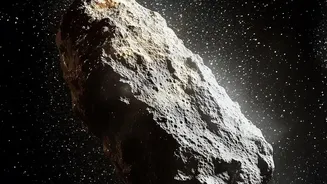
For a long time, the idea of an object from another star system visiting our own was purely theoretical. That all changed in 2017 with the discovery of 1I/'Oumuamua, a bizarre, elongated object that tumbled through our solar system before heading back
into deep space. Then in 2019, amateur astronomer Gennadiy Borisov spotted 2I/Borisov, a body that looked much more like a conventional comet. These first two discoveries proved that interstellar objects are not just possible, but that they are actively passing through. The discovery of a third, 3I/ATLAS, in 2025 by the Asteroid Terrestrial-impact Last Alert System confirmed that a new era of astronomy has begun. With new observatories like the Vera C. Rubin Observatory now scanning the skies, scientists expect to find dozens more of these celestial tourists in the coming years.
A Chemical Fingerprint from Afar
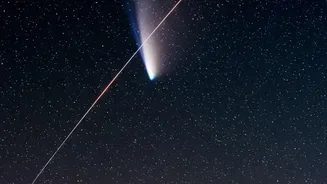
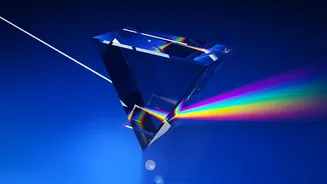
The most powerful tool astronomers have for studying these fleeting visitors is spectroscopy, which analyzes the light coming from an object to determine its chemical makeup. When an interstellar comet like 3I/ATLAS gets closer to our Sun, its ices heat up and turn into gas, forming a glowing cloud called a coma. By studying the light from this coma, scientists can read its chemical fingerprint. This is exactly what they did with 2I/Borisov, and the results were stunning. It contained a much higher concentration of carbon monoxide than any comet from our own solar system. This suggested it formed in an extremely cold region around its parent star, possibly a red dwarf, offering the first real chemical clues about the building blocks of a completely different planetary system.
Building Blocks of Other Worlds
Each interstellar object is a physical sample from another stellar nursery. They are essentially planetary shrapnel, pieces of rock and ice ejected from their home systems billions of years ago. By studying their composition, scientists can learn about the raw materials that form planets around other stars. For example, the high levels of carbon monoxide in 2I/Borisov hinted at a planetary system that may have formed very differently from our own. Observations of 3I/ATLAS have revealed other unique chemical signatures, including methane and abundant carbon dioxide, further expanding our understanding of cosmic diversity. Each new object adds a data point, helping scientists determine whether our solar system's chemistry is common or an exception in the vast expanse of the galaxy. Some astronomers even believe these objects could be the oldest comets ever seen, potentially predating our own solar system.
The Challenge of a Fleeting Target
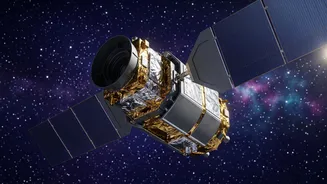
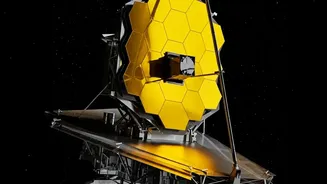
Studying these objects is a race against time. Interstellar visitors travel at incredible speeds, often moving too fast to be captured by the Sun's gravity. They swing through our solar system for a few months and then disappear back into interstellar space, likely forever. When 'Oumuamua was discovered, it was already on its way out, giving scientists little time to observe it in detail. The discovery of 2I/Borisov and 3I/ATLAS happened earlier in their approach, allowing for a worldwide campaign of observation from telescopes on the ground and in space, including the Hubble and James Webb Space Telescopes. This rapid response is critical. The more data astronomers can gather—from an object's size and shape to the gases it emits—the more complete a picture they can build of its mysterious origins before it vanishes from view.