



Seeing the Light: Visible Astronomy
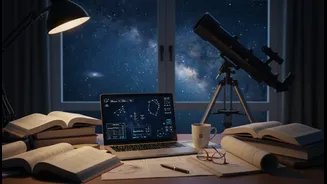
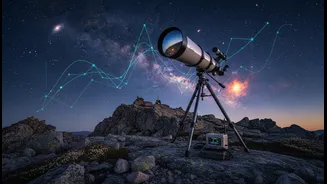
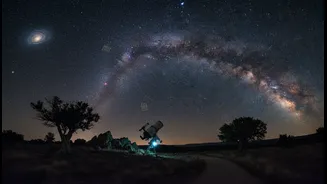
Visible-light astronomy is what most of us think of when we imagine stargazing. It’s the study of celestial objects using the light our eyes can see. When you use a backyard telescope or look at a stunning image from the Hubble Space Telescope, you are
engaging with visible light that has travelled, sometimes for billions of years, across space. This type of astronomy is excellent for observing objects that are hot enough to glow brightly, like stars, nebulae, and the swirling arms of distant galaxies. It reveals the universe in a way that feels familiar, capturing the colours and shapes that we can conceptually understand. However, the visible spectrum is just a tiny fraction of the total information the universe is sending our way. Much of the cosmos is shrouded in mystery, hidden behind cosmic dust or emitting energy at wavelengths our eyes simply cannot detect.
Tuning In: The Invisible Radio Universe
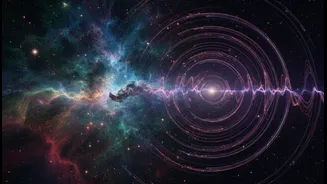
This is where radio astronomy comes in. Instead of looking for visible light, radio telescopes capture radio waves—a form of light with very long wavelengths, completely invisible to us. Think of it like tuning a radio: astronomers can point massive antennas, which often look like giant dishes, at the sky to 'listen' to specific frequencies coming from space. These are not sound waves, but rather light waves that are collected, focused, and amplified. The weak signals are then processed by powerful computers, which convert the data into images. These images allow us to 'see' what's happening in parts of the universe that are otherwise dark and mysterious. Radio waves can pass straight through the cosmic dust clouds that block visible light, giving us a clear view of phenomena that would otherwise be hidden.
Two Windows, One Universe
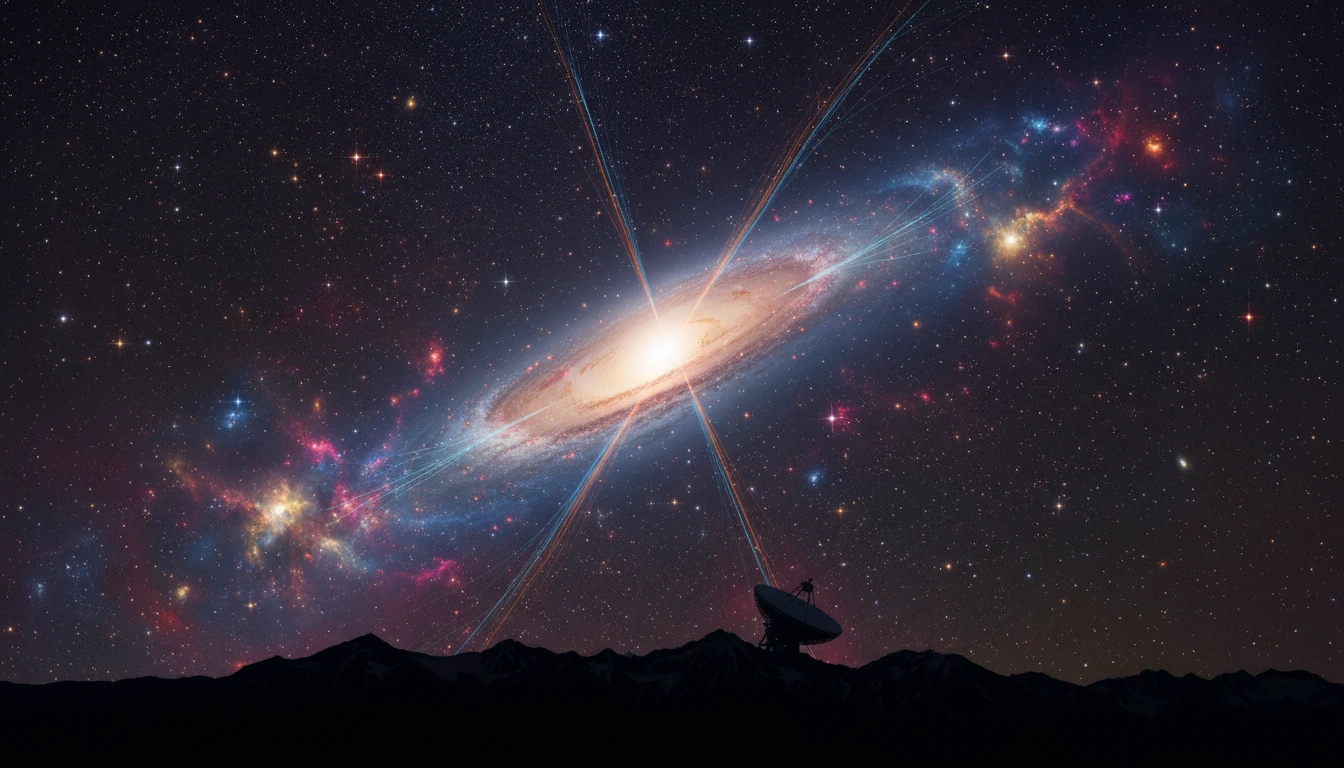
So, what’s the real difference in what they show us? Visible-light telescopes excel at capturing the brilliant, high-energy light from stars and hot gas. Radio telescopes, on the other hand, are masters at detecting colder, less energetic processes. They can map the distribution of cool hydrogen gas, the most abundant element in the universe, which allows astronomers to trace the structure of entire galaxies. Radio astronomy also reveals some of the most extreme events in the cosmos. It allows us to study pulsars (the rapidly spinning cores of dead stars) and the powerful jets of energy blasted out by supermassive black holes at the centres of galaxies—phenomena that are often faint or completely invisible in optical light. By combining both visible and radio images, astronomers can build a much more complete picture of an object, layering the different types of information to understand its full story.
Citizen Science from the Himalayas
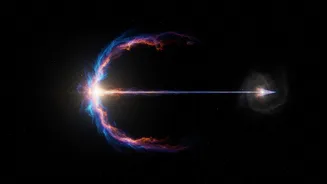
You might think this kind of astronomy is reserved for scientists with access to giant observatories. But that’s no longer the case, thanks to citizen science initiatives. The headline mentions Sikkim, and for good reason. Recently, a citizen scientist from a remote village in Sikkim, Pranim Limbo, made a remarkable discovery. While participating in an Indian citizen science network called RAD@home, Limbo identified a uniquely shaped 'Bow-and-Arrow' radio galaxy. This structure, believed to be the result of a galaxy crashing into a dense cluster of other galaxies at supersonic speed, was missed by automated computer systems but caught by the human eye. This highlights the vital role that everyday people can play in making real scientific discoveries.
How You Can Get Involved
Pranim Limbo’s discovery was made through the RAD@home Astronomy Collaboratory, India's first citizen science research platform dedicated to astronomy. Established in 2013, RAD@home trains students, teachers, and any interested citizen to analyse astronomical data from world-class radio telescopes like India’s own Giant Metrewave Radio Telescope (GMRT). The platform runs online workshops and discovery camps, teaching participants how to create and interpret multi-wavelength images of galaxies. No prior experience is needed, just enthusiasm. Their goal is to empower anyone to contribute to research on topics like black hole and galaxy co-evolution by sifting through vast amounts of data—a task where human pattern-recognition skills are still invaluable. Participants learn to spot unusual features that algorithms might miss, contributing directly to the forefront of astronomical research from their own laptops.