



The Annual Pothole Pandemic
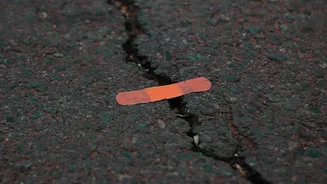
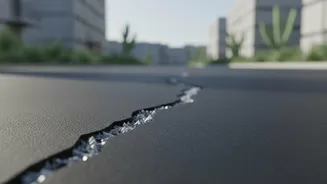
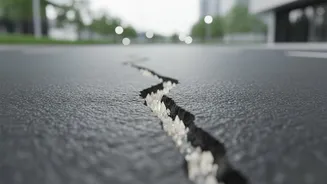
For commuters across India, navigating roads after a downpour feels like an obstacle course. Potholes, the jarring craters that appear with relentless frequency, are more than just an annoyance. They cause vehicle damage, lead to traffic snarls, and are a significant
factor in road accidents, especially for two-wheelers. The cycle is frustratingly predictable: civic authorities scramble to patch the roads using traditional bitumen and gravel mixes, only for the next heavy spell of rain to wash away their efforts. This constant loop of damage and temporary repair costs the country crores of rupees annually and creates a perpetual state of infrastructure distress. The problem is that conventional repair methods are often a losing battle against the elements, especially water, which weakens the road's foundation and expands existing cracks.
A Living Solution to a Concrete Problem
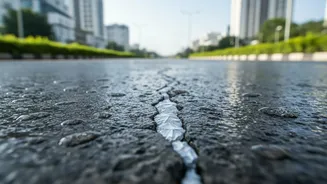
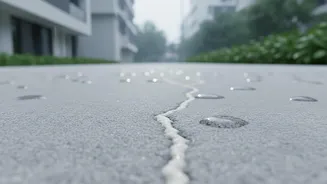
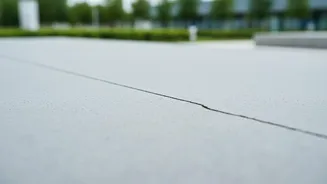
Imagine a road that, when it cracks, simply repairs itself from the inside out. This isn't science fiction; it's the premise behind 'self-healing concrete', also known as bacterial concrete. This innovative material embeds a biological agent directly into the cement mix to give it a regenerative ability. The concept, pioneered by researchers in the Netherlands, flips the script on maintenance. Instead of waiting for a crack to become a dangerous pothole requiring external intervention, the material is designed to stop the damage at its source. For a country like India, with its vast road network and extreme weather cycles, such a technology could be a game-changer, promising not just smoother journeys but also more durable and sustainable infrastructure.
How Bacteria Can Build Roads
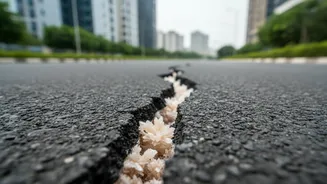
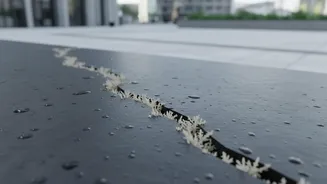
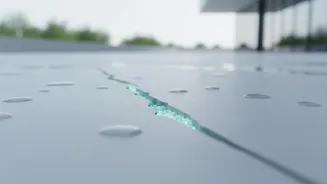
The secret ingredient is a specific group of bacteria, typically from the robust Bacillus genus, which are chosen for their ability to survive in the highly alkaline environment of concrete. These microbes are mixed into the concrete in a dormant, spore-like state, along with tiny capsules of their food source, usually calcium lactate. As long as the concrete is solid and intact, the bacteria do nothing. The magic happens when a crack forms. Water, the very culprit behind traditional potholes, seeps into the fissure and acts as an activator. It awakens the dormant bacteria, which then begin to feed on the lactate. Through their metabolic process, they produce calcium carbonate—a substance chemically identical to limestone. This limestone deposit gradually fills the crack, sealing it and preventing water from penetrating further and damaging the steel reinforcements within. Once the crack is healed and the moisture is gone, the bacteria simply become dormant again, ready for the next time they are needed.
From Global Labs to Indian Highways
While the technology has been in development globally for over a decade, it is now gaining serious attention in India. The National Highways Authority of India (NHAI) is exploring the use of various self-healing materials to create more resilient highways. Research institutions like the CSIR-Central Building Research Institute are actively working on developing bio-concrete solutions suited for local conditions. Some research is focused on identifying indigenous bacterial strains that perform optimally in the high heat and humidity typical of the Indian subcontinent. There is also talk of pilot projects incorporating this technology in new infrastructure under the Smart Cities Mission in places like Pune and Surat. The goal is to create an economical and scalable approach that can be widely adopted for road and infrastructure construction across the nation.
The Road Ahead: Challenges and Potential
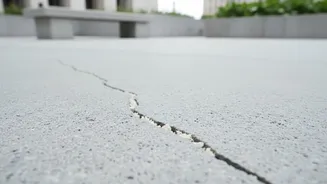
Despite its immense promise, bacterial concrete is not a magic wand just yet. The technology is currently most effective on micro-cracks, typically less than a millimetre wide. By sealing these small fissures early, it prevents them from growing into major problems. The other significant hurdle is cost. Adding bacterial agents and their encapsulated nutrients makes this concrete more expensive than traditional mixes. However, proponents argue that the higher initial investment is offset by a dramatic reduction in long-term maintenance and repair costs, leading to a lower overall lifecycle cost for the structure. Furthermore, by extending the life of our roads and reducing the need to produce new cement—a major source of carbon emissions—this technology offers a greener path forward for urban development.