







Why Soggy Roots Are the Enemy
The biggest threat to a potted strawberry plant is often too much love in the form of overwatering. Unlike plants in the ground, a container creates a closed system. When you water too much, the soil becomes waterlogged, pushing out the oxygen that roots
need to breathe. This suffocating environment is the perfect breeding ground for fungal diseases that cause root rot. Once root rot sets in, the plant's ability to absorb nutrients and water is compromised, leading to wilting, yellowing leaves, and eventual collapse—even though the soil is wet. The goal is to keep the soil consistently moist, but never soggy.
Start with the Right Foundation
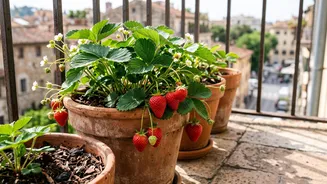
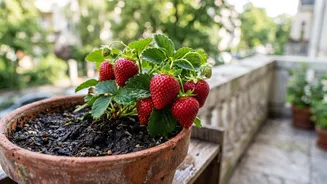
Proper watering begins before you even add water; it starts with your pot and soil. Choose a container that is at least 10-12 inches wide and 8 inches deep to give the shallow root system space. The most critical feature is drainage. Ensure your pot has several drainage holes at the bottom so excess water can escape freely. Avoid using heavy garden soil, which compacts easily in pots. Instead, use a light, well-draining potting mix. A great blend for Indian balconies is an equal-parts mix of good soil, cocopeat (for moisture retention), and vermicompost (for nutrients). Adding some perlite or sand can further improve drainage.
The Golden Rule of Watering
Forget a strict schedule. The best way to know if your strawberry plant needs water is to perform the 'finger test'. Push your index finger about an inch into the soil. If it feels dry, it's time to water. If it's still moist, wait another day. Potted strawberries dry out faster than those in the ground, so you may need to check daily, especially during hot or windy weather. When you do water, do it in the morning to allow leaves to dry during the day, which helps prevent fungal issues. Water the soil at the base of the plant thoroughly until you see it run out of the drainage holes. This ensures the entire root zone is hydrated. Then, allow the pot to drain completely and don't let it sit in a saucer full of water.
Reading the Signs of Distress
Your plant will tell you if your watering is off. It's important to distinguish between overwatering and underwatering, as they can sometimes look similar. Underwatered plants will have dry, brittle, and wilting leaves, and the soil will be visibly dry and pull away from the pot's edge. Overwatered plants might also wilt, but their leaves will often be limp and yellow, not crispy. The most definitive sign of overwatering is soil that remains soggy long after you've watered. If you suspect root rot, you might notice a foul smell coming from the soil. Adjust your watering frequency based on these visual cues.
Adjusting for Indian Weather
India's diverse climate requires a flexible watering approach. During the hot, dry spells of summer, especially in the northern plains, your pots can dry out very quickly. You might need to water daily. Placing a layer of mulch, like straw or coco chips, on top of the soil can help retain moisture, keep roots cool, and keep the berries clean. Conversely, during the monsoon season, you must protect your plants from becoming waterlogged by constant rain. Ensure pots have excellent drainage and consider moving them to a sheltered spot where they still get sun but are shielded from the heaviest downpours. In milder climates like Bangalore's, a more consistent, less extreme watering schedule will suffice.