






A Reality Check from the Front Lines
During a recent earnings call, major consumer tech companies provided a dose of reality on the adoption of third-party AI agents. Airbnb CEO Brian Chesky noted that of the nearly half a million bookings the platform sees daily, a 'very non-material' number
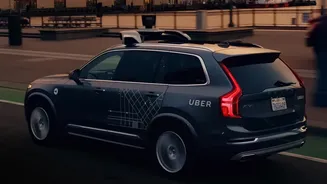
come from AI agents like Meta's Muse or the much-discussed Instinct AI. Similarly, Uber reported that during its busy Halloween week, only four rides and 500 Uber Eats orders were made by AI agents out of a total of 320 million transactions. DoorDash CEO Tony Xu also stated that agents have generated only a few hundred orders since they've been active. This data suggests that despite the significant buzz in Silicon Valley, consumers are not yet rushing to outsource their booking and ordering tasks to automated assistants.
What Exactly Is an AI Agent?
Think of an AI agent as a step beyond a simple chatbot. While a chatbot can answer questions, an AI agent is designed to take action on your behalf. Instead of you opening an app, searching for a restaurant, building a cart, and checking out, you could simply give a command like 'Order my usual Friday night pizza'. The agent would then interact with the service's systems to place the order, handle payment, and complete the task without you needing to navigate the app's interface. The ultimate promise is a more natural, conversational way to interact with digital services, moving away from tapping and swiping through menus. This is the future companies like Meta, OpenAI, and a wave of startups are investing in heavily.
The AI Arms Race: DoorDash and Uber Push Forward
While current usage is low, the companies at the heart of the on-demand economy are not standing still. In late 2026, DoorDash launched a pilot program allowing users to order food simply by texting an AI agent within Apple Messages. This system accesses the user's account history to understand requests like 'my usual' and can even handle group orders with mixed dietary needs. Uber has also integrated AI-powered voice commands into its app, allowing for hands-free booking, which is useful for multitasking or for users who prefer voice assistants. Both companies see AI not as a replacement for their apps, but as a powerful new channel to attract demand and make their services more accessible and frictionless.
Airbnb's Calculated AI Strategy
Airbnb's low numbers don't signal a lack of interest in AI. In fact, the company is aggressively pursuing its own AI-native path. CEO Brian Chesky argues that general-purpose agents are great for simple, transactional tasks but fall short for something as personal and aspirational as travel. He notes that most travelers enjoy the process of researching and planning a trip. Because of this, Airbnb is developing its own specialized AI travel agent, with a rollout planned for the first half of 2027. This tool won't be a simple chatbot; instead, it will build a rich, visual interface around a user's query, composing maps, photos, and comparisons in real-time. The goal is to enhance the discovery process, not automate it away, and to manage the entire trip, from booking to post-stay support—something an outside agent can't easily do.
From Hype to Reality: The Road Ahead
The reports from Airbnb, Uber, and DoorDash highlight the gap between technological capability and mainstream consumer adoption. Uber's CEO noted that it takes a median of just 50 seconds to book a ride in the app, questioning the time-saving value of an agent for such a quick task. Yet, the industry is clearly betting on a future where AI agents play a central role. The investments are not just in consumer-facing features; Airbnb, for example, already uses AI to resolve around 40% of its customer support issues and to help engineers write code more efficiently. The current low booking numbers from third-party agents seem to reflect that it's still very early days. The infrastructure is being built and the competition for who becomes the consumer's preferred assistant is just beginning, but a world where we tell our devices what we want, rather than tapping our way to it, is clearly the destination.