



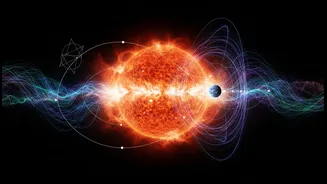


What is Space Weather?
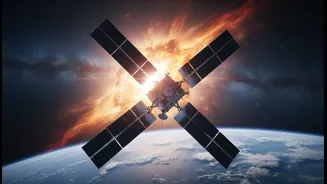
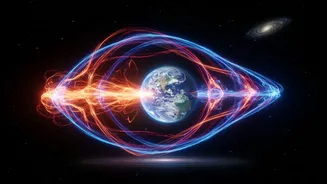
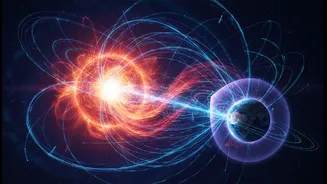
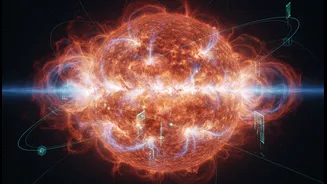
Just like weather on Earth, space has its own dynamic conditions, driven by the Sun. Instead of wind and rain, space weather involves phenomena like solar flares (intense bursts of radiation) and coronal mass ejections (CMEs), which are giant clouds of solar plasma
and magnetic fields hurled into space. When these events are directed at Earth, they can have serious consequences. While they produce beautiful auroras, they also pose a significant threat to our modern, technology-dependent civilisation. These solar outbursts can disrupt radio communications, damage the electronics on satellites, affect GPS accuracy, and even induce currents in power grids on the ground, potentially causing widespread blackouts.
Aditya-L1: India’s Early Warning System
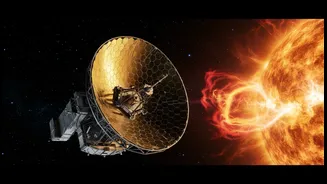
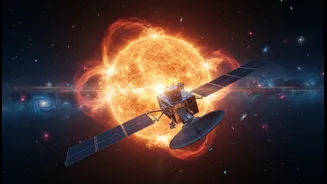
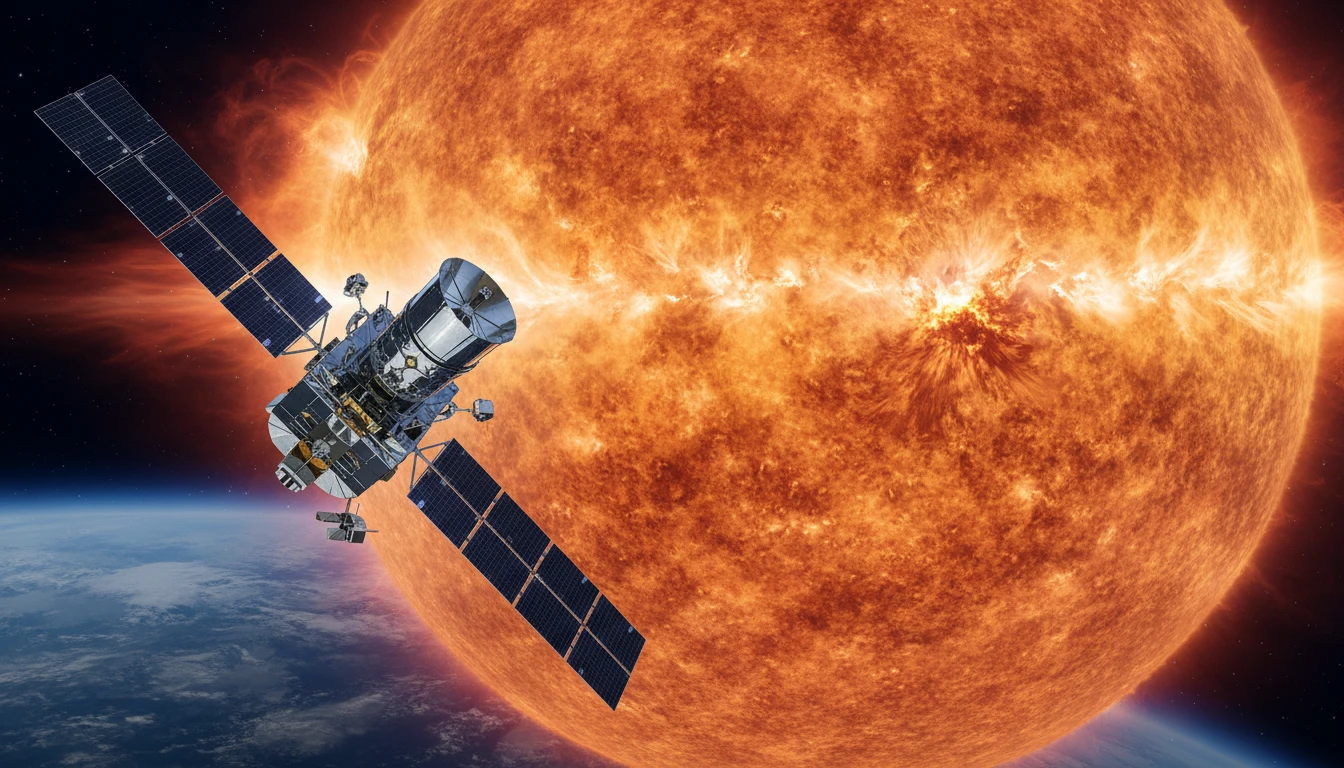
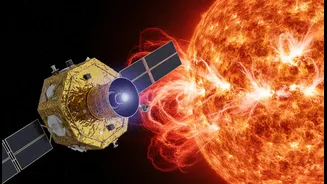
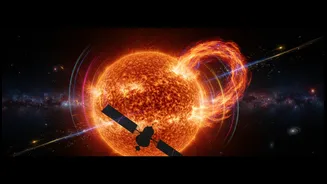
This is where the Aditya-L1 mission becomes crucial. Positioned at the first Lagrange point (L1), it has an uninterrupted view of the Sun. Its primary job is to act as an early warning system, observing the Sun's activity and giving us precious time to prepare for incoming solar storms. The mission's suite of instruments studies the Sun's atmosphere, tracks the origin of solar storms, and measures the solar wind. This data is fundamental not just for pure science, like understanding why the Sun's corona is hotter than its surface, but for practical, society-saving applications. By detecting a CME, Aditya-L1 can provide a forecast that allows satellite operators and power grid managers to take protective measures.
A New Frontier for Careers
As India's reliance on satellites for communication, navigation, and defence grows, so does our vulnerability to space weather. This vulnerability creates a demand for a new kind of professional: the space weather forecaster. These are not traditional meteorologists; they are specialists who can interpret solar data, model the path of a solar storm, and predict its impact on Earth-based and space-based systems. The field is interdisciplinary, creating roles for physicists, data scientists, software engineers, and communication specialists. These experts will be needed in government agencies like ISRO, in private satellite companies, in the aviation industry, and in the power sector—all of which are susceptible to solar disruptions.
The People Who Connect the Systems
The job of a space weather professional is to bridge the gap between the data from Aditya-L1 and the practical needs of infrastructure on and around Earth. It involves several key roles. Space weather analysts interpret the raw data from satellites. Computational scientists develop and run complex models to forecast a storm's arrival and intensity. Instrument scientists design and maintain the tools that collect the data, both in space and on the ground. Finally, communication specialists translate these highly technical forecasts into actionable advice for governments and private companies, ensuring that warnings lead to effective protective actions.
Skills for the Future
Building a career in this emerging field requires a strong foundation in science and technology. A bachelor's degree in physics, atmospheric science, astronomy, or engineering is a typical starting point. However, advanced degrees like a Master's or PhD are often required for research and high-level forecasting roles. Crucially, expertise in data analysis and programming, using languages like Python or MATLAB, is becoming essential to handle the vast amounts of data generated by missions like Aditya-L1. Institutions like the Indian Institute of Space Science and Technology (IIST), set up by ISRO, are at the forefront of training the next generation of space scientists who will fill these vital roles.