


First, Set Some Ground Rules
Before a single mug is moved, the most important step is to talk. The headline says “agree,” and that’s the key. This isn't about one person winning the decor debate; it's about creating a space that feels good for everyone. Start by discussing the goal.
Is it purely for looks, or do the shelves need to be highly functional? A good rule is that items used daily are strong candidates for open shelving because they're washed too frequently to gather dust. For larger or more expensive items, agree that both partners need to approve. For the small stuff, try to find a shared style. Maybe one of you loves minimalism and the other loves colorful clutter. The compromise might be a neutral colour palette with a few curated, colourful accent pieces.
The 'Yes' List: Display These with Confidence
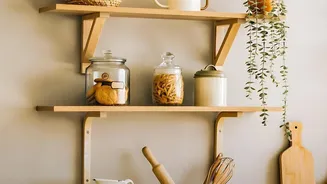
Certain items are practically made for open shelves. They are the all-stars that look good in almost any kitchen. Start with your daily essentials, like a cohesive set of plates and bowls. Stacking them creates a sense of order and sculptural beauty. Your favourite mugs and everyday drinking glasses also work well, especially when grouped together. Don’t forget the power of texture and warmth. Wooden cutting boards, especially when layered, add a natural, rustic element. A few cherished cookbooks, a beautiful ceramic pitcher, or a high-quality bottle of olive oil can serve as both functional items and decorative anchors.
The 'Maybe' List: Use With Care
This category is for items that have potential but can quickly look cluttered if not handled thoughtfully. Plants are a fantastic way to add life and a pop of green, but choose ones that are easy to care for in your kitchen's light conditions. Baskets can be a lifesaver for hiding small, unattractive necessities, but make sure they match your overall aesthetic. Art is another great addition, but it needs to be the right scale for the shelf and able to withstand a kitchen environment. Jars of bulk ingredients like pasta, flour, and rice can look stunning, but only if you commit to using uniform, attractive containers and keeping them topped up and tidy. A half-empty jar of lentils next to a nearly-gone bag of flour is more chaotic than chic.
The 'Hard No' List: Keep These Concealed
The secret to beautiful open shelving isn't just what you display, it’s what you hide. The primary purpose of cabinets is to conceal the less glamorous side of kitchen life. Keep mismatched, promotional, or novelty mugs behind a solid door. The same goes for most small appliances, like a blender or toaster, unless you have a truly design-forward model. Plastic food containers, bags of snacks, half-used spice packets, and jumbles of kids' cups and plates are best stored out of sight. The goal is to reduce visual clutter. If an item doesn't serve a functional purpose on the shelf or actively contribute to the beauty of the display, it likely belongs in a cabinet or drawer.
The Art of the Arrangement
Once you've agreed on the items, the final step is arranging them. Think like a designer. Start with larger, foundational objects like stacked plates or a serving bowl, then layer in smaller items. Play with height and scale; a tall stack of plates next to a short stack of bowls creates visual interest. Group similar items together—all the glasses here, all the bowls there. Stick to a limited colour palette to ensure the overall look is cohesive and calm. Finally, and most importantly, leave some empty space. Breathing room for the eye is crucial; it prevents the shelves from looking crowded and allows each chosen item to stand out.