



More Than Just a Mascot
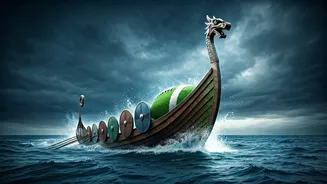
From the thunderous 'Viking clap' popularised by Icelandic fans to the Danish national team’s affectionate nickname, the 'Danish Dynamite' (often linked to a warrior spirit), the Viking archetype is everywhere in Nordic football. It’s more than just a convenient
marketing tool or a cartoonish mascot. This symbolism taps into a deep well of national identity, representing a potent mix of strength, resilience, and collective spirit against bigger, more fancied opponents. For teams from Denmark, Sweden, Norway, and Iceland, adopting the Viking persona is a declaration of intent: we may be smaller nations, but we possess a fighting spirit that can conquer giants. It's a psychological tool for players and a rallying cry for the fans who see themselves as a loyal shield wall, defending their team’s honour.
Forging a Modern Myth
Interestingly, the 'Viking' embraced by football culture isn't a direct representation of the historical figures from 800-1050 AD. Instead, it’s a product of 19th-century romantic nationalism. During this period, as Scandinavian nations sought to build distinct modern identities, they looked to the past for heroic symbols. The historical Viking—a complex figure who was as much a trader and explorer as a raider—was simplified and romanticised into the ultimate symbol of national strength, courage, and adventurous spirit. This idealised warrior, free from the complexities of history, was the perfect figurehead for a burgeoning national consciousness. It’s this romantic, heroic version, not the gritty historical reality, that provides the blueprint for the modern footballing Viking.
The Warrior on the Pitch
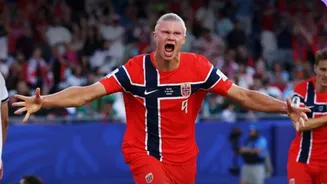
This cultural identity has often been reflected in the style of play. For decades, Scandinavian teams were stereotyped—and often celebrated—for their physical, disciplined, and hard-working approach. They were seen as difficult to break down, organised, and possessing immense mental fortitude. Think of the Danish team that surprisingly won Euro 1992, a story of underdogs displaying incredible collective resolve. While modern Scandinavian teams produce technically gifted superstars like Martin Ødegaard, the warrior archetype persists in players known for their physical dominance and relentless work rate. A player like Manchester City’s Erling Haaland, with his imposing physique and predatory instincts in front of goal, is almost a perfect modern embodiment of the Viking warrior ideal, combining raw power with lethal precision.
A Symbol of Unity and Defiance
For smaller nations competing on the global stage, the Viking ethos is a powerful symbol of unity. It fosters a 'band of brothers' mentality, an idea that a small, tight-knit group can achieve extraordinary things through collective will. The Icelandic national team's fairytale run to the quarter-finals of Euro 2016 is the ultimate example. With a population of just over 330,000, their success was framed as a modern Viking saga. Their iconic 'Viking clap' chant became a global phenomenon, a rhythmic, intimidating, and deeply unifying ritual that visually and audibly connected the players on the pitch with their '12th man' in the stands. It was a perfect expression of a small nation standing defiant and proud.
History, Myth, and the Beautiful Game
Of course, the symbolism is not without its simplifications. The horned helmets so often seen in fan paraphernalia are a complete fabrication, an invention of 19th-century costume design. But historical accuracy is beside the point. The footballing Viking is a myth, and its power lies in what it represents: pride, belonging, and the belief that with enough heart and unity, any challenge can be met. While fringe extremist groups have attempted to co-opt Norse symbols for their own hateful ideologies, the Viking of the football terrace remains overwhelmingly a positive and inclusive symbol of collective identity. It’s a shared story that fans and players tell themselves, a source of strength drawn from a romanticised past to face the battles of the present-day pitch.