

A Landmark Confirmation
The dream of finding accessible water on the Moon has taken a significant leap forward. Advanced analysis of data from multiple lunar missions, including NASA's Lunar Reconnaissance Orbiter (LRO) and India's Chandrayaan missions, has confirmed the presence
of water ice in high concentrations. This isn't just a few stray molecules; evidence points to substantial deposits mixed within the lunar soil, or regolith, particularly near the Moon's poles. While early missions dating back decades found hints of hydrogen, modern instruments can now definitively identify H2O. These findings are changing our perception of the Moon from a barren wasteland to a resource-rich world that could support future human endeavours.
The Science of Eternal Shadows
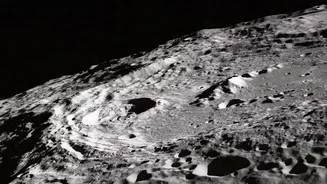
The key to this discovery lies in the Moon's permanently shadowed regions (PSRs). These are craters near the lunar poles where the crater floor is never touched by direct sunlight. Because the Sun's angle is so low at the poles, the crater rims cast eternal shadows, creating some of the coldest spots in the entire solar system. Temperatures in these PSRs can plummet below -198°C, acting as perfect cold traps. Over billions of years, water delivered by comets and asteroids, or potentially formed by the solar wind interacting with lunar minerals, can migrate into these deep freezes and remain stable as ice. Early hypotheses suggested these regions would harbour ice, and data from orbiters has finally provided the direct evidence needed to confirm it.
How the Sensors See the Ice
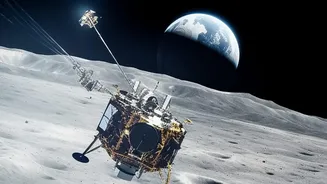
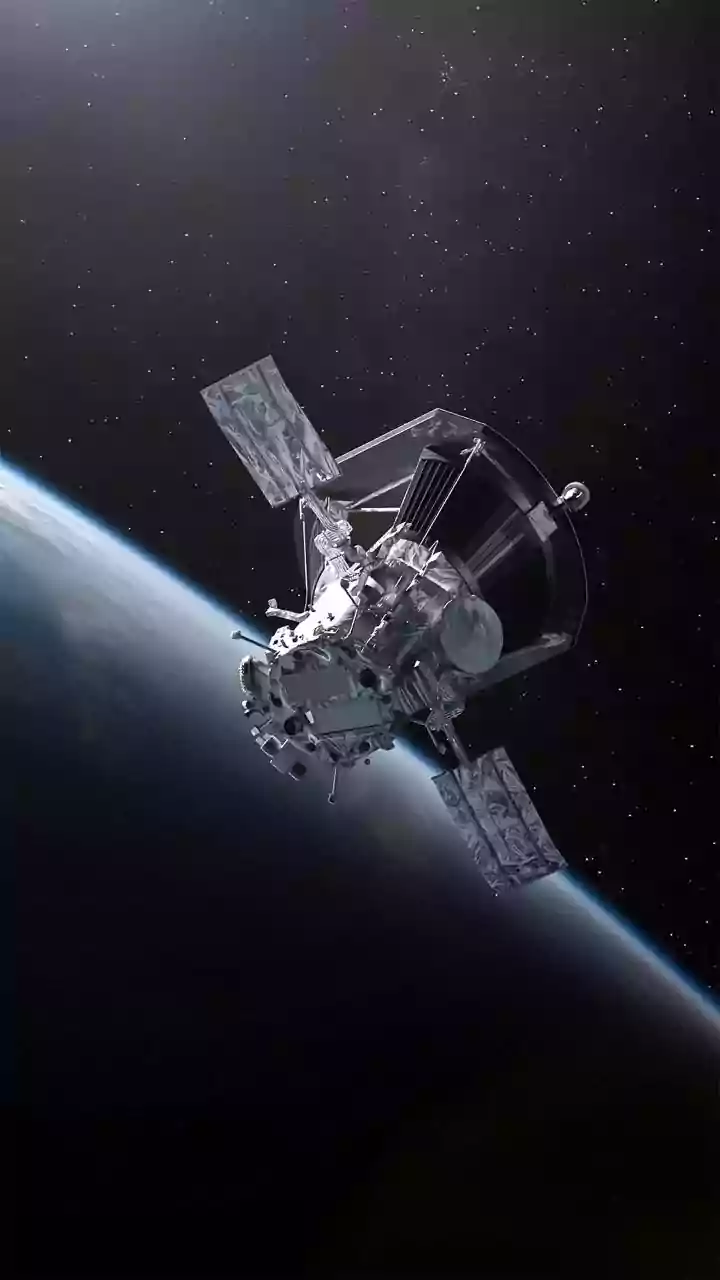
Detecting this hidden ice from orbit is a technological marvel. Missions like India's Chandrayaan-1 carried NASA's Moon Mineralogy Mapper (M3), an instrument that analysed how infrared light is absorbed by the lunar surface. Water ice has a unique spectral signature, and M3 was able to create the first high-resolution maps showing confirmed ice locations. More recently, NASA's LRO has used its own suite of instruments, including a neutron spectrometer, to detect hydrogen—a key component of water—and has found widespread evidence of ice beyond just the largest craters. Another innovative camera, ShadowCam, is specifically designed to peer into the dark PSRs by capturing faint light reflected off nearby crater walls, offering an even more detailed look at these elusive deposits.
A Game-Changer for Lunar Habitation
The presence of water ice is more than a scientific curiosity; it's the single most important resource for establishing a long-term human presence on the Moon. Transporting water from Earth is prohibitively expensive, so having a local source is critical. Lunar ice can be melted for drinking water and to irrigate plants for food. Crucially, through a process called electrolysis, water can be split into its components: oxygen for breathable air and hydrogen for rocket fuel. This ability to produce propellant on the Moon, known as in-situ resource utilization (ISRU), could turn our natural satellite into a refueling station for missions deeper into the solar system, including Mars.
The Next Frontier: Drilling Down
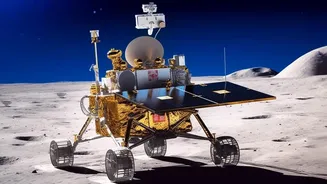
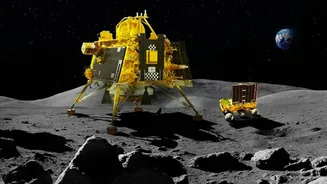
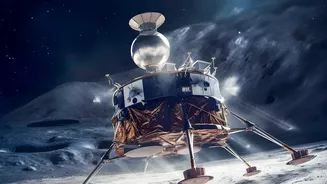
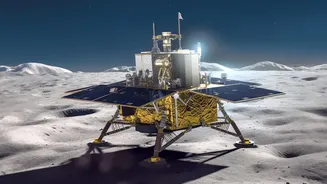
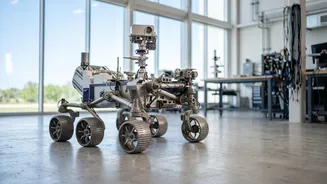
With orbital data confirming where the ice is, the next step is to explore it on the ground. Several upcoming missions are designed to do just that. The joint JAXA (Japan) and ISRO (India) Lunar Polar Exploration (LUPEX) mission, set to launch no earlier than 2028, will deploy a rover equipped with a NASA-provided neutron spectrometer to hunt for ice beneath the surface. Similarly, the European Space Agency is developing rovers like MAGPIE and the Prospect drill, designed to land near the south pole, drill into the regolith, and analyze samples for water content. These ground-truth missions will be essential for determining the exact concentration, depth, and accessibility of the ice, paving the way for future astronauts under the Artemis program to finally tap into this vital lunar resource.