


A Cosmic First Responder
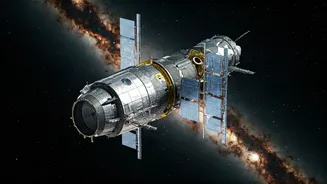
Launched in 2004, the Swift Observatory has a unique and vital job: spotting gamma-ray bursts (GRBs). These are the most powerful explosions in the universe, happening about once a day, and they signal the birth of a black hole or the collision of dead
stars. True to its name, Swift can pivot rapidly—something other powerful telescopes like Hubble cannot do—to catch these fleeting events just as they happen. This has made it an indispensable tool for astronomers, providing crucial data on cosmic phenomena. Beyond GRBs, it now serves as a general-purpose observatory for all kinds of transient cosmic events, making it a highly valued asset in NASA's fleet.
The Inevitable Fall
Like all satellites in low-Earth orbit, Swift is subject to atmospheric drag. Recently, heightened solar activity has caused Earth's upper atmosphere to expand, increasing this drag and accelerating Swift's orbital decay. In early 2025, NASA scientists realised the observatory was losing altitude faster than expected and would re-enter the atmosphere to burn up sometime in 2026 if no action was taken. While the spacecraft has also dealt with failing gyroscopes—the components that help it point accurately—the primary threat is now its shrinking orbit. Without engines of its own, Swift is powerless to stop its slow but certain descent.
A Robotic Lifeline
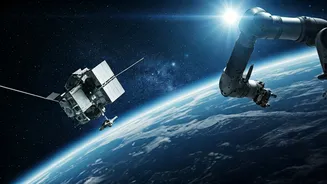
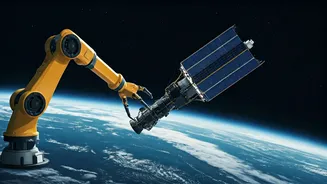
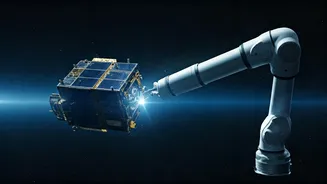
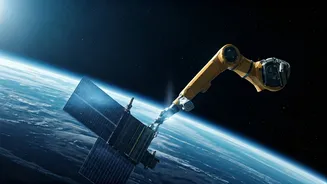
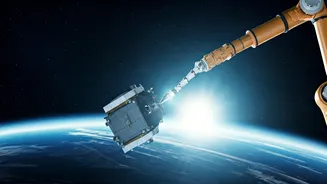
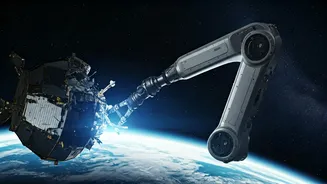
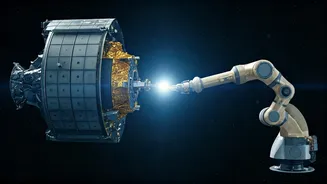
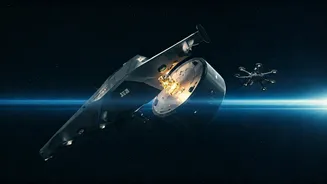
Instead of letting a valuable, functioning telescope fall from the sky, NASA is attempting a daring rescue. The agency awarded a $30 million contract to a private company, Katalyst Space Technologies, to build and launch a robotic servicing spacecraft. Dubbed "LINK," this autonomous spacecraft is essentially a robotic tugboat. Its mission is to chase down Swift, latch onto it, and physically push it into a higher, more stable orbit, extending its life for potentially another decade. The launch of LINK, scheduled for early July 2026, has faced some minor weather-related delays, but the high-stakes mission is poised to go ahead.
How to Save a Telescope in Orbit
The LINK spacecraft, roughly the size of a small refrigerator, is equipped with three robotic arms. After its own launch, it will spend about a month carefully approaching Swift. Since the observatory was never designed to be serviced or grabbed in orbit, this is a particularly delicate operation. Once in position, LINK's arms, which feature Lego-like pinching grippers, will latch onto Swift. Over the following months, the robotic servicer will use its own thrusters to gradually boost Swift from its current altitude of about 360 kilometers to a safer orbit of 600 kilometers. If successful, Swift could be back to its scientific work by the autumn.
The Dawn of a New Industry
This mission is about much more than just one telescope. It represents a major test for the burgeoning industry of on-orbit servicing. For decades, satellites were treated as disposable: once launched, they could not be repaired, refueled, or upgraded. This mission, if successful, will be the first time an American robotic spacecraft has performed such a service, proving that high-value assets can have their lives extended. It opens the door to a more sustainable model for space operations, where we maintain and upgrade hardware instead of constantly replacing it. This could reduce space debris, lower long-term costs, and change how we design future spacecraft.