



The Underrated Orbiter's Big Reveal
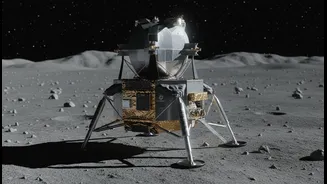
While the 2019 landing attempt of the Vikram lander drew most of the world's attention, the Chandrayaan-2 orbiter has been an unsung hero, quietly circling the Moon and gathering a wealth of invaluable data. One of its most perplexing discoveries comes
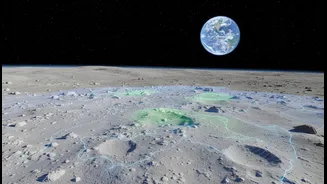
from the Dual-frequency Radio Science (DFRS) experiment, designed to study the Moon's incredibly thin atmosphere and ionosphere. Scientists at ISRO's Space Physics Laboratory used this instrument to probe the plasma environment—a soup of charged particles—surrounding the Moon. What they found has challenged long-held theories about how the lunar environment behaves, particularly on its dark side and when it passes behind the Earth.
A Shockingly Dense Plasma Environment
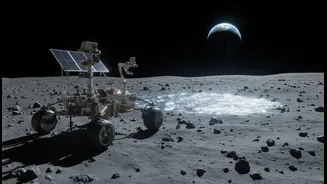
Scientists had long assumed the Moon's ionosphere would be extremely sparse, with only a few hundred plasma particles per cubic centimetre. Early measurements by Chandrayaan-2’s DFRS experiment shattered this assumption. In the region of the Moon's wake—the area shielded from the direct blast of solar wind—it detected plasma densities up to 10 times greater than on the sunlit side. More recently, in early 2025, another major finding emerged: when the Moon passes through Earth's extended magnetic field, known as the 'geotail', the plasma density can spike to nearly 100 times higher than on the day side. This was completely unexpected, as it was thought being shielded from the solar wind in the geotail would cause the plasma to dissipate.
The Practical Problem with Plasma
This is more than just a scientific curiosity; it’s a practical mystery with real-world implications for future lunar missions. High-density plasma environments can significantly interfere with radio communications between orbiters, landers, and Earth. This invisible turbulence could disrupt signals, corrupt data, or even cause a complete loss of contact at critical moments. Furthermore, this plasma interacts with lunar dust, a notoriously difficult substance that clings to everything. Unexpectedly high plasma levels could lead to 'surface charging', where electrical charges build up on equipment, attracting more abrasive dust and potentially short-circuiting sensitive electronics on rovers and habitats. Understanding this phenomenon is crucial for ensuring the safety and success of long-term robotic and human exploration.
A New Gift: Finding Buried Water Ice
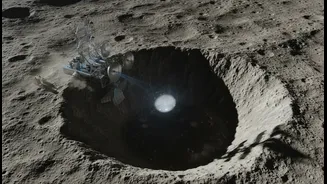
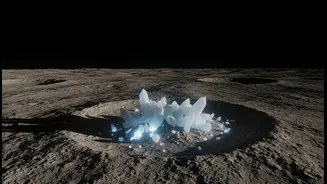
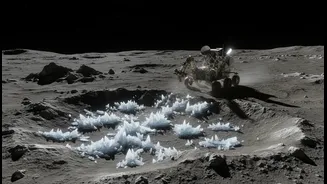
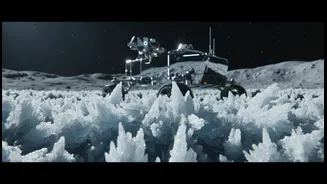
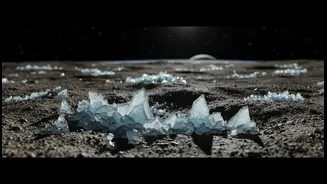
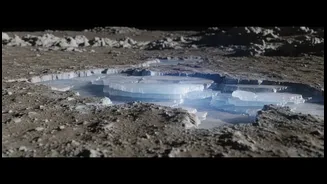
The orbiter's revelations aren't limited to plasma. In May 2026, researchers from the Physical Research Laboratory in Ahmedabad, analyzing data from the orbiter's Dual-Frequency Synthetic Aperture Radar (DFSAR), announced another landmark finding: strong evidence of subsurface water ice. The radar signals, which can penetrate below the surface, identified deposits consistent with ice hidden beneath the floors of 'doubly shadowed' craters near the south pole. These are some of the coldest places in the solar system, where sunlight has never reached, allowing ice to remain stable for billions of years. Finding ice buried underground is a massive development, as it is more protected from radiation and easier to access for future missions seeking to use it for drinking water, breathable oxygen, and rocket fuel.
India's Pivotal Role in the New Moon Race
These discoveries by Chandrayaan-2 solidify India’s crucial role in the new global push to return to the Moon. While the Vikram lander's fate was a setback, the orbiter's continued success has provided a stream of discovery-class findings that are fundamentally changing our lunar map. After the historic successful landing of Chandrayaan-3, the data from its predecessor is now guiding future exploration, identifying not just hazards like dense plasma but also vital resources like buried water. By uncovering these practical mysteries, ISRO and Indian scientists are not just exploring the Moon for themselves, but are providing an essential service to the world, paving the way for a sustainable human presence on our celestial neighbour.