






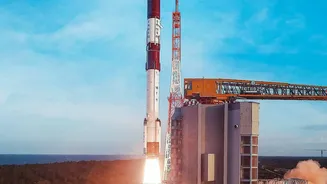
A Strategic Shift in Orbit
India's space journey, historically driven by the state-led Indian Space Research Organisation (ISRO), is undergoing a monumental transformation. Once the sole player, ISRO is now consciously evolving into an enabler, fostering a public-private ecosystem
where startups are not just participants but key drivers of innovation and commerce. This shift, formalized by policies like the Indian Space Policy 2023, is designed to boost India’s share of the global space economy by unleashing the potential of the private sector. The goal is to move beyond government-led missions and create a self-sustaining commercial space economy, with startups building everything from launch vehicles to satellite communication systems.
IN-SPACe: The Single-Window Facilitator
At the heart of this new ecosystem is the Indian National Space Promotion and Authorisation Centre (IN-SPACe). Established as a single-window agency, its primary role is to streamline the relationship between ISRO and private entities. Before IN-SPACe, navigating the regulatory and technical landscape was a daunting task for a fledgling company. Now, it acts as a promoter and regulator, helping startups get the authorisations they need, access ISRO’s world-class facilities, and even get technical guidance from former ISRO scientists. Since its inception, IN-SPACe has fielded hundreds of applications, granting over 100 authorisations that have allowed private companies to undertake a variety of space activities.
From ISRO Labs to Startup Launchpads
One of the most powerful catalysts for growth is the formal transfer of technology from ISRO to the private sector. Decades of research and development have produced a treasure trove of technologies, from rocket propulsion systems to specialised materials and software. Through IN-SPACe and NSIL, these technologies are now being licensed to Indian companies, giving them a significant head start and saving them immense R&D costs. More than 100 technologies have been transferred, covering applications from aerospace to biomedical devices. This allows startups to build upon ISRO's proven success and focus on innovation and commercialisation, rather than reinventing the wheel. While some have raised concerns about the pricing of these transfers, the aim is to spur industrial growth and reduce reliance on imports.
NSIL: The Commercial Engine
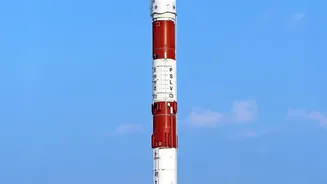
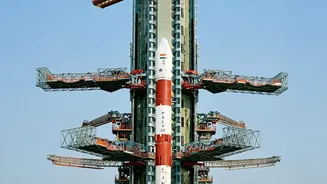
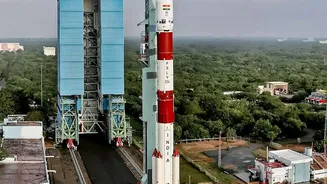
If IN-SPACe is the facilitator, then NewSpace India Limited (NSIL) is the commercial engine. As the commercial arm of ISRO, NSIL's mandate is to market the Indian space program's products and services globally. This includes selling launch services on trusted vehicles like the PSLV, marketing satellite-based services, and managing technology transfers. By creating a commercial marketplace for ISRO's assets, NSIL generates demand that startups can help fulfill. For instance, NSIL enables Indian industries to take up the manufacturing of launch vehicles, and it also partners with startups like GalaxEye to market their unique satellite imagery data, effectively acting as a bridge between public assets and private innovation.
The New Constellation of Startups
The results of this ecosystem are tangible and impressive. The number of Indian space startups has surged from single digits to over 450 in recent years. Companies like Skyroot Aerospace and Agnikul Cosmos are at the forefront of developing India’s first privately built rockets. Skyroot recently became the sector's first unicorn after successful funding rounds and a historic private launch. Meanwhile, startups like Pixxel are building constellations of hyperspectral imaging satellites, and Digantara is focused on space situational awareness. These companies are not just building hardware; they are creating downstream applications for sectors like agriculture, disaster management, and telecommunications, proving the wide-ranging economic impact of space technology.
Fueling the Future: A Surge in Investment
This flurry of activity has, unsurprisingly, caught the eye of investors. Indian space startups have attracted hundreds of millions of dollars in funding in the last few years, with investments growing steadily. Cumulative private investment has crossed the $600 million mark, with nearly $190 million reported in 2026 alone. The investor profile has also matured, expanding from early-stage angel investors to global asset managers and sovereign wealth funds. This influx of capital, supported by government initiatives like the Antariksh Venture Capital Fund, is crucial for scaling operations, funding complex missions, and positioning India to capture a larger slice of the projected $44 billion space market by 2033.