




A New Perspective on an Old Friend
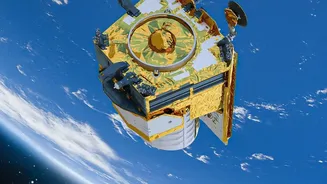
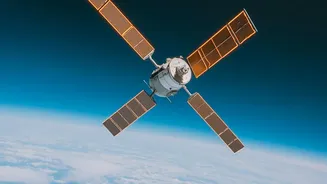
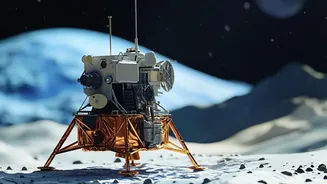
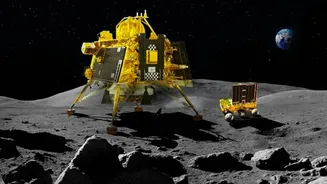
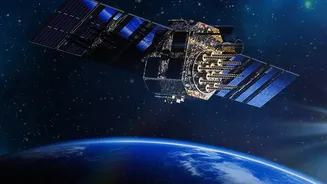
The primary goal of Chandrayaan-3 was, without a doubt, the successful soft landing on the Moon's south pole. But ISRO scientists added a brilliant secondary objective. The mission's Propulsion Module, the part that carried the lander and rover to lunar
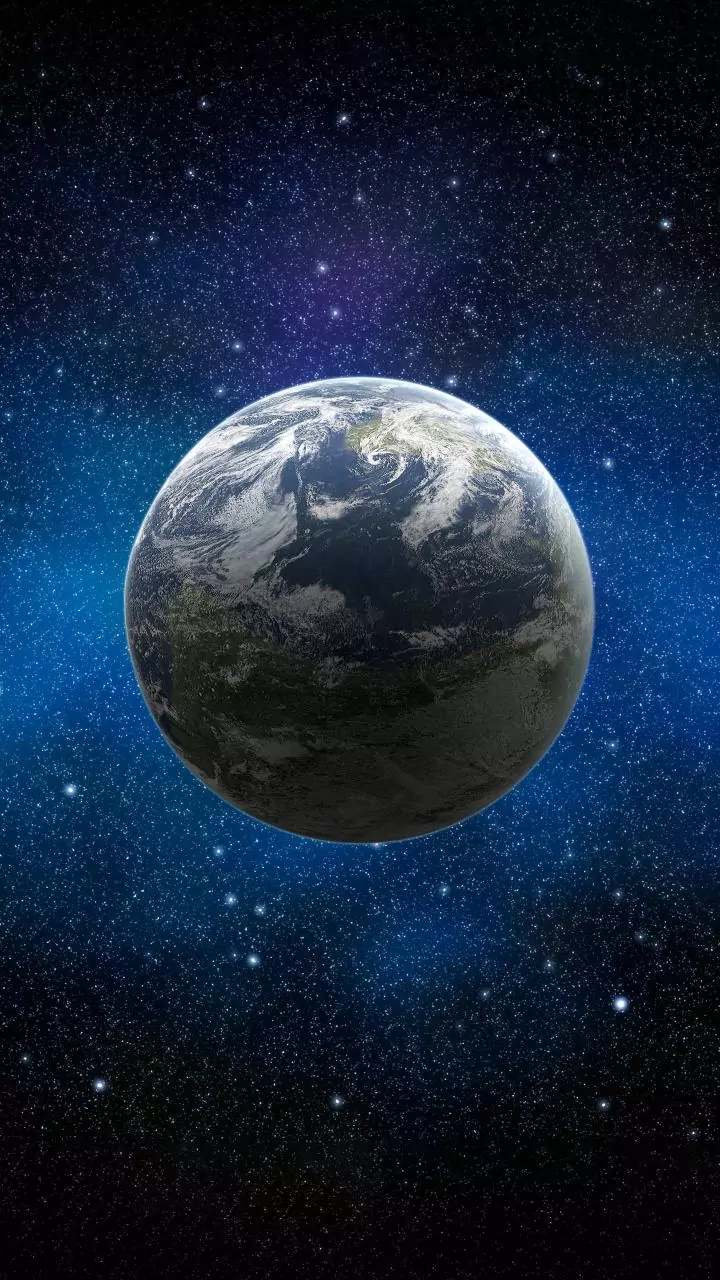
orbit, was equipped with a special instrument designed not to look at the Moon, but back at Earth. The idea was to use our own planet, with its known signs of life and habitability, as a perfect test subject. By studying Earth from a great distance, scientists could learn to identify the characteristic signatures—the 'fingerprints' of a life-bearing planet—that they hope to one day find in the light from distant exoplanets orbiting other stars. This turns our familiar home into a scientific baseline, a control group in the grand experiment of searching for life elsewhere in the cosmos.
The SHAPE Payload: An Eye for Habitability
The instrument at the heart of this experiment is called SHAPE, which stands for Spectro-polarimetry of HAbitable Planet Earth. It was the only scientific payload on the Propulsion Module. SHAPE was designed to do something very specific: study the light reflected from Earth in the near-infrared spectrum. It analyzes two key properties of this light: its spectrum and its polarization. The spectrum breaks the light down into its component colors, which can reveal the chemical composition of the atmosphere and surface, such as the presence of certain gases. Polarization, on the other hand, refers to the orientation of the light waves. Studying this property can provide crucial information about clouds and other particles in the atmosphere. By combining these two measurements, SHAPE can build a detailed profile of a planet, offering clues about its ability to support life.
Mimicking an Exoplanet Observation
To truly treat Earth as an exoplanet, the SHAPE instrument couldn't just take a simple snapshot. From its vantage point in lunar orbit, and later in a high Earth orbit, it observed our planet over extended periods. This allowed it to capture the disc-integrated light of Earth, meaning it saw the planet as a single point of light, just as we see exoplanets that are light-years away. By watching this single point of light, scientists could see how its characteristics changed as Earth rotated and as the viewing angle (or phase angle) changed during its orbit. This mimics exactly how astronomers would have to study a distant exoplanet. The data collected helps answer key questions, such as what the light signature of an Earth-like planet with oceans, continents, and a dynamic atmosphere looks like from afar, and how that signature varies over time.
A Blueprint for Finding 'Earth 2.0'
The data gathered by SHAPE is more than just a beautiful portrait of our home; it's a vital reference guide for future telescopes. When powerful new observatories are pointed at rocky exoplanets in the habitable zones of other stars, they will collect faint glimmers of light. Scientists will then compare the spectral and polarimetric signatures from that light to the benchmark data provided by SHAPE. If they find patterns that match Earth's signature—the specific chemical fingerprints of our atmosphere or the light-scattering effects of clouds and oceans—it would be a monumental step towards identifying another potentially habitable world. This clever use of the Chandrayaan-3 Propulsion Module provides long-term data that was previously unavailable from brief flyby missions. It effectively gives Indian scientists a template for what to look for in the vast darkness, refining the methods and technologies needed for one of the most profound quests in science.