






A New Star in India's Space Ecosystem
In the bustling tech corridors of Thiruvananthapuram's Technopark, a space-tech startup named HEX20 is scripting a new chapter for Indian enterprise. Founded by a group of alumni from the College of Engineering, Thiruvananthapuram (CET), HEX20 has rapidly
emerged as a significant player in India's burgeoning private space sector. While the company was initially established in Australia, its founders' deep roots and recognition of the immense talent pool in their hometown led them to set up a major engineering facility in Kerala. This move has positioned them at the heart of an ecosystem rich with space scientists and ancillary industries, ready to support ambitious new ventures. The company, which also has offices in the US, UAE, and Taiwan, is part of a wave of over 400 space-tech startups that have flourished since the Indian government opened the sector to private participation in 2020. This policy shift has unleashed a torrent of innovation, with companies like HEX20 demonstrating that world-class space hardware can be developed right here in India.
The Mission: A Probe for Deep Space
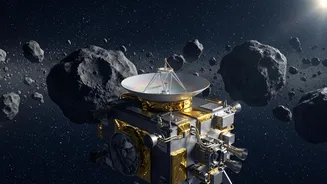
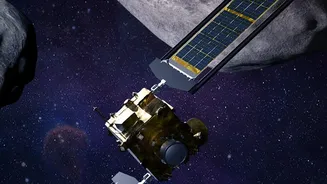
The headline-making work involves a historic collaboration with the United Arab Emirates (UAE) Space Agency. HEX20 was selected to develop a critical component for the Emirates Mission to the Asteroid Belt (EMA): a deployable lander, or probe, designed for a deep-space journey of billions of kilometres. This makes HEX20 the first private Indian company to be chosen for a deep-space mission by the Gulf nation. The startup is responsible for developing the spacecraft 'bus'—the core structure that houses all systems—as well as the sophisticated software, onboard computer, and power systems robust enough to survive the unforgiving environment of deep space. The probe is part of the larger MBR Explorer spacecraft, which is scheduled to launch in March 2028. HEX20's team in Thiruvananthapuram and Abu Dhabi delivered the complex systems in just 15 months, a testament to their engineering prowess.
Destination: Asteroid 269 Justitia
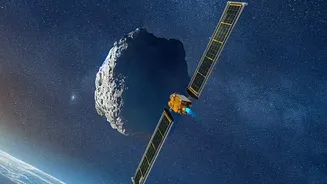
The ultimate destination for HEX20's probe is an asteroid named 269 Justitia. The MBR Explorer will undertake an epic journey, using gravity-assist fly-bys of Venus, Earth, and Mars to slingshot itself towards the main asteroid belt located between Mars and Jupiter. After observing six other asteroids along the way, the mothership is expected to reach Justitia's orbit around 2036. At that point, the probe developed by HEX20 will separate and begin an autonomous descent to the asteroid's surface. Its mission is to perform a 'hard landing' and transmit invaluable data and images back to Earth. Scientists are keenly interested in Justitia because of its unusual reddish surface, which could hold clues about the presence of organic materials and water from the solar system's formation. This exploration could help answer fundamental questions about how our universe was formed.
More Than Just One Mission
While the UAE asteroid mission is a monumental achievement, HEX20's ambitions don't stop there. The company has a proven track record, having already made history in 2025 by launching 'Nila', Kerala's first privately developed satellite, aboard a SpaceX rocket. It has since launched another satellite for Taiwan's National Central University. The company specialises in building cost-effective and customisable satellite platforms, offering everything from design and development to launch support and mission operations for academic, commercial, and defence clients. HEX20 has also signed a multi-mission launch agreement with Skyroot Aerospace, another pioneering Indian startup, for future satellite deployments using its Vikram series of rockets starting in 2027. This collaboration between Indian startups highlights the development of a self-sustaining domestic ecosystem, reducing reliance on international launch providers.