



A Cosmic Sweet Spot
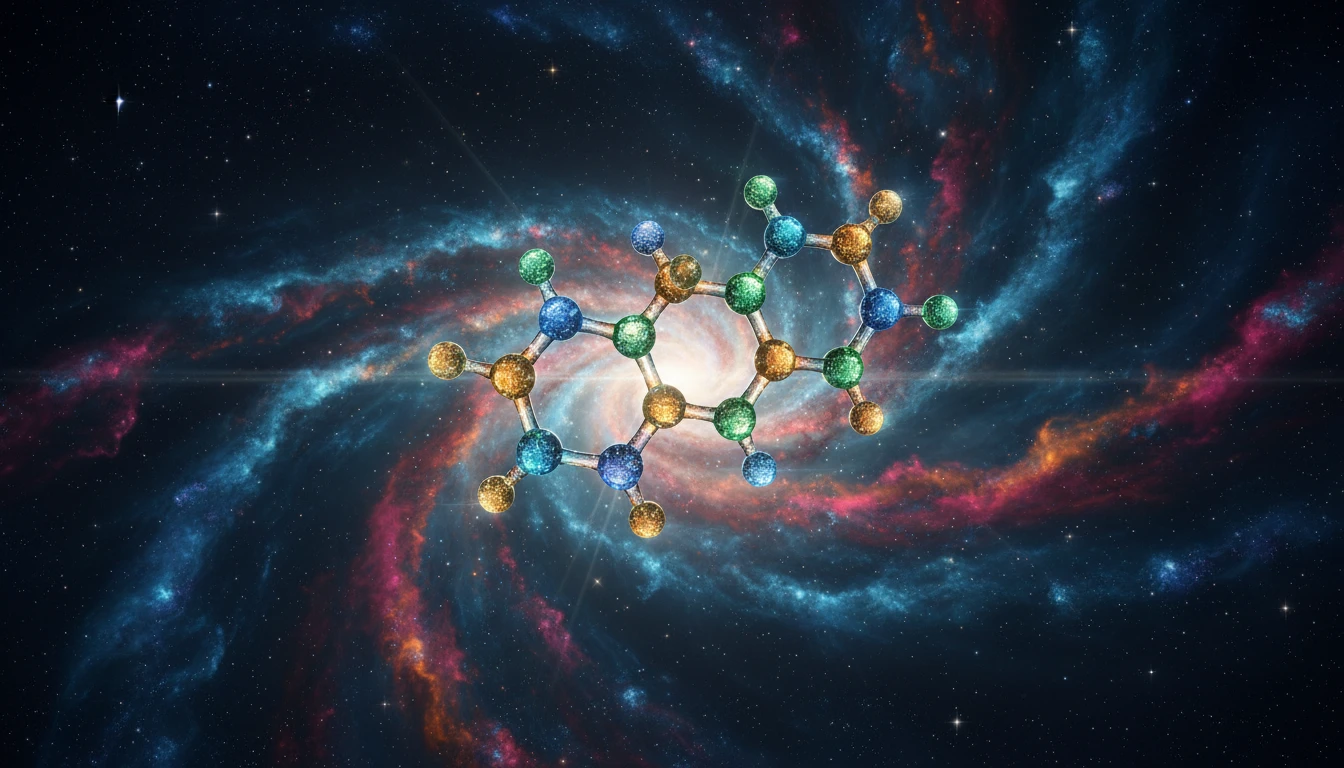
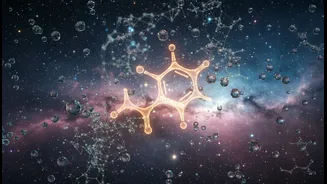
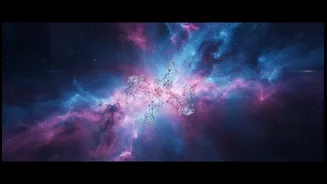
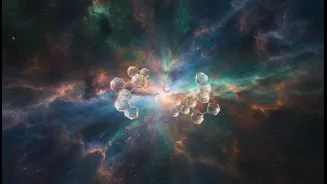
The molecule in question is erythrulose, a simple sugar that on Earth is found in things like raspberries. But finding it floating in a vast cloud of gas and dust 27,000 light-years away is a landmark discovery. For years, scientists have wondered how
the essential ingredients for life, like sugars, could have formed on early Earth. Laboratory experiments suggest they don't form easily under prebiotic conditions. While sugars have been found in meteorites before, this is the first direct detection in the interstellar medium—the space between stars. This finding suggests that these crucial molecules aren't a local phenomenon, but are instead scattered throughout the cosmos.
The Galaxy's Chemical Factory
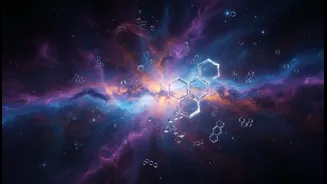
The discovery was made in a region known as G+0.693-0.027, a dense molecular cloud near the galactic center. These clouds are essentially stellar nurseries, giant factories where gas and dust collapse to form new stars and planets. Using powerful radio telescopes in Spain, an international team scanned this chemically rich area. They were looking for the unique radio signal, or spectral fingerprint, that specific molecules emit. After careful analysis, they identified 12 signals that perfectly matched the signature of erythrulose. This region is known for being a hotbed of complex organic chemistry, but finding a molecule as complex as a four-carbon sugar is a significant step up in the ladder of interstellar chemical complexity.
From Stardust to Planets
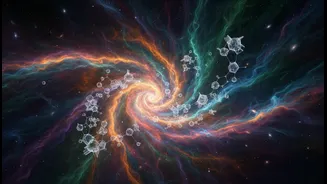
So, how does a sugar molecule in a distant cloud relate to planet building? The connection lies in the process of star formation itself. As a molecular cloud collapses, it forms a spinning disc of gas and dust around the newborn star, known as a protoplanetary disk. This is where planets are born. The molecules present in the original cloud, including erythrulose, get incorporated into this disk. From there, they can be swept up into comets, asteroids, and eventually the planets themselves. Essentially, these interstellar molecules are the raw ingredients—the prehistoric building blocks—that seed new solar systems with the materials necessary for forming worlds and potentially, life.
A Key Ingredient for Life?
Sugars are fundamental to life as we know it. They provide energy and form the backbone of RNA and DNA, the molecules that carry our genetic code. While erythrulose itself is not found in DNA, it is a close chemical relative to ribose, the sugar in RNA. Many scientists believe in an "RNA World" hypothesis, where RNA came before DNA as the primary form of genetic material. The discovery of erythrulose in space supports the idea that the universe is naturally stocked with the precursors to these vital biomolecules. Researchers estimate that millions of tonnes of this sugar could have been delivered to a young Earth during the Late Heavy Bombardment, a period of intense comet and asteroid impacts around 4 billion years ago, potentially kickstarting the prebiotic soup from which life emerged.
What This Discovery Means
This detection is more than just an interesting astronomical footnote; it touches on the profound question of our own origins. It provides strong evidence for the theory that the building blocks of life are not unique to Earth but are common throughout the galaxy. By finding these complex molecules in the spaces between stars, we get a clearer picture of a continuous process, from simple interstellar chemistry to the formation of molecules that are essential for biology. According to the research team, this discovery opens the door to finding even more complex sugars, like ribose itself, in space. Each new detection is another piece of the puzzle, tracing a cosmic lineage from stardust to the very molecules that make us who we are.