




India's Staggering Food Waste Problem
India faces a profound paradox: as one of the world's largest food producers, it also wastes an enormous quantity of it. According to the United Nations Environment Programme (UNEP), India generates approximately 74 million tonnes of food waste annually.
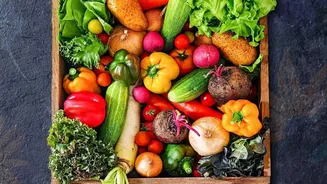
This isn't just about leftovers in household kitchens, which account for about 50 kg per person per year. A significant portion, up to 40% of fresh produce, is lost long before it ever reaches a consumer. This happens due to inadequate cold storage, inefficient transportation, and poor harvesting techniques. The economic value of this loss is staggering, estimated at around ₹92,000 crores each year, but the environmental cost is just as severe.
The Landfill's Toxic Legacy
When food is thrown away, its journey typically ends in a landfill. Many assume that being organic, it will simply decompose. However, modern landfills are compacted and sealed, creating an oxygen-free (anaerobic) environment. In these conditions, decomposing food waste releases methane, a greenhouse gas that is over 80 times more potent than carbon dioxide in trapping heat over a 20-year period. Globally, food waste accounts for 8-10% of all human-caused greenhouse gas emissions. Beyond methane, this process can create a toxic liquid called leachate, which can seep out and contaminate surrounding soil and groundwater, damaging the local ecosystem.
Breaking the Cycle: How Waste Degrades Soil
Healthy soil is a living ecosystem, rich in nutrients and microorganisms that are essential for growing nutritious food. When we grow crops, these nutrients are transferred from the soil to the plant. When that food is then wasted and sent to a landfill, those vital nutrients are permanently removed from the agricultural cycle. This one-way trip to the dump means that the land is continually depleted of its natural fertility. To compensate, farmers often have to rely more heavily on synthetic fertilizers. This not only increases costs but can also degrade soil structure and harm the environment over time, creating a vicious cycle of dependency and depletion.
The Virtuous Loop of Composting
The alternative to this destructive cycle is to return the nutrients from food scraps back to the earth. This is achieved through composting. Composting is the process of controlled, aerobic (oxygen-rich) decomposition of organic matter. Unlike in a landfill, this process does not produce methane. The result is compost, a dark, humus-rich material teeming with beneficial microbes. Adding compost to agricultural land has transformative effects. It improves soil structure, helping it retain more water and resist erosion. It provides a slow release of essential nutrients, reducing the need for chemical fertilizers. It also enhances the biodiversity of the soil, making it more resilient to pests and diseases. In essence, composting closes the loop, turning waste into a valuable resource that regenerates the very soil our food system depends on.
From Farm to Kitchen: Where We Can Act
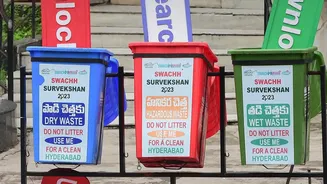
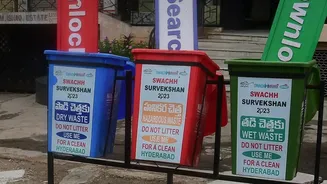
Tackling food waste requires action at every stage of the supply chain. At the farm level, investments in better infrastructure like cold storage and improved logistics are crucial to prevent post-harvest losses. As consumers, our role is equally important. Simple habits like planning meals, making shopping lists, storing food correctly to prolong its life, and understanding the difference between 'best before' and 'use-by' dates can dramatically reduce the amount of food discarded at home. For the scraps that are inevitably generated, such as vegetable peels and coffee grounds, starting a home or community composting bin is a powerful way to directly contribute to soil health.