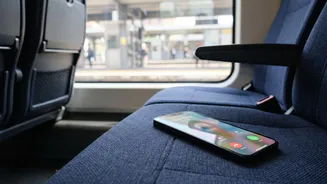







The Unwanted Public Broadcast
It has become an inescapable part of using public transport in India. Whether on a local train, a cross-country express, or the metro, the personal bubble of peace is frequently burst by someone else's phone. From lengthy, loud conversations on speaker
to watching videos or playing music at full volume, the 'speaker scum' phenomenon, as some frustrated commuters have termed it, is a daily reality. It's a behaviour that transforms a shared public space into a private entertainment zone for one, at the expense of everyone else's comfort. This isn't just about the occasional urgent call; it has evolved into a pattern of behaviour where using earphones is the exception rather than the rule for a noticeable segment of travellers.
Why Do People Do It?
The reasons behind this behaviour are complex and varied. For some, it may be a simple lack of awareness or a habit carried over from the privacy of their homes. In a country where personal space is often a luxury, the concept of auditory space can be similarly fluid. Some experts suggest it might be linked to the novelty of the smartphone, which for many is still a device to be shown off. Others point to more practical reasons, like poor quality or broken earphones. However, there's also a performance aspect; a loud conversation can be a way of projecting importance. Regardless of the reason, the outcome is the same: a shared environment is dominated by one person's audio, forcing fellow passengers into unwilling listenership.
More Than Just Annoyance
While it's easy to dismiss this as a minor irritation, the impact of constant, unwanted noise is significant. Research has consistently linked noise pollution to negative psychological and physiological effects. Studies show that exposure to high levels of urban noise is associated with increased psychological distress, anxiety, depression, and poor sleep quality. Unwanted sound, especially when it's unpredictable and uncontrollable like a stranger’s phone call, can elevate stress levels and lead to sustained muscle tension. It robs commuters of a chance to decompress, read, or simply sit in peace. For students trying to study or professionals trying to work, it's a direct assault on their concentration. It's an invasion of auditory space that leaves people feeling tense and agitated.
What Do The Rules Say?
In response to growing complaints, authorities have started to take notice. Recently, Southern Railway issued a directive clarifying the rules under the Railways Act. Passengers causing a nuisance by playing media on speaker or having loud conversations can be fined up to ₹1,000 and even be removed from the train. If the behaviour persists after a warning, the penalty can escalate to a fine of up to ₹5,000 and imprisonment for up to six months. These rules, amended under the Jan Vishwas Act, 2026, give railway staff clear authority to act. Similarly, metro systems like in Delhi and Chennai have provisions to penalise such behaviour, with fines and enforcement aimed at fostering better travel etiquette. The challenge, as many commuters point out, lies in consistent enforcement and public awareness.