




A Lake's Secret History
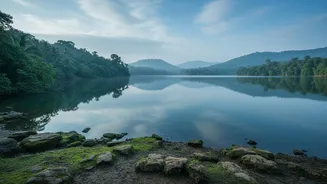
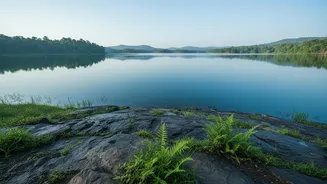
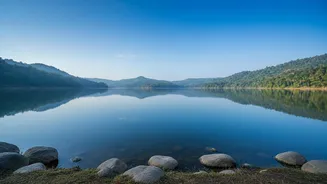
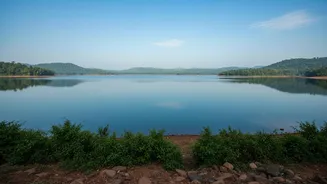
In the Korba district of Chhattisgarh lies Raja Rani Lake, an unassuming body of water that has been silently keeping a detailed diary for over 2,500 years. Scientists from the Birbal Sahni Institute of Palaeosciences (BSIP) in Lucknow travelled to this
lake, located in the heart of India's Core Monsoon Zone (CMZ), a region critically sensitive to the fluctuations of the Indian Summer Monsoon. They weren't there for the water, but for what lay beneath it: layers of mud and sediment that have accumulated over millennia. By extracting a 40-centimetre-long sediment core, they essentially pulled a history book out of the lakebed, with each layer representing a different period in time. This mud contained the key to their investigation: countless microscopic pollen grains preserved from plants that lived and died around the lake centuries ago.
Pollen: Tiny Messengers from the Past
The science of analysing ancient pollen is called palynology. It works on a simple principle: different plants thrive in different climates. By identifying the types of pollen in each sediment layer, scientists can reconstruct what the vegetation was like at that time. For example, an abundance of pollen from forest-loving plants points to a warm, humid climate with plenty of rain. Conversely, a higher concentration of pollen from grasses and herbs suggests a drier, more arid environment. Each pollen grain is like a tiny fingerprint, allowing researchers to paint a detailed picture of the past landscape and, by extension, the climate that sustained it. This method provides a direct look into environmental conditions long before humans started keeping records.
A Stronger, Wetter Monsoon
The pollen analysis from Raja Rani Lake yielded a surprising discovery. Between roughly 1060 and 1725 CE, the evidence pointed not to a moderate climate, but to an unusually strong and intense Indian Summer Monsoon. This period coincided with a global warm phase known as the Medieval Climate Anomaly (MCA). During this time, the pollen record showed a clear dominance of species from moist and dry tropical deciduous forests, indicating a period of heavy rainfall and a consistently warm, humid climate in central India. This finding challenges some previous assumptions, revealing a past where the monsoon was significantly more powerful than previously believed. The data suggests this intensified monsoon was driven by a combination of factors, including La Niña-like conditions in the Pacific Ocean and increased solar activity.
Why Ancient Weather Matters Today
Understanding that the monsoon was once much stronger is more than just a historical curiosity; it is a critical piece of information for our future. The Core Monsoon Zone, where this study was conducted, receives up to 90% of India's annual rainfall, making it the lifeblood of the nation's agriculture, economy, and water security. As our planet's climate continues to change, climate models are essential for predicting future trends. This high-resolution data from the past provides a vital baseline, helping to refine these models. By showing how the monsoon system responded to past global warming events like the MCA, this research gives scientists a better understanding of the range of possibilities we might face in the coming decades. It underscores that the climate systems we depend on have been and can be far more variable than we might assume.