




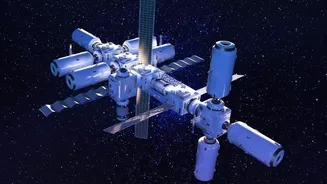
An Icon's Sunset
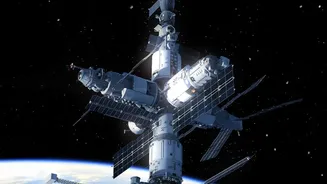
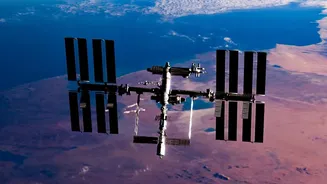
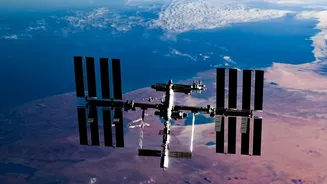
Since November 2000, the International Space Station has been continuously occupied, a symbol of global cooperation and a hub for groundbreaking science. But after more than three decades of service, the 400-tonne structure is showing its age. Citing
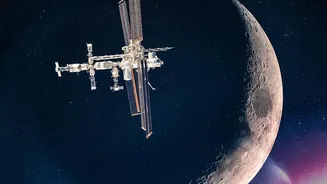
wear on its components and the high cost of maintenance, NASA plans to deorbit the ISS in 2030. A specially commissioned vehicle will guide it to a controlled re-entry over a remote part of the Pacific Ocean known as Point Nemo. This planned retirement marks a pivotal moment, ending the era of a government-run monopoly in low-Earth orbit and opening the door for a new commercial ecosystem.
NASA's New Role: From Landlord to Tenant
Instead of building a direct replacement for the ISS, NASA is changing its role from an owner-operator to a customer. Through its Commercial Low-Earth Orbit Destinations (CLD) program, the agency is providing funding and technical support to several private companies to stimulate the development of commercial space stations. The goal is to create a competitive marketplace where NASA can purchase services like research time and astronaut accommodation, ensuring a continuous US presence in orbit without bearing the full cost of station ownership. This strategy is modeled on the success of its commercial cargo and crew programs, which revitalized access to the ISS by partnering with companies like SpaceX.
The Commercial Contenders
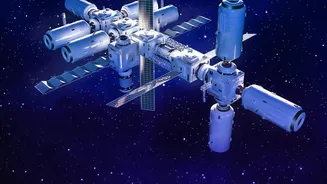
Several companies are now in a race to build the first generation of private orbital habitats. Axiom Space is taking an incremental approach, planning to first attach its modules to the ISS starting around 2027 before separating to become a free-flying station. This allows them to test their systems in a live environment while also flying private astronaut missions to the ISS. Another key player, Vast, is aiming to launch the first standalone single-module station, Haven-1, as early as the first quarter of 2027. The company plans a follow-on, multi-module station called Haven-2, designed to support larger crews. Other major projects include Orbital Reef, a 'mixed-use business park' in space developed by Blue Origin and Sierra Space, and Starlab, a venture from Voyager Space and Airbus.
Innovative Designs for a New Era
These new stations are not just replicas of the ISS. Many are incorporating novel designs and technologies. Sierra Space, a partner on Orbital Reef, has been developing its Large Integrated Flexible Environment (LIFE) habitat. This inflatable module launches in a compressed state and expands in orbit to offer a large volume of living and working space, potentially three stories high. The company has conducted successful burst pressure tests, proving the strength of the flexible fabric materials. Meanwhile, Vast's long-term vision includes creating artificial gravity on its stations by rotating them, which could help mitigate the negative health effects of long-duration spaceflight.
The Future of the LEO Economy
The transition to commercial stations is expected to spark a bustling economy in low-Earth orbit. These platforms will not just be for NASA astronauts and scientific research; they are being designed to serve a wide range of customers. Potential markets include in-space manufacturing of unique materials like high-purity optical fibers, pharmaceutical research in microgravity, and even space tourism and entertainment. The global space economy is projected to grow significantly, with some estimates suggesting it could surpass $1.8 trillion by 2035. By fostering a multi-station environment, NASA hopes to lower costs and broaden access, creating a vibrant ecosystem of science, industry, and exploration just a few hundred kilometers above our heads.