





The Age of Disposable Giants
Space telescopes like the James Webb Space Telescope (JWST) are marvels of engineering, but they are also incredibly fragile, single-shot missions. Launched to a distant point in space 1.5 million kilometers from Earth, JWST had to work perfectly out
of the box; there is no way to fix it. This all-or-nothing approach places immense pressure on designers and inflates costs, as every component must be built to survive for decades without maintenance. The Hubble Space Telescope was the exception that proved the rule. Because it was in low-Earth orbit, astronauts could visit it five times between 1993 and 2009. These crewed missions corrected a flawed mirror, replaced failing parts, and installed new, more powerful instruments, dramatically extending Hubble’s life and scientific capabilities. But those missions were complex, expensive, and risky, a model NASA cannot replicate for its deeper space observatories.
A New Philosophy in Orbit
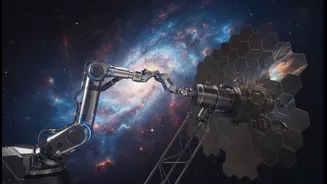
Enter the Habitable Worlds Observatory (HWO), NASA's next great space telescope planned for the 2040s. Its primary mission is to search for signs of life on Earth-like planets orbiting other stars. From its inception, HWO is being designed with a radical new requirement: it must be serviceable. Speaking at the American Astronomical Society meeting in July 2026, NASA officials confirmed that the observatory is being engineered to allow for robotic servicing, assembly, and maintenance while in orbit. This marks a fundamental departure from the design of JWST. Instead of building a static monument, NASA is planning to build a sustainable and evolvable platform. This isn't just a vague goal; it's a core mandate that will shape every aspect of the telescope's construction.
Robots as Roadside Assistance
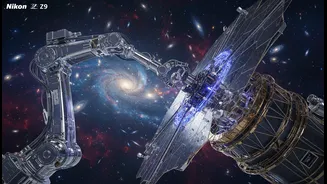
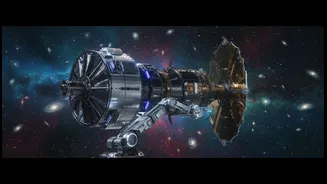
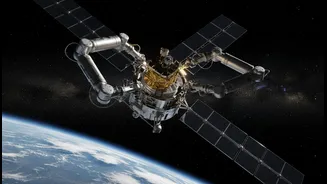
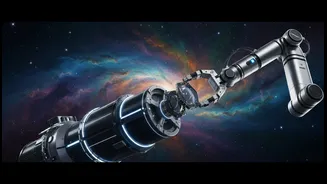
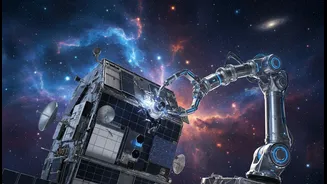
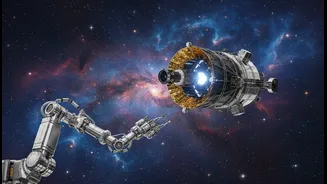
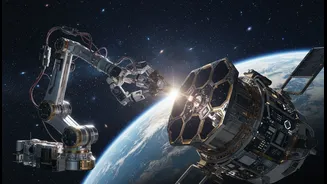
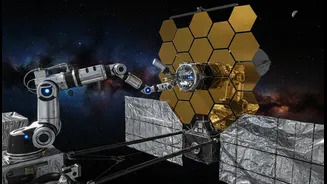
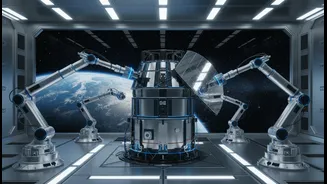
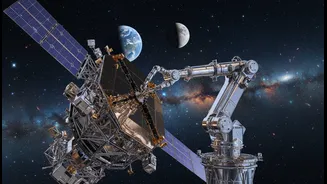
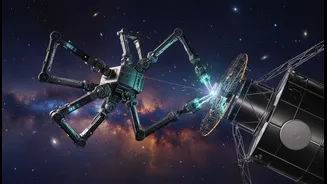
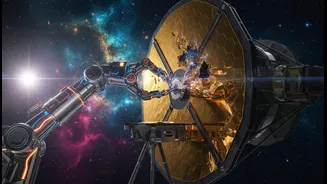
Since HWO will operate at the same distant Lagrange point (L2) as JWST, sending astronauts for repairs is not feasible with current technology. The solution is robotics. The observatory will be built with a modular design, featuring standardized docking ports and components that can be easily unplugged and replaced by a robotic servicing spacecraft. These future space mechanics could perform a range of tasks, from swapping out old scientific instruments for next-generation technology to replenishing coolant or repairing a damaged component. This capability might even extend to in-space assembly, allowing NASA to construct a telescope far larger than anything that could fit into a single rocket fairing. This approach not only makes missions more resilient but is also expected to drive a new commercial industry for in-space servicing, assembly, and manufacturing (ISAM).
Beyond Repair: A Future of Evolution
The ability to fix HWO is only part of the story. The real revolution is the ability to upgrade it. Technology advances at a blistering pace; the instruments considered cutting-edge today will be obsolete in twenty years. A serviceable design means HWO won't be frozen in time. As scientists develop better sensors and new instruments, a robotic mission can be sent to install them. This transforms the observatory from a finite mission into a long-term scientific outpost that can adapt to new questions and discoveries over many decades. It fundamentally changes mission design by reducing the immense upfront pressure to get everything perfect for a 20-year lifespan. Instead, designers can focus on a solid platform, knowing that it can evolve. This makes missions more affordable over the long run and ensures that our premier eye on the cosmos remains at the forefront of technology.