



A Puzzling Correlation
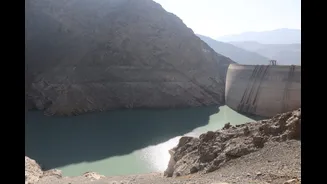
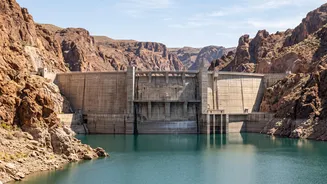
Recent analysis, highlighted in a New York Times report, points to a striking geographical overlap between Iran’s dams and its clandestine missile facilities. The issue gained new attention after recent US and Israeli airstrikes on suspected missile sites
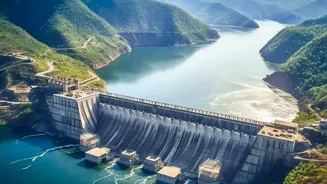
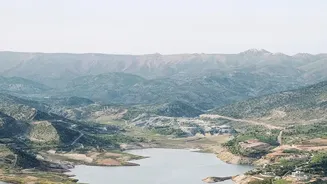
appeared to mirror a map of Iran's water infrastructure. Nima Shokri, a water security expert at Germany's Hamburg University of Technology, has tracked at least 533 dams in Iran and noted that the pattern of airstrikes closely matched his map of dam locations. This has led analysts to hypothesize that the placement is not coincidental, but rather a deliberate strategic decision. The central question now being asked is whether these projects, publicly justified for agricultural and civilian use, were also built to support Iran's military ambitions.
Powering the 'Missile Cities'
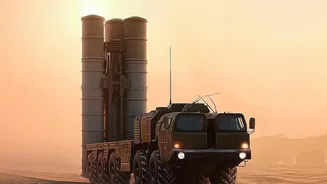
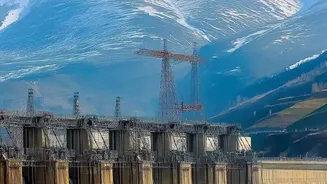
The most prominent theory is that the dams provide a reliable, independent source of power and water to Iran's so-called 'missile cities'. These are vast, fortified underground complexes used to store, assemble, and launch ballistic missiles and drones, designed to be impervious to attack. According to military analysts, having a dedicated power and water supply from a nearby dam would give these critical bases 'operational continuity,' allowing them to function even if the national grid is disabled during a conflict. A former Israeli military intelligence analyst, Danny Citrinowicz, noted that Iran has a strong incentive to ensure its missile complexes are not dependent on civilian infrastructure. This strategy would be consistent with Iran's broader military doctrine of building redundant and resilient systems to withstand attacks from more powerful adversaries.
A Defensive Shield or Something More?
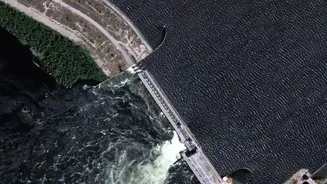
Beyond logistical support, the proximity of dams to missile sites creates a powerful deterrent. An attack on a nearby missile facility carries the catastrophic risk of damaging a dam, which could lead to devastating downstream flooding and a humanitarian crisis. This forces any adversary to weigh the military gain of striking a base against the potential for immense collateral damage. This 'dual-use' nature of the infrastructure complicates targeting assessments for foreign militaries. Following the report, Iran's Parliament Speaker, Mohammad Bagher Ghalibaf, warned that Tehran would apply the same 'dual-use' logic to any power plant or dam located near a US or Israeli base, highlighting the escalatory potential of such claims.
Hypothesis, Not Proven Fact
It is crucial to note that the link between Iran's dams and its military program remains a hypothesis. Analysts and even some of the experts cited in the initial report stress that proximity alone does not prove causality. Iran is a water-scarce country, and many of its dams serve essential civilian functions like providing drinking water, irrigation, and hydroelectric power. Furthermore, both dams and underground military bunkers are often logically situated in mountainous terrain, which could explain the overlap without a coordinated strategy. Iranian officials have pushed back fiercely against the suggestion, calling it a pretext to justify future attacks on the nation's vital civilian infrastructure. However, the questions raised by the geographical correlation persist, especially regarding dams built in remote areas with no clear economic or agricultural need.