





A Gift From a Famous Comet
The Orionid meteor shower is an annual celestial event that occurs when Earth passes through the stream of debris left behind by Comet 1P/Halley. While the legendary comet itself only visits the inner solar system every 76 years—last seen in 1986 and
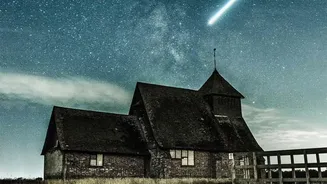
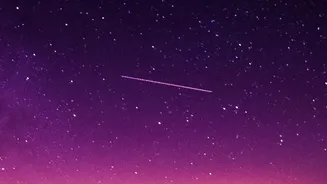
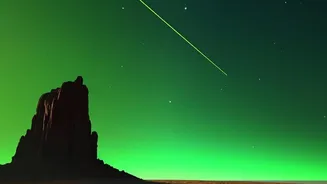
not due back until 2061—its dusty trail gives us a beautiful show every October. These tiny particles, many no larger than a grain of sand, burn up upon entering our atmosphere at incredible speeds of around 66 kilometres per second. This high velocity is what makes the Orionids famous for being particularly bright and often leaving behind glowing trails, or 'trains', that can linger for a few seconds after the meteor has vanished.
When to Watch: The Pre-Dawn Window
The Orionid meteor shower will be active from early October to early November, but the peak, when the most meteors are visible, occurs on the night of October 21-22, 2026. However, there is a challenge this year: a bright waxing gibbous moon will illuminate the sky for much of the night, washing out many of the fainter meteors. But there is a perfect solution for dedicated skywatchers. The moon is expected to set around 3 a.m. local time on the morning of October 22. This opens up a 'golden window' of true darkness between moonset and the start of dawn twilight. This pre-dawn period is your absolute best chance to see the shower in all its glory, perfectly aligning with the headline's advice.
Where to Look: Finding Your Spot
The meteors are named Orionids because they appear to radiate from a point in the constellation Orion, the Hunter. However, you don’t need to stare directly at Orion. In fact, meteors seen further away from the radiant will appear longer and more dramatic. The best strategy is to find a comfortable spot, lie back, and look up at the darkest part of your sky. The most critical factor for a successful viewing is getting away from light pollution. City lights can drastically reduce the number of visible meteors. For those in cities like Delhi, Mumbai, or Bengaluru, this means planning a trip to the outskirts or a rural area where the sky is significantly darker. Locations like Ladakh, Spiti, or the deserts of Rajasthan offer world-class dark skies, but even a local park far from streetlights can improve your view.
Your Essential Viewing Checklist
Watching a meteor shower requires no special equipment, just patience and comfort. A telescope or binoculars are not recommended as they narrow your field of view. Your eyes are the best tools for the job. First, give your eyes at least 20-30 minutes to fully adapt to the darkness; this means putting your phone away, as its bright screen will ruin your night vision. Since you’ll be out in the cool, pre-dawn hours, dress in warm layers. A reclining chair or a thick blanket will allow you to look up at the sky comfortably without straining your neck. Finally, be patient. Meteors appear in sporadic bursts, so you might see several in a few minutes and then none for a while. Under ideal dark-sky conditions, you can expect to see about 15-20 meteors per hour during the peak.
Capturing the Cosmic Moment
For those interested in astrophotography, the Orionids offer a rewarding challenge. You will need a DSLR or mirrorless camera with manual controls, a sturdy tripod, and a wide-angle lens. To capture the faint streaks of light, use a long exposure setting—anywhere from 15 to 30 seconds. Set your aperture as wide as possible (a low f-number like f/2.8 is ideal) and increase your ISO to a level like 1600 or 3200, depending on your camera's capabilities and the darkness of your location. Focusing on the stars can be tricky in the dark, so use your camera's live view to magnify a bright star and manually adjust the focus until it is a sharp point. Then, take a series of continuous shots. With a little luck, you’ll capture a brilliant meteor streaking through your frame.