







Why Your Morning Sets the Stage
How you start your day significantly influences your mental state. A structured morning routine provides a sense of predictability and control, which can lower stress and anxiety before you even step out the door. When you eliminate the chaos of unstructured
mornings, you reduce the production of the stress hormone cortisol and create a calm foundation. This proactive approach to your morning helps you feel grounded and mentally prepared for the challenges ahead, creating a positive domino effect for the rest of your day.
The Power of Pranayama: More Than Just Breathing
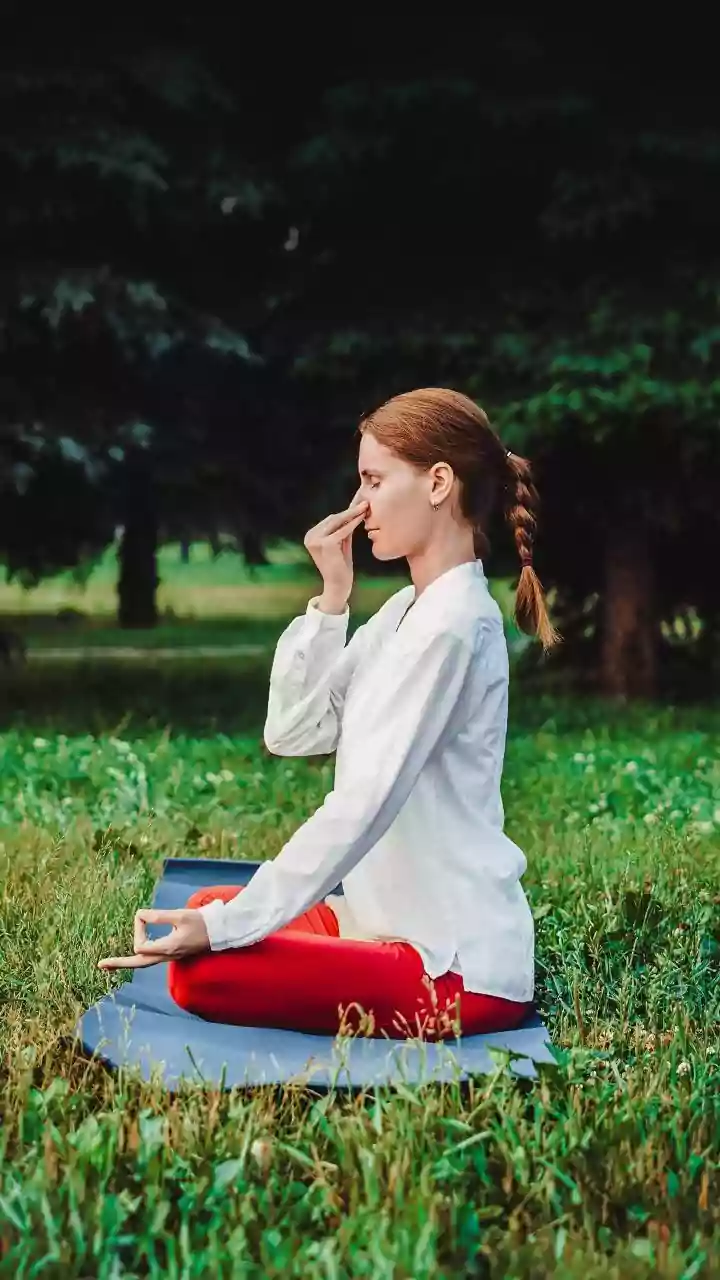
Pranayama is the ancient yogic practice of breath regulation. In Sanskrit, 'prana' means life energy and 'yama' means control. The goal is to intentionally control the timing, duration, and pattern of your breath to connect the mind and body. Most of the time, our breathing is unconscious, often becoming shallow and erratic when we're stressed. Pranayama helps break this pattern by teaching you to breathe deeply and mindfully, which directly stimulates the parasympathetic nervous system—our body's 'rest and digest' mode. This activation counteracts the 'fight or flight' stress response, promoting a state of calm.
Two Simple Pranayama Techniques for Beginners
You don't need to be a yoga expert to reap the benefits. Here are two highly effective techniques that are perfect for starting your day. **1. Anulom Vilom (Alternate Nostril Breathing):** Praised for its ability to balance the brain's left and right hemispheres, this practice is incredibly calming. * Sit comfortably with a straight spine. * Use your right thumb to gently close your right nostril. * Inhale slowly and deeply through your left nostril. * Close your left nostril with your ring finger, release your thumb, and exhale slowly through the right nostril. * Now, inhale through the right nostril. * Close the right nostril with your thumb, release your ring finger, and exhale through the left. * This completes one round. Continue for 3-5 minutes. **2. Bhramari (Bee Breath):** This technique uses sound vibration to soothe the nervous system, making it ideal for alleviating agitation and anxiety. * Sit in a quiet place and close your eyes. * Place your index fingers gently on the cartilage of your ears. * Take a deep breath in through your nose. * As you exhale, keep your mouth closed and make a low-pitched humming sound, like a bee. * Continue for 8-10 rounds.
Your 15-Minute Anti-Stress Morning Routine
Combining these elements doesn't require a huge time commitment. The key is consistency. Here’s a simple, customizable template to get you started: * **Minutes 0-1: Hydrate.** Drink a glass of water as soon as you wake up. Your body loses water overnight, and rehydrating supports cognitive function and metabolism. * **Minutes 1-5: Gentle Movement.** Before even getting out of bed, do a full-body stretch. Reach your arms overhead and point your toes. This simple action helps wake up your muscles and improve circulation. * **Minutes 5-13: Pranayama Practice.** Choose one of the breathing techniques above and practice for about eight minutes. Studies show that even this short duration can significantly reduce anxiety. * **Minutes 13-15: Set an Intention.** Take the final two minutes to sit in silence. Think about one positive intention for your day. This helps shift your focus from stress to purpose.
Making the Habit Stick
The most effective routine is one that you can maintain. Start small and don't aim for perfection. If 15 minutes feels like too much, start with five. The goal is to build a sustainable habit. Try to follow your routine every day, even on weekends, to help regulate your body's internal clock, or circadian rhythm. Track your progress if it helps you stay motivated. Over time, this small investment in your morning will become an automatic and essential part of your day, equipping you with the resilience to better handle workplace stress.