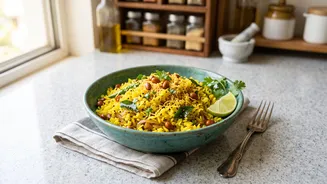



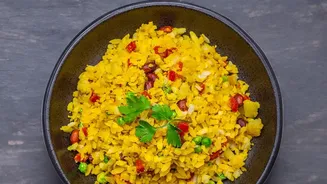
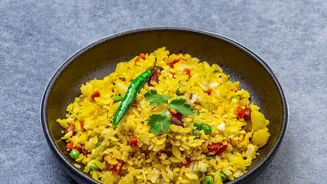
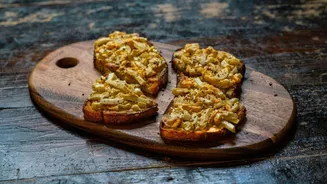
A beloved breakfast across India, poha takes on a unique and irresistible form in the city of Indore. This version is a delightful explosion of sweet, tangy, and spicy flavours, elevated by a colourful and crunchy mix of toppings.
What Makes Indori Poha Special?
While poha (flattened
rice) is a staple everywhere, the Indori version stands apart. Unlike its Maharashtrian counterpart, which often sautées onions with the poha, Indori Poha is traditionally steamed, resulting in incredibly soft and fluffy rice flakes. The magic, however, lies in the final assembly. It’s a dish built on contrasts: the soft poha is generously topped with crunchy sev (a crispy chickpea flour snack), juicy pomegranate arils, finely chopped raw onions, and fresh coriander. The final flourish is a sprinkle of Jeeravan masala, a unique spice blend from Indore that gives the dish its signature zesty, tangy, and slightly spicy kick.
The Key to Fluffy Poha
The most critical step to achieving perfect, non-mushy poha is the wash. Use medium or thick poha flakes, as the thin variety turns soggy easily. Place the poha in a colander and rinse it under cool running water for just 20-30 seconds, until the flakes are moist but not saturated. Do not soak them in a bowl. After rinsing, let the poha rest in the colander for 5-10 minutes. During this time, the flakes will absorb the residual moisture and become perfectly soft and ready for cooking. A good test is to press a flake between your fingers; it should crush easily without feeling wet.
Ingredients You Will Need
For the Poha (Serves 2-3):
- 2 cups thick poha
- 1 tbsp oil
- 1 tsp mustard seeds
- 1 tsp fennel seeds (saunf)
- A pinch of asafoetida (hing)
- 8-10 curry leaves
- 1-2 green chillies, slit
- 1 small onion, finely chopped
- ½ tsp turmeric powder
- 1 tsp sugar
- Salt to taste
For the Toppings:
- ½ cup Indori sev or any fine sev
- ¼ cup pomegranate arils
- ¼ cup finely chopped raw onion
- 2 tbsp fresh coriander, chopped
- 1 tsp Jeeravan masala
- Lemon wedges, for serving
Step-by-Step Cooking Method
1. Prepare the poha: Rinse the poha as described above and let it rest. Once softened, add salt, sugar, and turmeric powder to the poha and gently toss to combine.
2. Make the tempering (tadka): Heat oil in a wide pan or kadhai over medium heat. Add the mustard seeds and let them splutter. Add the fennel seeds, asafoetida, curry leaves, and slit green chillies. Sauté for a few seconds until fragrant.
3. Cook the base: Add the chopped onion to the pan and cook until it becomes soft and translucent, for about 2–3 minutes.
4. Steam the poha: Add the prepared poha to the pan. Gently fold everything together, being careful not to mash the flakes. Sprinkle a tablespoon of water, cover the pan with a lid, and let it steam on low heat for $2–3$ minutes. This step helps the poha become fluffy and absorb the flavours.
5. Assemble and serve: Turn off the heat. Fluff the poha with a fork. Transfer to serving plates. Now, generously garnish with chopped raw onions, pomegranate arils, and coriander leaves. Sprinkle Jeeravan masala all over and top it off with a hearty amount of sev. Serve immediately with a lemon wedge on the side.
About Jeeravan Masala
Jeeravan masala is the soul of Indori Poha. It's a complex, tangy, and spicy finishing powder from Madhya Pradesh made from roasted cumin, coriander, fennel, black salt, mango powder, ginger, and other spices. It is not the same as chaat masala or garam masala and provides a distinct flavour that is hard to replicate. While readily available in stores, if you can't find it, you can make a quick substitute by mixing cumin powder, coriander powder, chat masala, a pinch of garam masala, red chilli powder, and black salt.