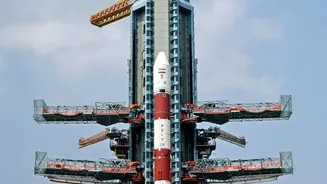







The Great Unlocking of Indian Space
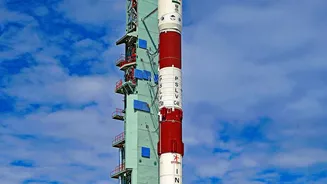
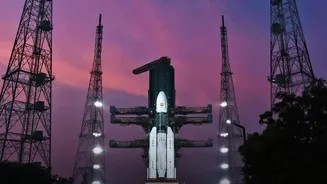
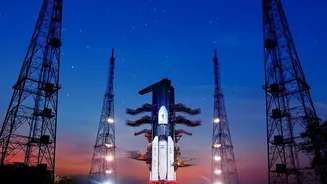
For decades, space in India was synonymous with the Indian Space Research Organisation (ISRO). But a major policy shift in 2020 changed the landscape forever, opening the sector to private enterprise. The government established the Indian National Space Promotion
and Authorisation Centre (IN-SPACe) as a single-window agency to promote, authorise, and supervise the activities of private companies. This wasn't about privatising ISRO, but rather about allowing the national agency to focus on advanced research and strategic missions like Gaganyaan, while private players handle the manufacturing of operational systems and commercial services. The goal is ambitious: to grow India's share of the global space economy from around 2% to 8% and expand the domestic space economy from about $8.4 billion to a projected $44 billion by 2033.
The New Jobs: Beyond Astronauts and Scientists
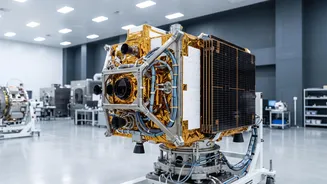
The popular image of a space career is often limited to astronauts and research scientists. However, the burgeoning private ecosystem is creating a much wider variety of roles. The demand is surging for aerospace, satellite, and propulsion engineers, but also for technicians and specialists in high-volume manufacturing. As companies like Skyroot Aerospace and Agnikul Cosmos build launch vehicles, and firms like Pixxel and Dhruva Space develop satellite constellations, they need skilled workers for everything from composite manufacturing and CNC programming to designing PCBs and thermal engineering. This industrial expansion creates opportunities not just in big cities but also in manufacturing hubs, building a deep supply chain of MSMEs that has long supported ISRO.
Meet the New Private Players
The number of Indian space-tech startups has surged from just a handful a decade ago to over 400 today. These companies are attracting significant investment, with funding crossing $871 million. Hyderabad-based Skyroot Aerospace became India's first private company to launch a rocket into orbit in July 2026. Chennai's Agnikul Cosmos is pioneering single-piece, 3D-printed rocket engines. Meanwhile, Bengaluru has become a hub for satellite and data companies. Pixxel, which recently raised $100 million, is building a constellation of hyperspectral satellites to provide detailed Earth-observation data for agriculture, mining, and environmental monitoring. These companies, and many others, are now the primary drivers of hiring in the sector, seeking talent from top engineering colleges and beyond.
The Downstream Data Boom
Perhaps the largest and most accessible job market lies not in building rockets or satellites, but in using the data they generate. This is the 'downstream' segment of the space economy. Companies are hiring data scientists, geospatial analysts, and software engineers to turn raw satellite imagery and signals into actionable intelligence. These applications serve a vast range of industries: farmers use satellite data to monitor crop health, insurance companies assess flood damage, and urban planners manage infrastructure development. The demand for these skills connects the space industry directly to India's broader digital economy, creating high-value jobs that rely on software and analytics expertise, a traditional Indian strength. As more satellites are launched, the flood of data will only grow, making data analytics a key growth area for the foreseeable future.