




A Field of Sunlight and Crops
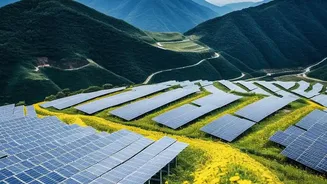
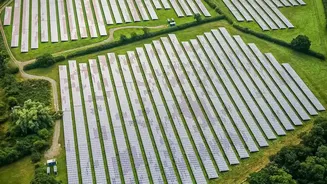
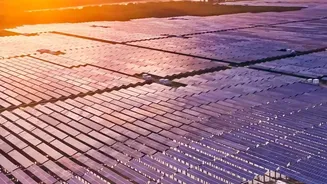
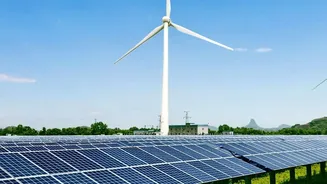
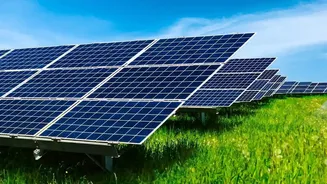
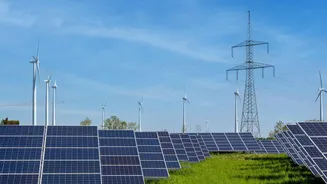
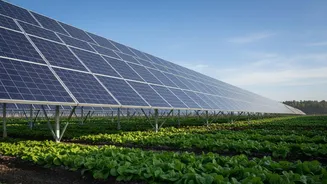
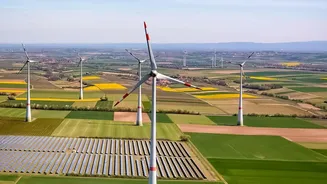
At its core, agrivoltaics is a simple but powerful idea: using the same piece of land for two purposes at once. It involves installing solar panels, often on raised structures, high enough above the ground to allow crops to be cultivated underneath or between
the panel rows. Instead of a field being just for agriculture or just for a solar park, it becomes a dual-use asset. This innovative approach addresses two of India’s most pressing challenges: the need for clean energy and the quest for food security, all while tackling the critical issue of land scarcity.
The Old Farming Gamble
Traditional farming income is notoriously unpredictable. A farmer's success is tied to a host of factors beyond their control: the timing and intensity of the monsoon, unexpected pest attacks, hailstorms, and volatile market prices that can plummet just as crops are ready for sale. This uncertainty makes financial planning incredibly difficult, often leading to cycles of debt and distress. Income arrives in lumps after a harvest, and its size is never guaranteed, making it hard to budget for monthly expenses or invest in the future.
A Second, Steadier Paycheque
This is where agrivoltaics changes the entire financial equation. By leasing a portion of their land to a solar developer or owning the solar plant themselves, farmers can generate and sell electricity to the grid. This creates a second, entirely separate income stream. Unlike crop sales, the revenue from selling solar power is incredibly predictable. Power purchase agreements with distribution companies (DISCOMs) lock in a fixed tariff for the electricity generated, ensuring a steady, reliable payment month after month for up to 25 years. This predictable cash flow makes farm income far easier to manage and understand, transforming financial planning from a guessing game into a structured exercise.
More Than Just Money
The benefits of agrivoltaics extend far beyond the bank account. The partial shade provided by the solar panels creates a unique microclimate that offers several agricultural advantages. Studies show this shading can reduce water evaporation from the soil by up to 30%, a crucial benefit in water-scarce regions. The panels also protect sensitive crops from the scorching summer sun, heavy rain, and hailstorms, which can lead to more stable and sometimes even improved yields for certain shade-tolerant varieties. This makes farming operations more resilient to the increasingly extreme weather conditions brought on by climate change.
The Government's Big Push
The Indian government is actively promoting this transition through schemes like the Pradhan Mantri Kisan Urja Suraksha evam Utthaan Mahabhiyan (PM-KUSUM). This flagship program encourages farmers to install solar power plants on their land. Component-A of the scheme specifically supports the development of grid-connected solar projects on barren or agricultural land, allowing farmers to become energy producers. The scheme provides significant financial assistance, with subsidies that can cover up to 60% of the initial cost, making the technology more accessible to small and marginal farmers.
Not Without Hurdles
Despite its immense potential, the path to widespread adoption has challenges. The primary obstacle is the high upfront capital cost of installing solar infrastructure, which can be 30-40% higher than traditional ground-mounted solar farms. There is also a need for more research to identify the best crop-and-panel combinations for India's diverse agro-climatic zones. Furthermore, a lack of awareness and technical expertise among farmers can lead to hesitancy. Overcoming these hurdles will require continued government support, innovative financing models, and clear policy frameworks that encourage farmer-centric development.