




Finding the Right Surface to Jump On
The surface you jump on is one of the most critical factors in preventing injury and even determines the lifespan of your rope. The ideal surface provides a balance of firmness and shock absorption. Hardwood floors, like those in a basketball court or dance
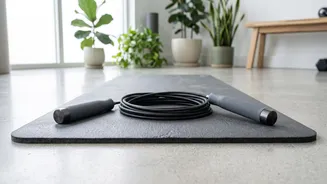
studio, are often considered the gold standard because they have some give. However, the most common and damaging mistake is jumping on concrete or asphalt. These unforgiving surfaces provide zero shock absorption, sending impact straight into your shins, knees, and ankles, which can lead to injuries like shin splints and stress fractures. Grass might seem like a good, soft alternative, but it's often uneven and can cause your rope to snag. If you lack an ideal indoor space, a quality jump rope mat is your best investment. These mats are designed to absorb impact, protect your joints, and save your rope from the wear and tear of rough ground. Look for a dense rubber or high-quality PVC mat that won't slip during your workout.
How Much Space Do You Really Need?
You don't need a full gymnasium, but you do need more space than you might think. The most important dimension is vertical clearance. A common recommendation is to find a space with a ceiling at least three feet taller than you are. This prevents the rope from constantly hitting the ceiling, which disrupts your rhythm. Horizontally, you'll need enough room for the rope's arc. A clear area of about 10 feet from front to back and 5 feet side-to-side is a good starting point. Before you start, do a slow turn with the rope to check for any obstacles like furniture, light fixtures, or shelves. Trying to compensate for a tight space by shortening your swing or crouching can lead to poor form and potential injuries, defeating the purpose of the workout.
Why Your Choice of Footwear Matters
Jumping rope is a high-impact activity, and your feet bear the brunt of every landing. The right shoes are not a luxury; they are essential for injury prevention. Common issues from using improper footwear include plantar fasciitis, shin splints, and general joint pain. Running shoes are often a poor choice for jumping rope. While cushioned, they typically have a thick, soft heel designed for forward motion, which can create instability during the vertical, repetitive motion of skipping. Instead, look for cross-training shoes. These are specifically designed for a variety of movements, including jumping. Ideal features in a shoe for skipping include strong forefoot cushioning (since you land on the balls of your feet), good ankle support for stability, and a relatively lightweight design. A shoe with a stable, flatter base will help you feel grounded and maintain balance during quick movements.
Key Features in a Jump Rope Shoe
When shopping for shoes, focus on a few key characteristics. First is balanced cushioning; you want enough to absorb impact but not so much that the shoe feels mushy and unstable. High-density foam is often used in cross-trainers to provide this balance of responsiveness and support. Second, look for a durable outsole with good traction to prevent slips, especially if you're jumping on a mat or smooth floor. Finally, the overall fit should be snug but not restrictive, with a toe box that allows your toes to spread naturally upon landing. Brands like Nike Metcon, Reebok Nano, and others in the cross-training category are frequently recommended because they are built for the type of dynamic, high-impact movements involved in jumping rope.