


An Icon's Enduring Charm
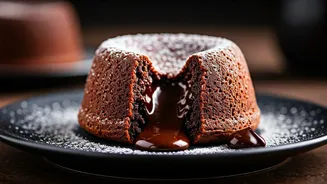
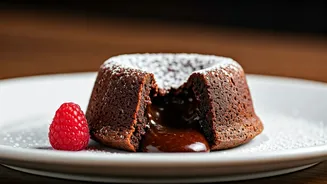
Sometime in the late 1990s and early 2000s, the chocolate lava cake became inescapable. It was the star of high-end restaurant dessert menus, the guaranteed crowd-pleaser at dinner parties, and the special occasion treat that always delivered a moment
of theatre. Its ubiquity was so complete that it eventually became a cliché, a shorthand for a certain kind of accessible decadence that trickled down from fine dining to chain restaurants and freezer aisles. Yet, to dismiss it as a dated trend is to miss the point entirely. The chocolate lava cake’s journey from novelty to norm is a testament to its powerful, elemental appeal. It’s a dessert that’s simultaneously simple and dramatic, comforting and impressive.
A Tale of Two Inventors
The dessert's origin story is as rich and debated as the cake itself. There are two primary claims to its invention. In one corner is esteemed French chef Michel Bras, who says he spent two years perfecting his *coulant au chocolat*, which he introduced in his restaurant in 1981. His creation was technically complex, involving a frozen ganache core placed inside a batter that would bake around it, ensuring a liquid center. In the other corner is celebrated chef Jean-Georges Vongerichten, who claims he created it by accident in New York in 1987. As the story goes, he pulled a batch of individual chocolate cakes from the oven too soon, only to find the undercooked, gooey centers were a surprise hit. While Vongerichten is largely credited with popularizing the dessert in America, both chefs contributed to the legend of this molten masterpiece.
The Science of the Gooey Center
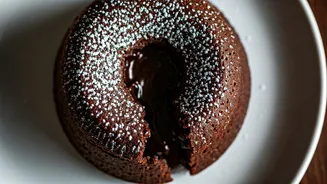
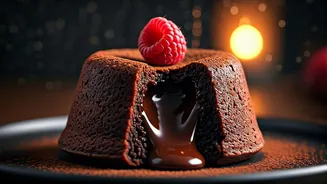
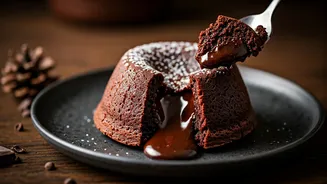
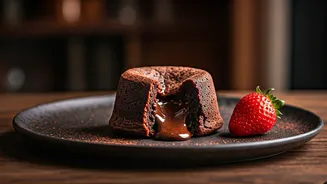
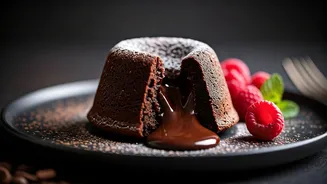
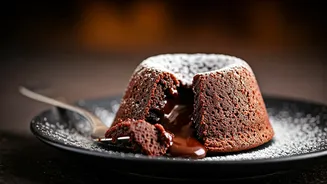
The magic of the lava cake lies in that perfect, flowing center. This effect is achieved in one of two ways. The first is the Vongerichten method: simply underbaking the cake. By baking a rich, egg-heavy batter in a very hot oven for a short amount of time, the exterior sets while the interior remains a warm, liquid batter, creating that signature volcanic flow when cut. The second, more technical method, pioneered by Bras, involves placing a ball of frozen chocolate ganache in the middle of the cake batter before baking. As the cake cooks, the ganache melts into a perfect, contained pool of liquid chocolate. While Vongerichten's simpler method is the one that became more popular and easier to replicate, both techniques result in the delightful textural contrast that defines the dessert.
More Than Just Nostalgia
Food trends are cyclical; what was once innovative becomes mainstream, and then nostalgic. The lava cake has completed this entire journey, evolving from a Michelin-starred creation to a comforting staple available everywhere. And yet, it continues to capture our imagination. It recently had a viral moment at the 2026 Milan Winter Olympics, where athletes dubbed it the breakout dessert of the games, becoming its generation's version of the famed Paris 2024 chocolate muffin. This recent resurgence in popularity proves that the lava cake is not just a relic of '90s fine dining. Its appeal is timeless. It is the perfect combination of a warm, soft cake, the rich bitterness of dark chocolate, and the pure theatre of that molten core. It’s a multi-sensory experience that delivers comfort and a touch of luxury.