







What Exactly is a Mudra?
In the traditions of yoga and meditation, a mudra is a symbolic or ritual gesture, most often performed with the hands and fingers. The Sanskrit word 'mudra' can be translated as 'seal' or 'gesture'. These positions are believed to help channel the body's
vital life force energy, known as prana. By holding the hands in specific ways, practitioners aim to influence their mental and physical states, connecting different parts of the body's energy system. While there are many complex mudras, some, like Hakini Mudra, are simple enough for anyone to practice anywhere, anytime.
The Power and Meaning of Hakini
Hakini Mudra is named after the Hindu goddess Hakini, who is believed to rule over the third-eye chakra, or 'Ajna' chakra. This energy center, located conceptually between the eyebrows, is associated with intuition, imagination, and inner wisdom. Because of this connection, Hakini Mudra is often called the 'Mudra for the Mind' or the 'Brain Power Mudra'. Practitioners use it to invoke the qualities of the third-eye chakra, aiming to gain power over their own mind and thoughts. The gesture itself is thought to symbolize the unification of the left and right hemispheres of the brain.
Believed Benefits for a Sharper Mind
The primary benefit associated with practicing Hakini Mudra is the enhancement of mental functions. It is widely believed to improve concentration and focus, making it a popular tool for students before an exam or professionals before a big meeting. Many also use it to boost memory retention and recall. Beyond cognitive boosts, the mudra is said to promote a sense of calm and reduce stress and anxiety by quieting mental chatter. By bringing all five fingertips together, the gesture is thought to harmonize the two sides of the brain, fostering better decision-making, creativity, and overall mental clarity.
How to Perform Hakini Mudra
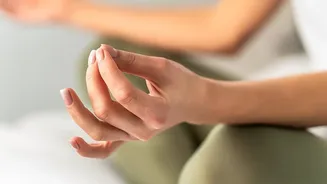
Performing this mudra is beautifully simple and requires no special equipment. Find a comfortable seated position, either cross-legged on the floor or upright in a chair with your feet flat. Keep your spine long and your shoulders relaxed. Bring your palms to face each other a few inches apart, as if holding a small ball. Now, lightly touch the tips of all five fingers on your right hand to the corresponding fingertips on your left hand. The palms remain apart, creating a dome-like shape with the hands. You can rest your hands in your lap or hold them in front of your chest or solar plexus. To deepen the practice, you can gently direct your gaze upward toward the space between your eyebrows.
When and How to Practice
The beauty of Hakini Mudra is its versatility. You can practice it for a few moments whenever you need a mental reset. Try holding the gesture for five minutes before starting a demanding task to help sharpen your focus. It can be integrated into a daily meditation or yoga routine, often held for several minutes to settle the mind. Some people even use it discreetly during meetings or conversations to aid recall and clear thinking. You can also practice it while walking mindfully. For a more intentional practice, combine the hand gesture with slow, deep breathing. As you inhale, you can place your tongue on the roof of your mouth, and as you exhale, allow it to relax. This combination of breath and gesture can amplify the calming and focusing effects. Hold the mudra for as long as feels comfortable, starting with a few minutes and gradually increasing over time.