







India's Heavy Reliance on Imports
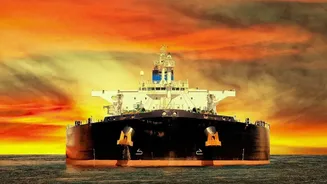
India is one of the world's largest importers of crude oil, depending on other countries for over 85% of its needs. This heavy reliance means that when global prices for benchmarks like Brent crude rise, India’s import bill swells significantly. As of September
2026, with Brent crude hovering above $100 per barrel, the cost to bring oil into the country has surged. For instance, even with slightly lower import volumes in August 2026 compared to the previous year, India's import bill was substantially higher due to these elevated prices, showcasing the direct financial strain. Every $10 increase in the price of a barrel of oil can widen India's current account deficit, a key indicator of economic stability, by a significant margin.
The Price You Pay at the Pump
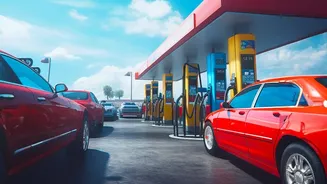
The most immediate and visible impact for consumers is at the petrol pump. The journey from a barrel of crude to a litre of fuel in your vehicle involves refining costs, dealer commissions, and, crucially, central and state taxes. These taxes, including excise duty and Value Added Tax (VAT), form a large component of the retail price, which is why prices vary widely from one city to another. On September 21, 2026, petrol prices in Delhi were around ₹102 per litre, while in Mumbai they were over ₹111. Because petrol and diesel are kept outside the Goods and Services Tax (GST) regime, state-level levies play a major role in these price differences. While daily prices have been relatively stable recently, the underlying pressure from high crude costs remains immense.
The Ripple Effect on Household Goods
The impact of fuel prices extends far beyond transportation. Higher diesel costs are particularly significant, as diesel is the lifeblood of India's logistics network. It powers the trucks that transport everything from fresh produce and milk to factory-made goods across the country. When transportation becomes more expensive, these costs are inevitably passed on to consumers. This is often called the 'second-order effect,' and it means that a fuel price hike can lead to more expensive groceries, clothing, and other essential items. Studies have shown this disproportionately affects lower and middle-income households, which spend a larger portion of their income on essentials, squeezing their budgets.
Fueling Broader Inflation
These combined effects are a major driver of headline inflation, measured by the Consumer Price Index (CPI). Fuel and power have a direct weightage in the CPI basket, but the indirect effects of higher transport costs on food and manufactured goods also push the overall inflation rate up. With retail inflation in India rising to 4.82% in August 2026, concerns are growing. Economists and analysts are now warning that if crude prices stay above the $100 mark, India's retail inflation could approach the 6% mark, which is the upper tolerance limit for the Reserve Bank of India (RBI). Persistently high inflation could compel the RBI to raise interest rates, which would make loans more expensive for everyone and could slow down economic growth.
Government's Tightrope Walk
The government faces a difficult balancing act. It can provide relief to consumers by cutting excise duties on petrol and diesel, which it has done in the past. However, this comes at a cost to the government's own revenues, potentially widening the fiscal deficit. These revenues are essential for funding infrastructure projects and social welfare schemes. The impact of high oil prices acts like a tax that is distributed among government finances, oil marketing companies, corporations, and ultimately, households. Therefore, any decision to cut taxes involves a complex trade-off between offering immediate relief to citizens and maintaining the nation's long-term fiscal health.